

Chp 13: Early History of Europe: Slides: Western

Presentation
•
English
•
6th - 8th Grade
•
Easy

Nadia Radwan
Used 1+ times
FREE Resource
39 Slides • 25 Questions
1

2
Multiple Choice
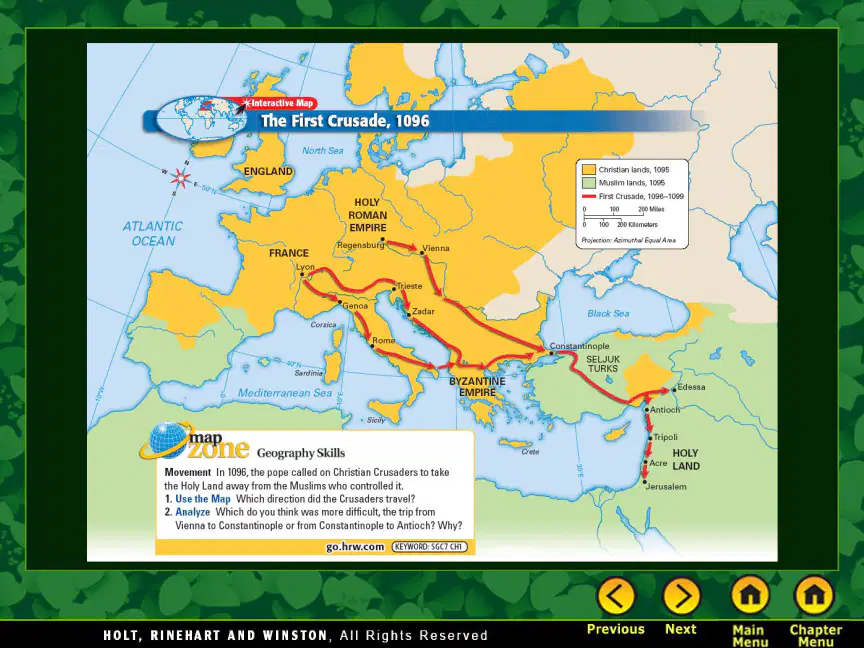
Why is it important to study the early history of Europe, including Ancient Greece and the Roman World?
To understand the roots of Western civilization
To learn about ancient myths and legends
To memorize dates and events
To compare ancient and modern architecture
3
4
Open Ended
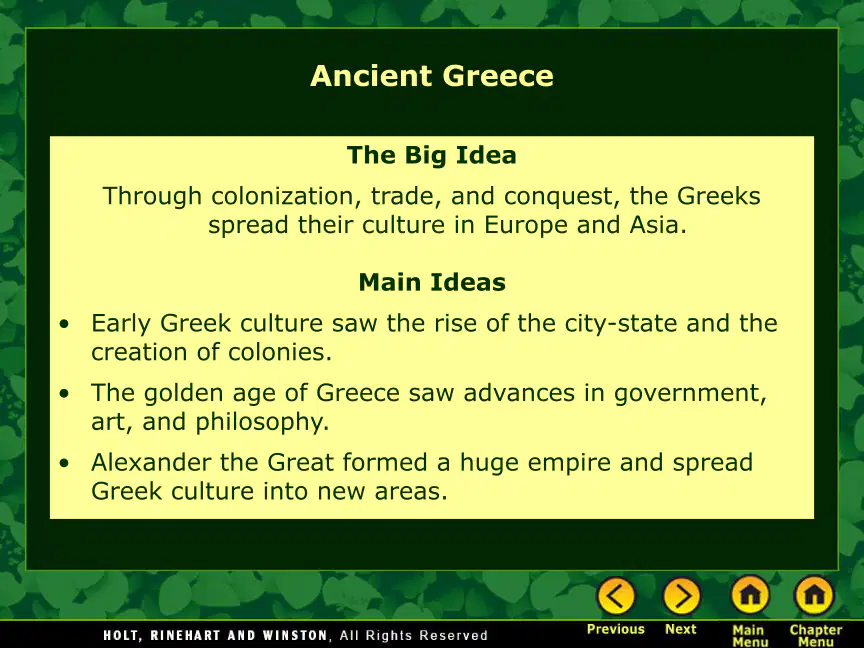
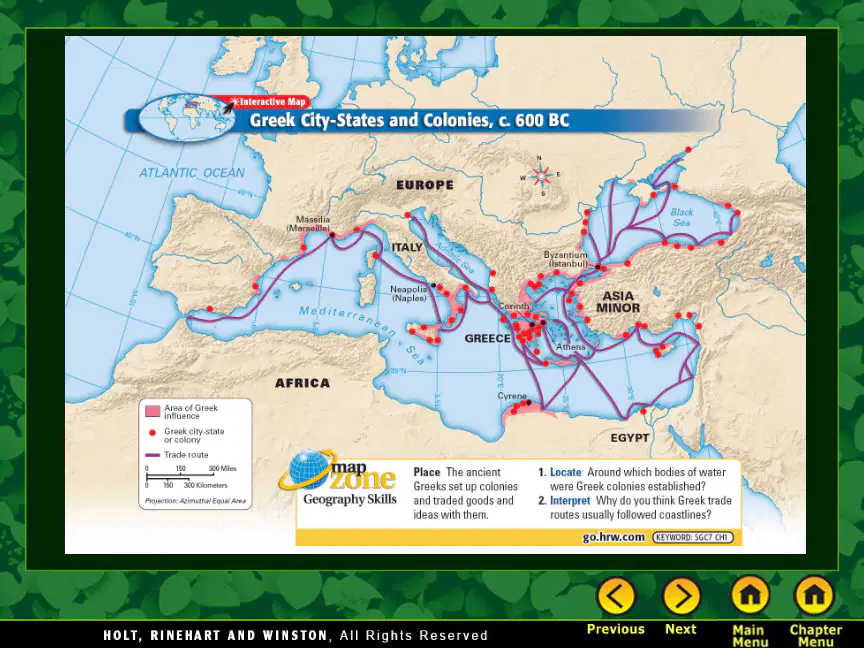
How did colonization, trade, and conquest help the Greeks spread their culture across Europe and Asia?
5
6
Multiple Choice
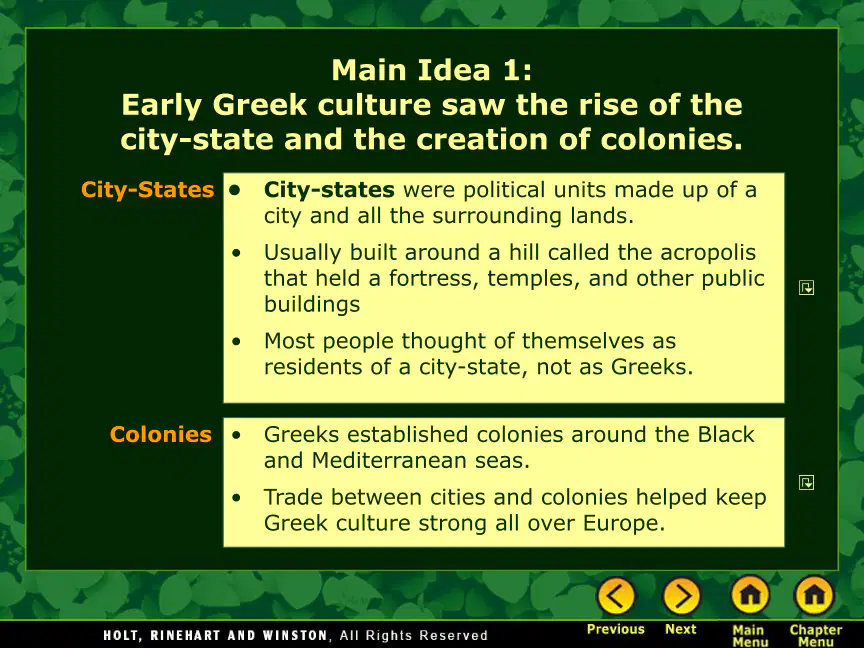
Which of the following best describes a Greek city-state?
A political unit made up of a city and its surrounding lands
A large empire ruled by a king
A colony established for trade
A religious center for all Greeks
7
8
Open Ended
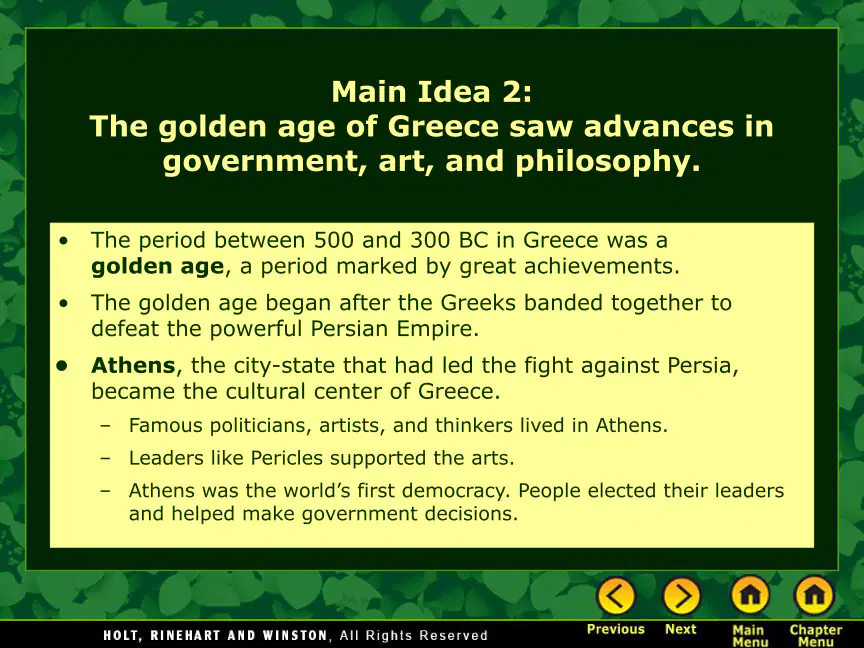
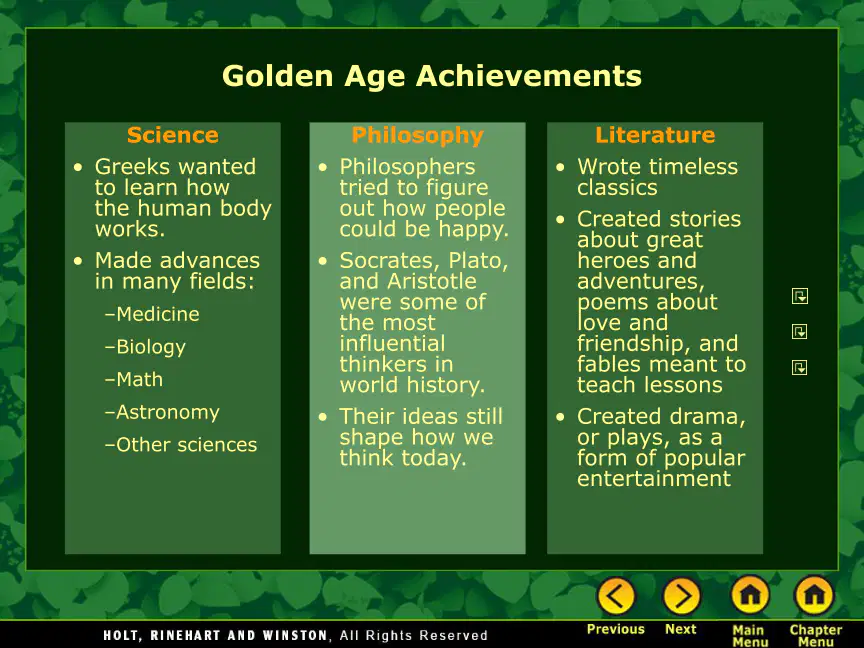
Explain how the golden age of Greece contributed to advancements in government, art, and philosophy.
9
10
11
Fill in the Blanks
Philosophers like
Type answer...
12
Multiple Select
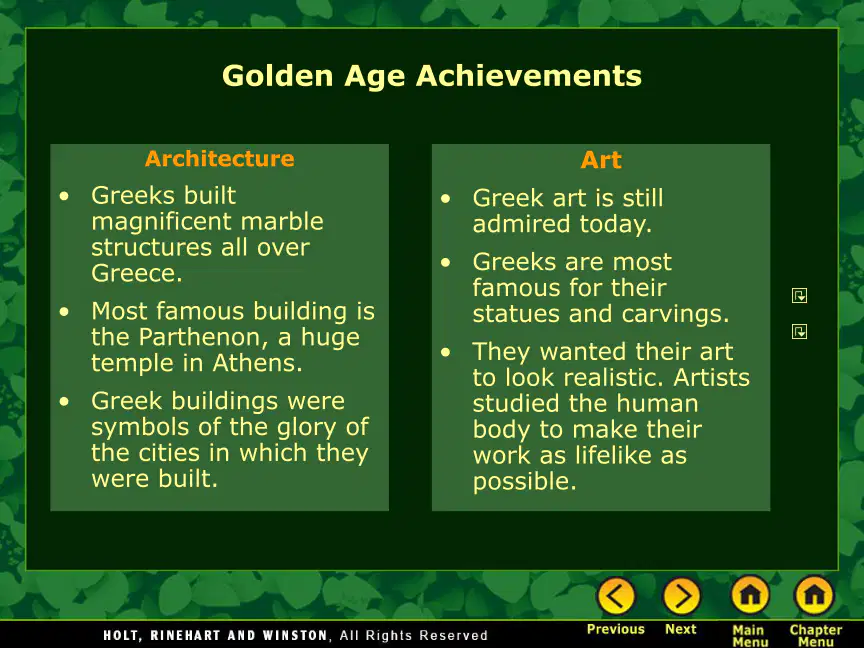
Which of the following were achievements of the Greek golden age?
Magnificent marble architecture
Realistic statues and carvings
Advances in medicine and math
Creation of drama and plays
13
14
Open Ended
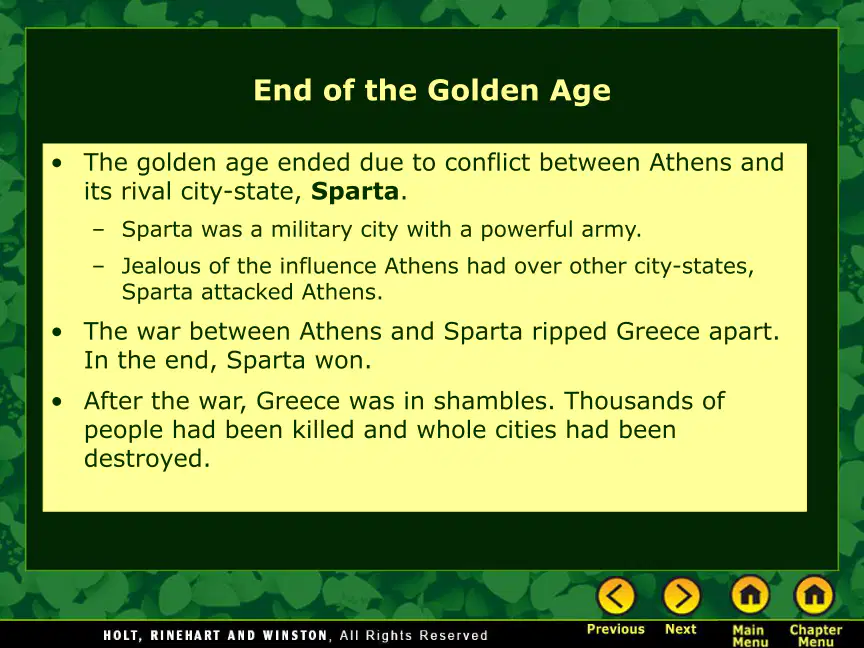
What were the main reasons for the end of the Greek golden age?
15
16
Multiple Choice
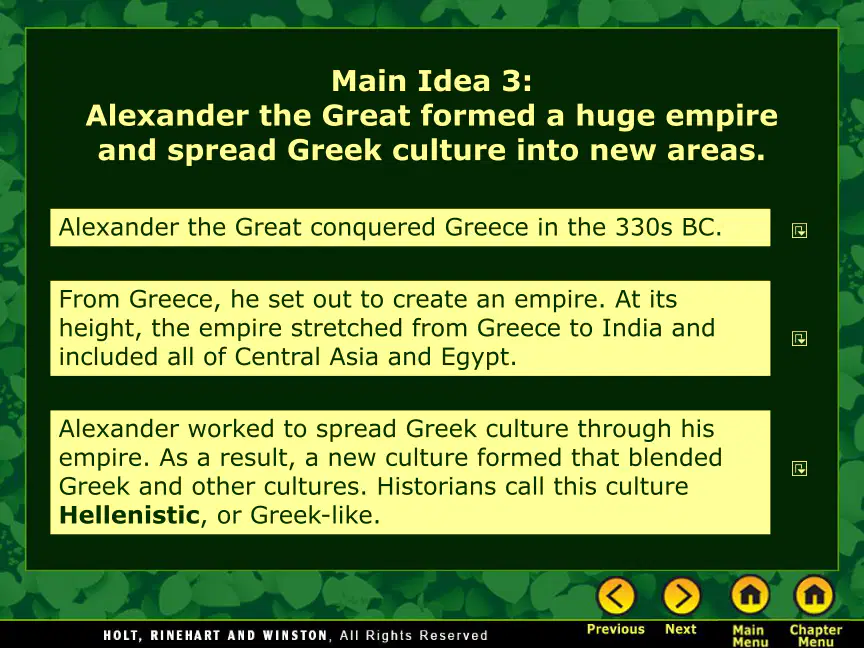
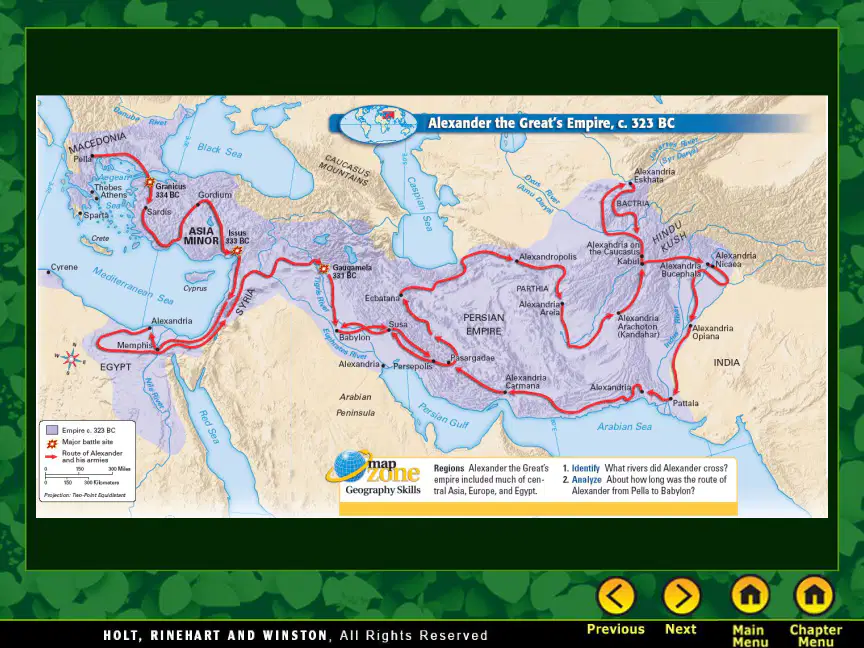
What is the term historians use to describe the culture that blended Greek and other cultures during Alexander the Great's empire?
Hellenistic
Classical
Byzantine
Roman
17
18
Multiple Choice
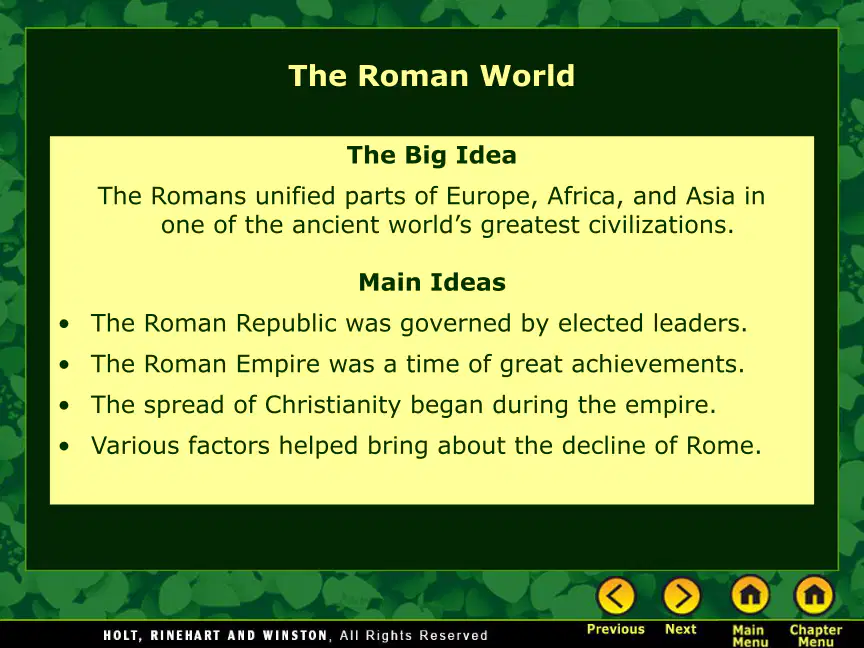
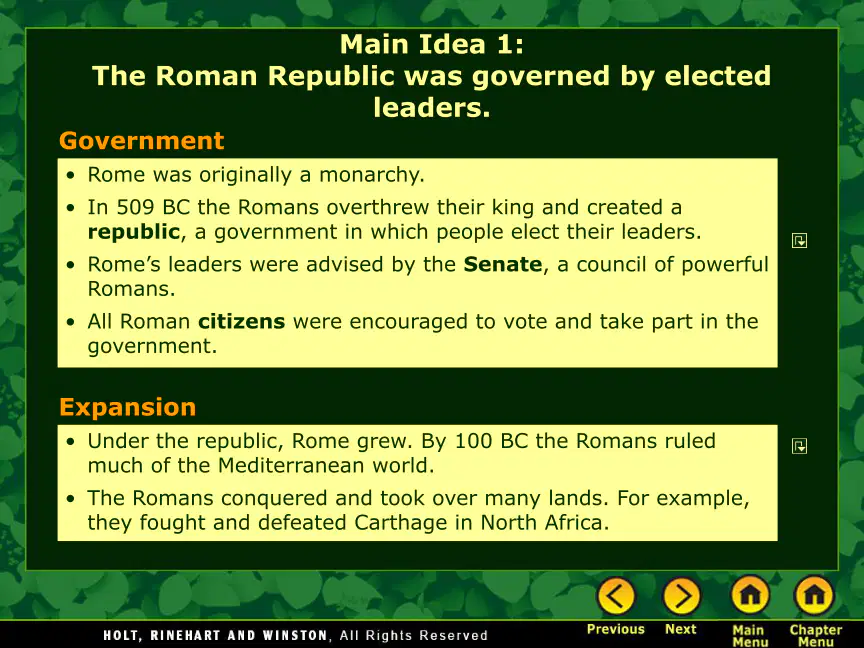
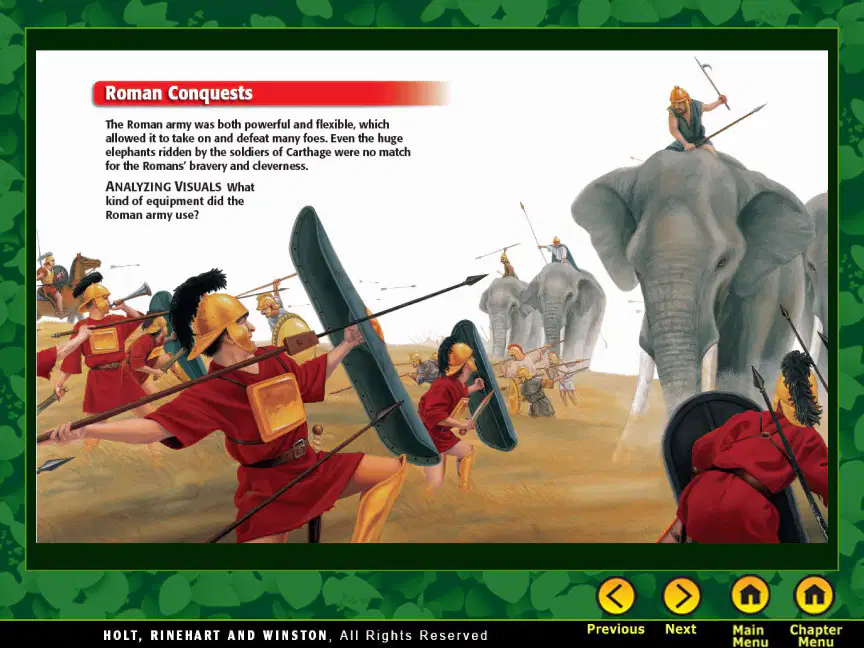
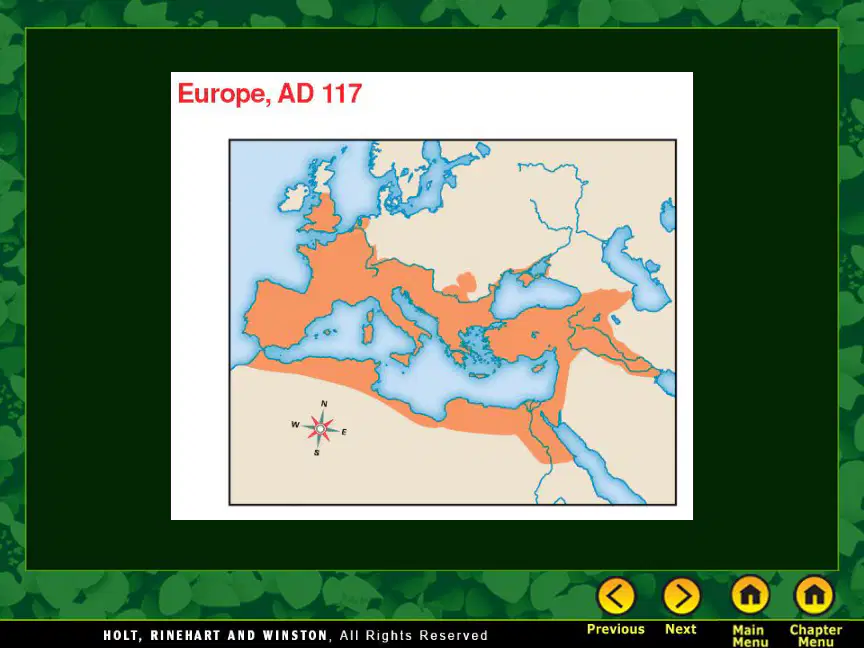
Which of the following was NOT a main idea about the Roman World?
The Roman Republic was governed by elected leaders.
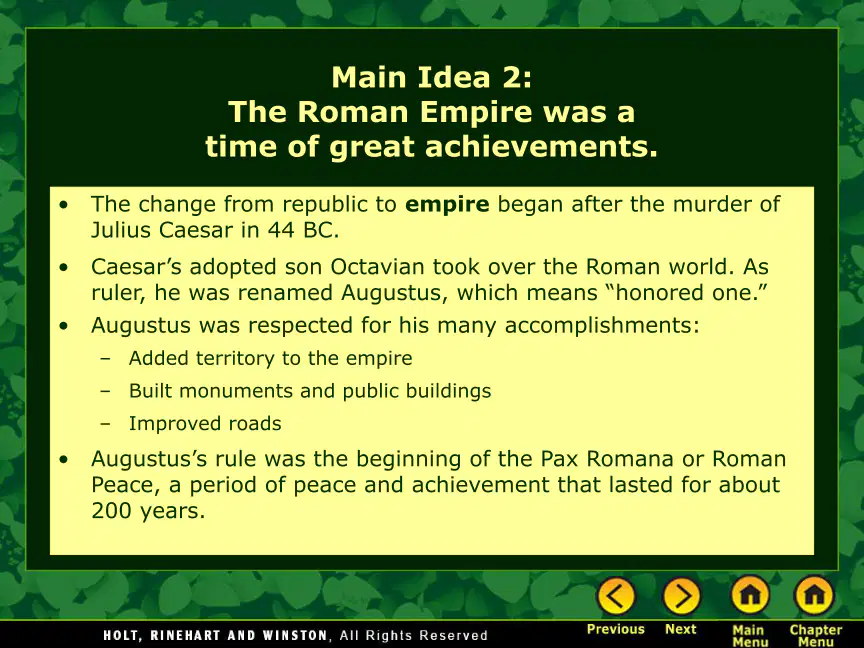
The Roman Empire was a time of great achievements.
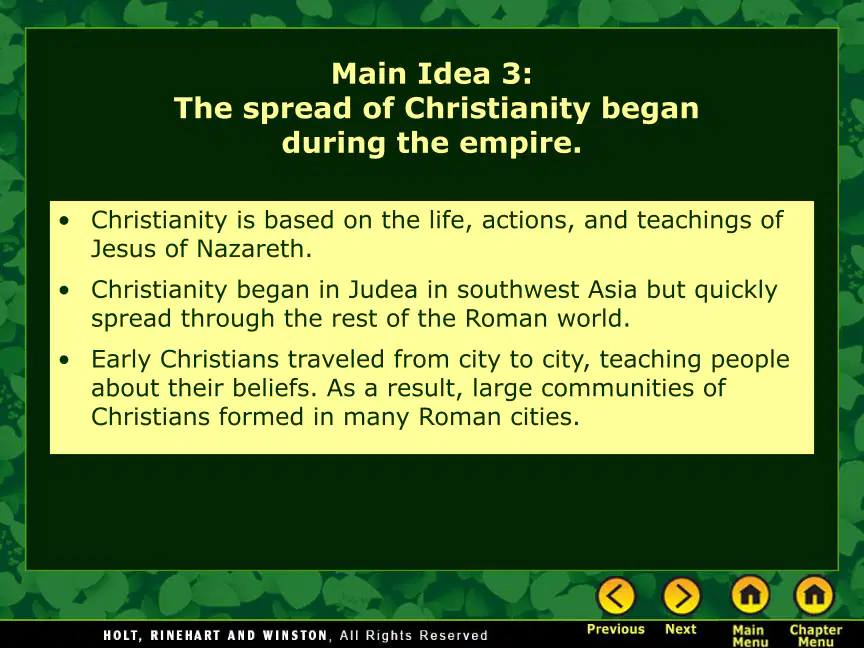
The spread of Christianity began during the empire.
The Romans invented democracy.
19
20
Open Ended
Explain how the Roman Republic's government differed from its earlier monarchy.
21
22
Multiple Select
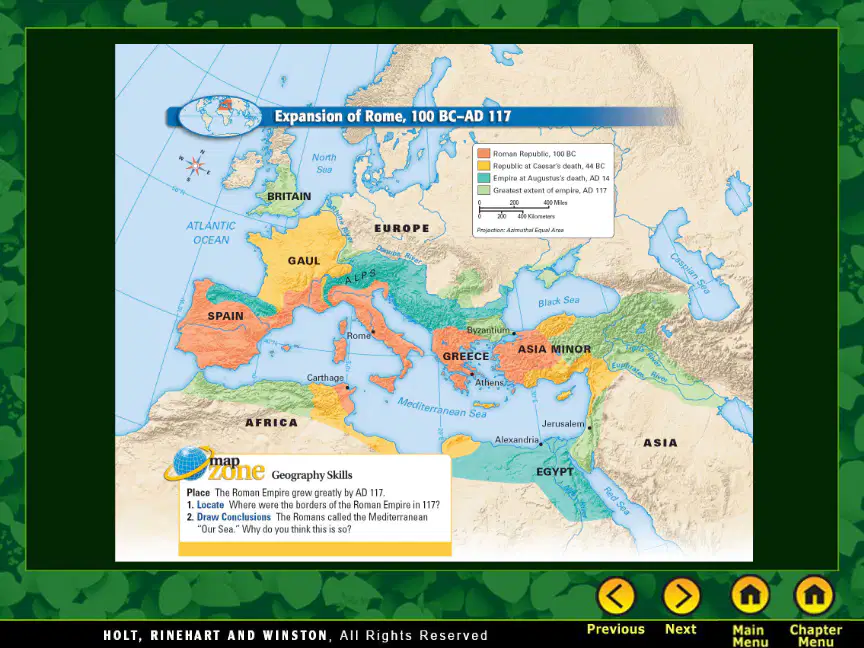
Which of the following were accomplishments of Augustus during the Roman Empire?
Added territory to the empire
Built monuments and public buildings
Improved roads
Invented aqueducts
23

24
Fill in the Blanks
Roman aqueducts were used to carry
Type answer...
25
26
Open Ended
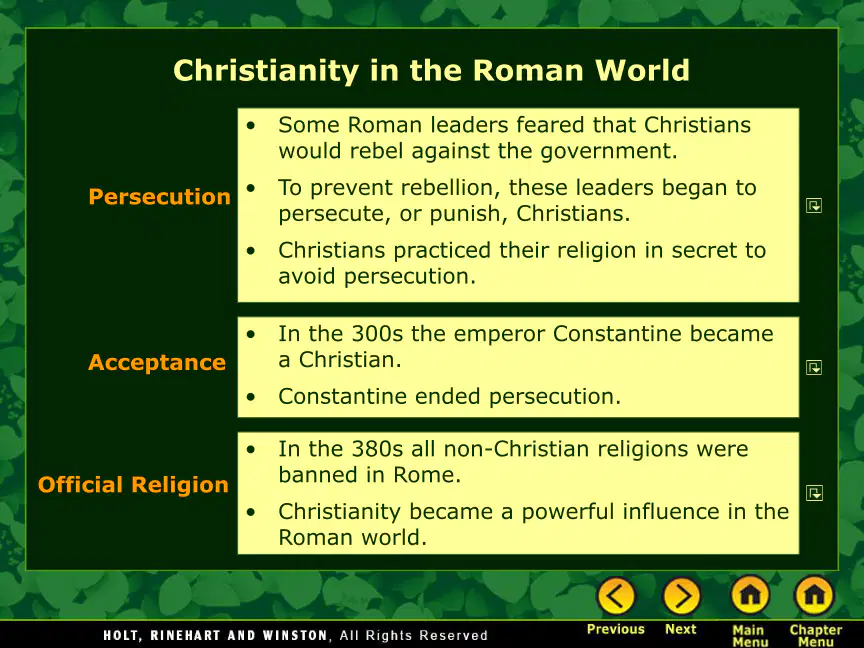
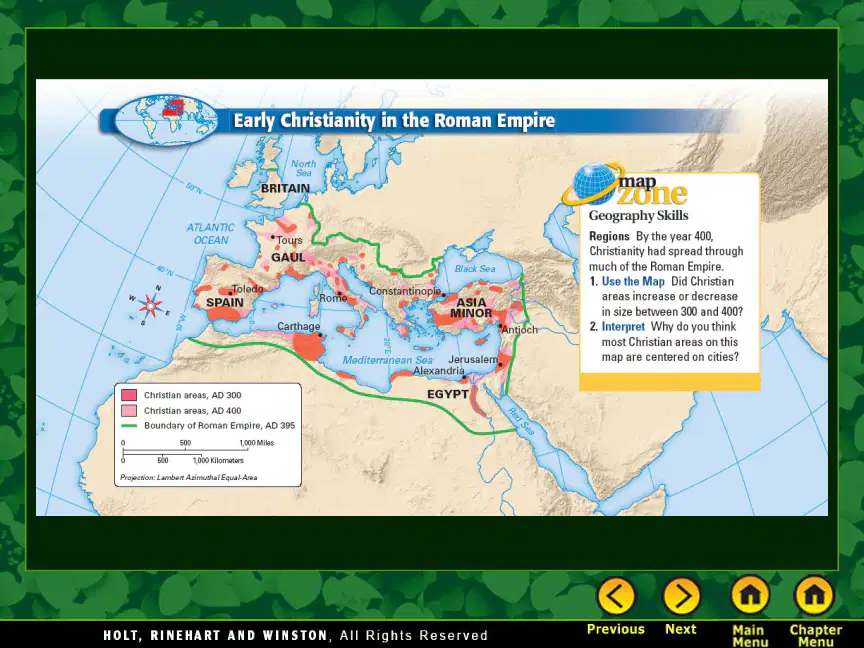
How did Christianity spread throughout the Roman Empire?
27
28
29
Multiple Choice
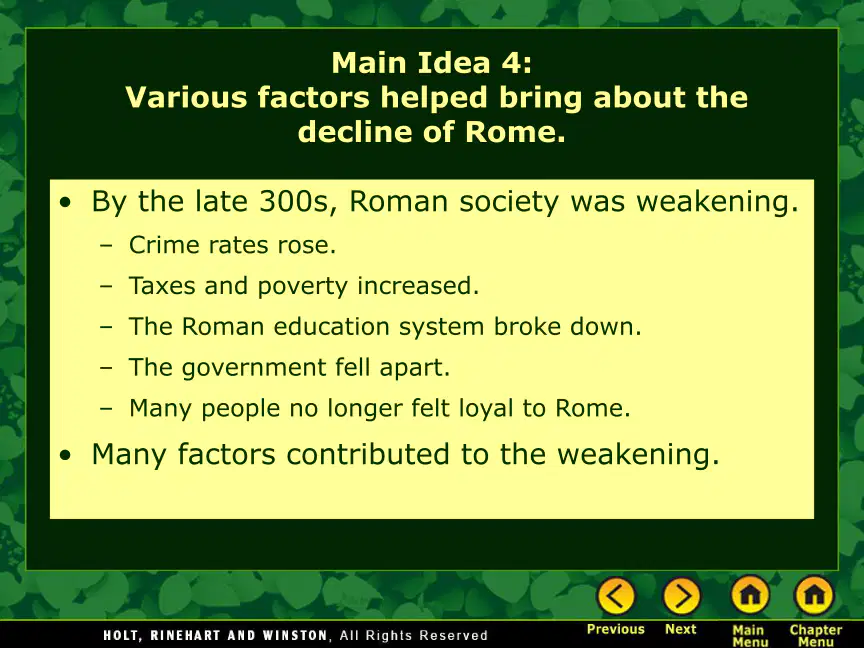
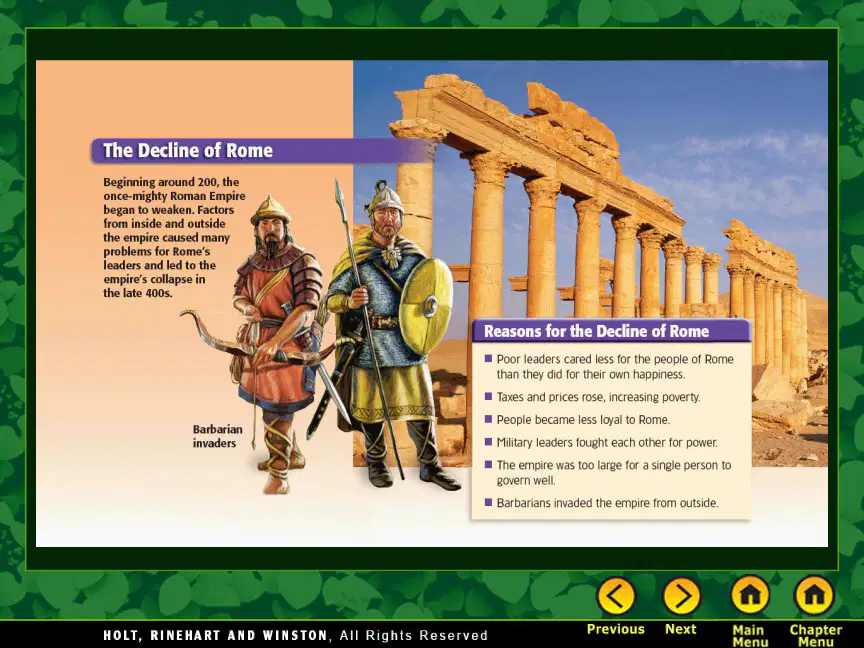
Which of the following was NOT a factor that contributed to the weakening of Roman society by the late 300s?
Crime rates rose
Taxes and poverty increased
The Roman education system improved
The government fell apart
30
31
32
33
34
Fill in the Blanks
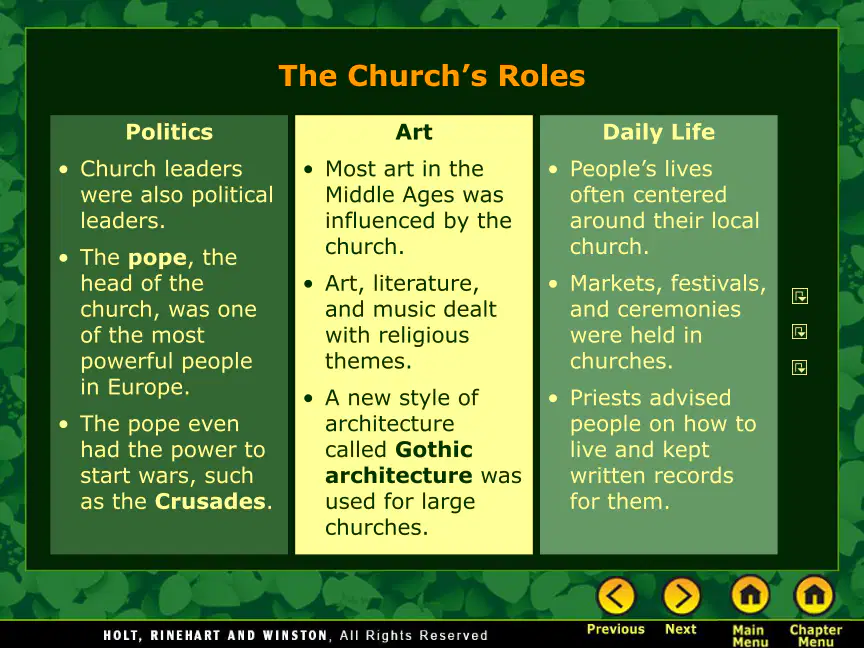
The pope was one of the most powerful people in Europe during the
Type answer...
35
Multiple Select
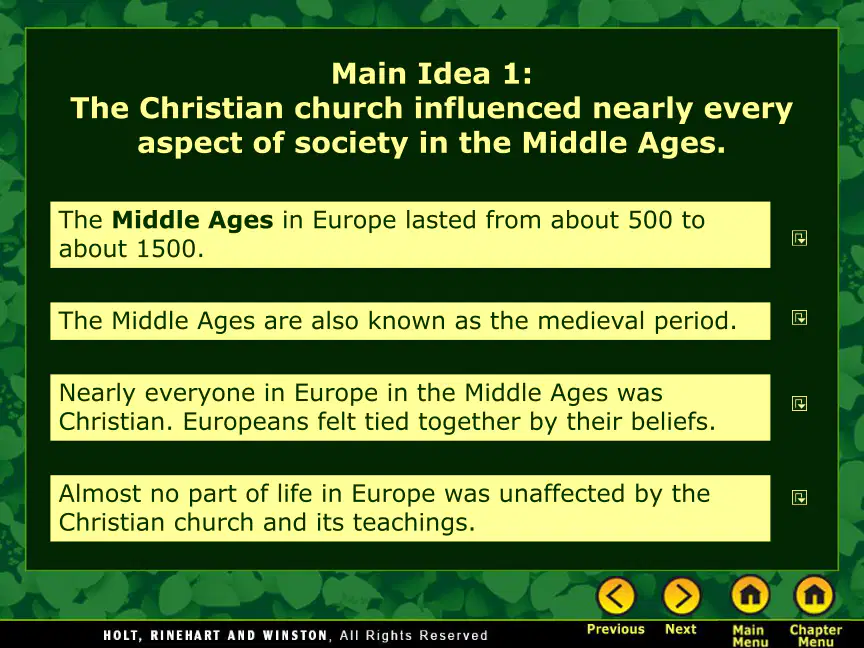
Select all the correct statements about the influence of the Christian church in the Middle Ages.
Most people in Europe were Christian during the Middle Ages.
The Christian church influenced politics, art, and daily life.
The Middle Ages lasted from about 1000 to 1500.
No part of life in Europe was unaffected by the Christian church.
36
37
Multiple Choice
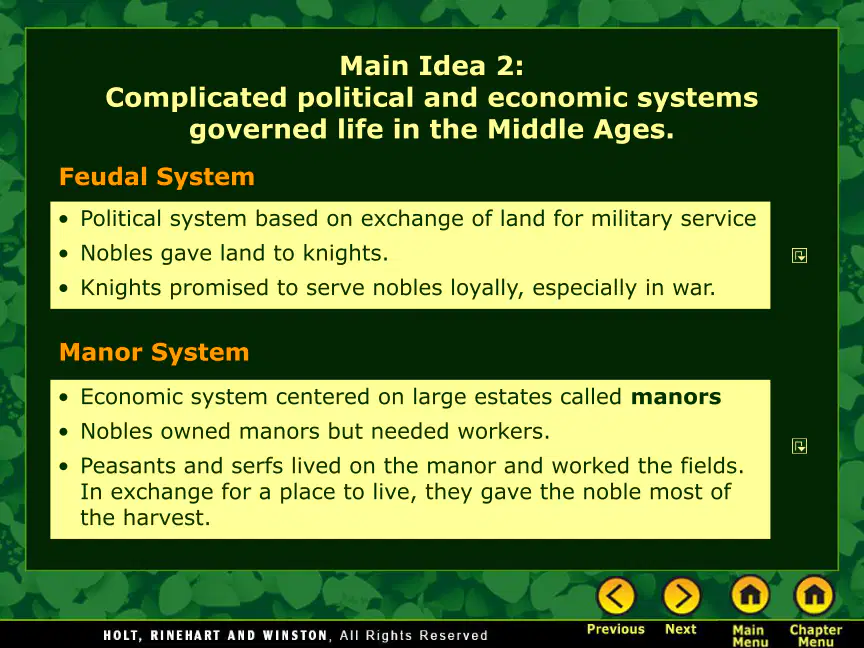
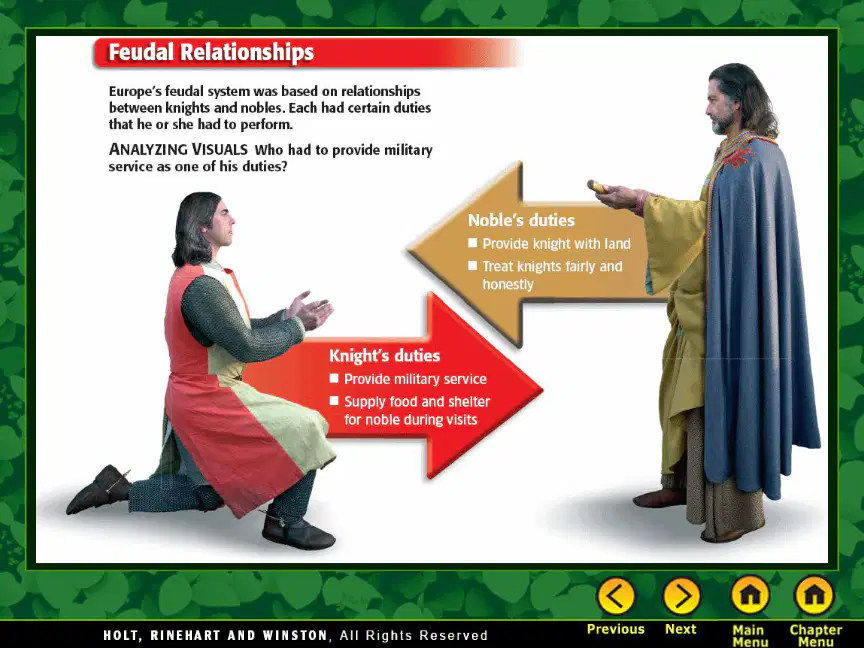
Which of the following best describes the manor system in the Middle Ages?
A political system based on land exchange for military service
An economic system centered on large estates where peasants worked the land
A religious system led by the pope
A system where knights ruled over nobles
38
Open Ended
Compare the feudal and manor systems in terms of their roles in medieval society.
39
40
Multiple Choice
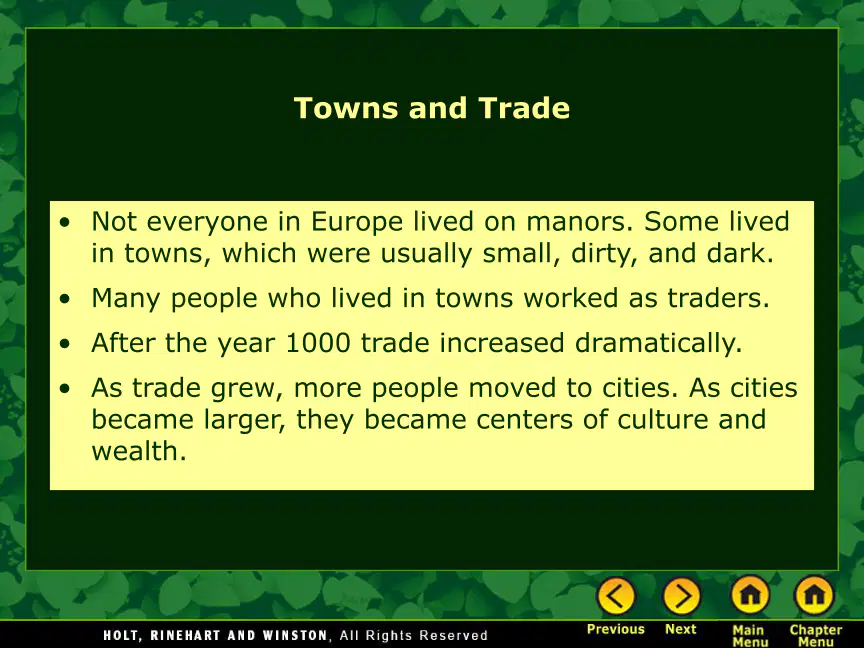
How did the growth of trade after the year 1000 impact European towns and cities?
It caused towns to shrink and become less important.
It led to the decline of culture and wealth in cities.
It resulted in more people moving to cities, making them centers of culture and wealth.
It made people abandon towns for rural life.
41
42
Multiple Choice
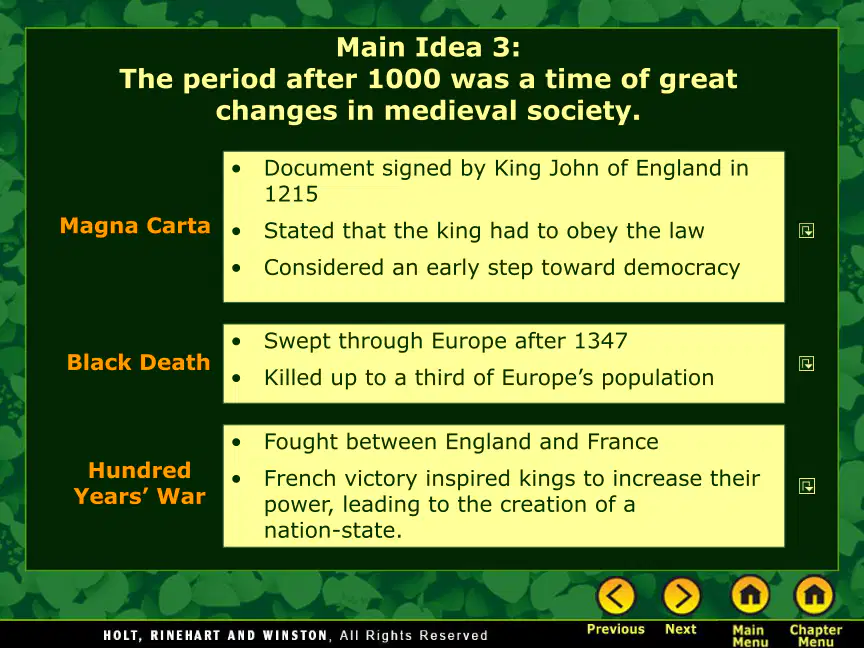
Which of the following events after the year 1000 contributed to significant changes in medieval society?
The signing of the Magna Carta
The spread of the Black Death
The Hundred Years’ War
All of the above
43
44
Fill in the Blanks
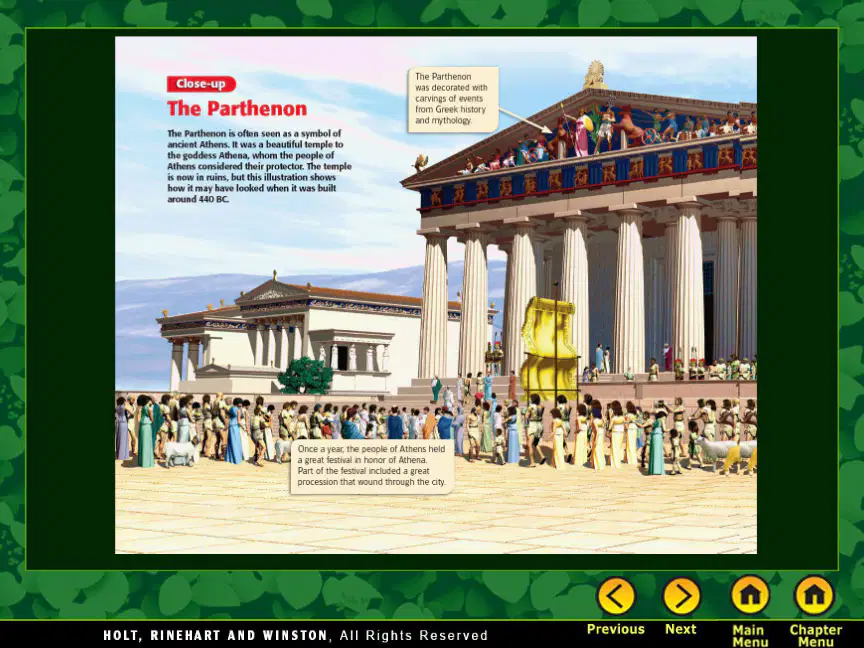
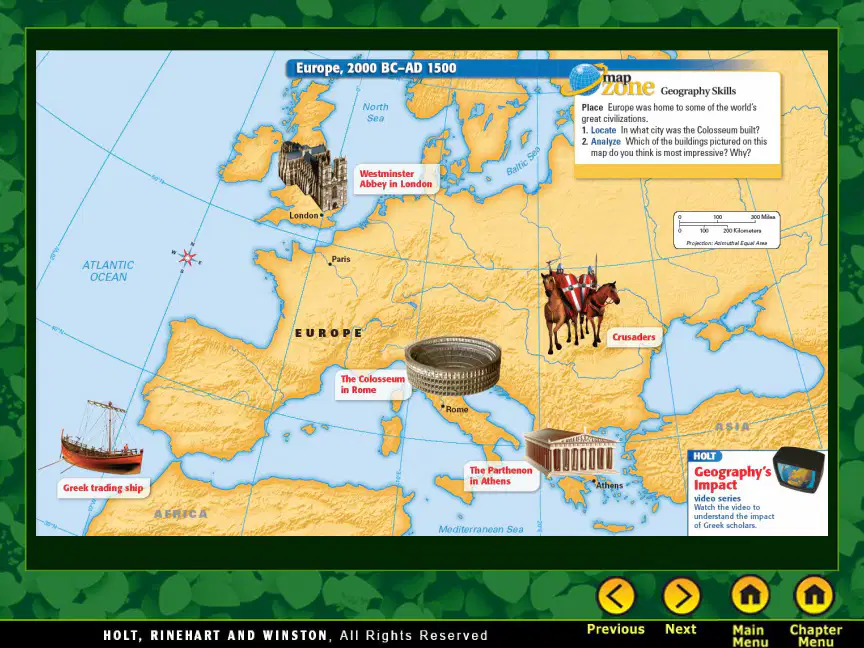
The Parthenon was dedicated to the goddess
Type answer...
45
46
47
Open Ended
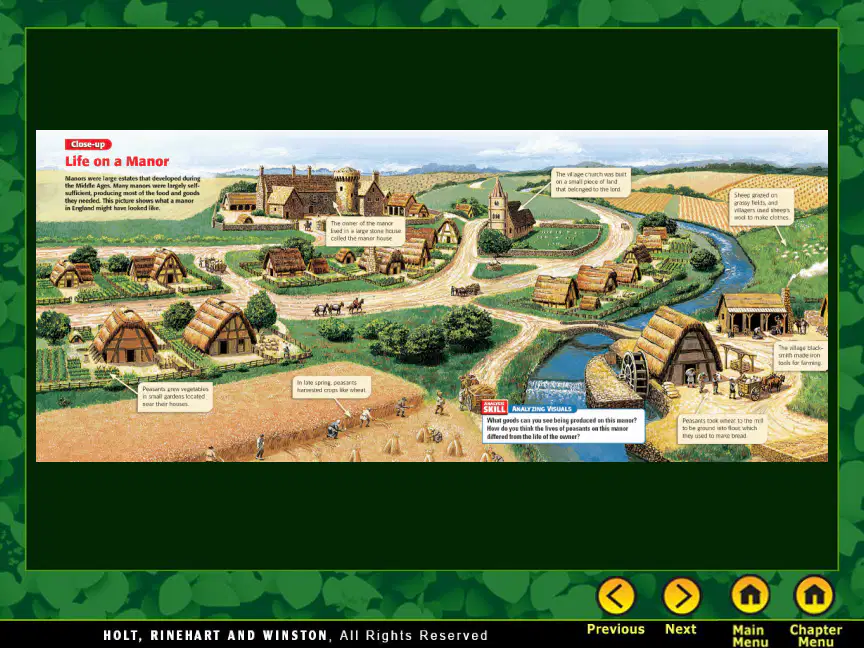
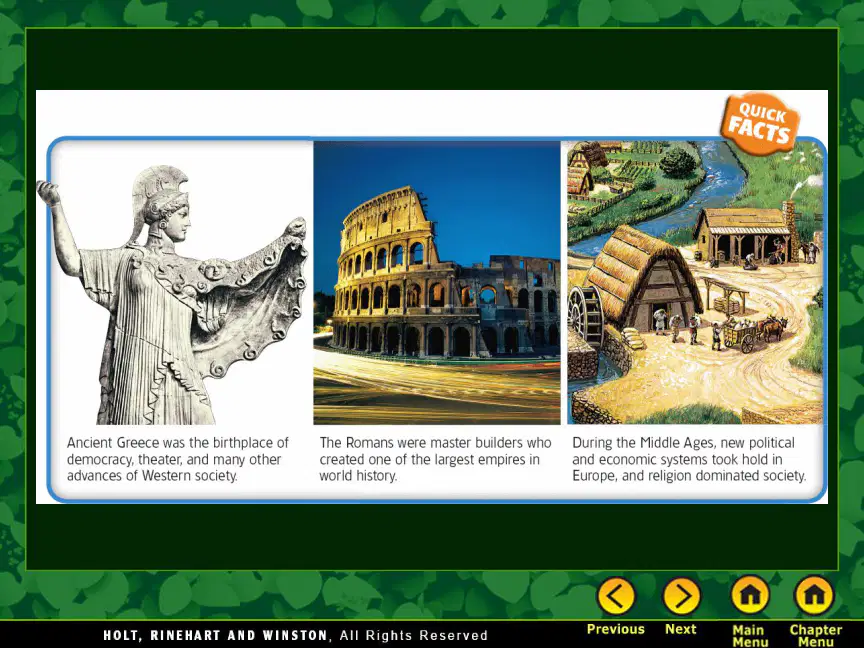
What goods can you see being produced on this manor? How do you think the lives of peasants on this manor differed from the life of the owner?
48
49
Multiple Select
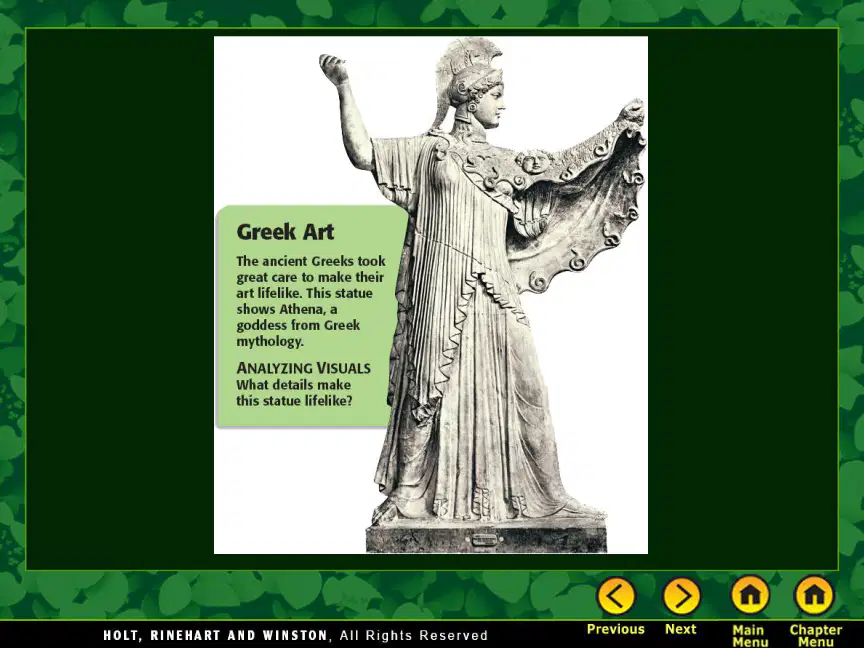
Which of the following are characteristics of Greek art as shown in the statue of Athena?
Lifelike appearance
Use of mythology
Abstract shapes
Attention to detail
50
51
52
53
54
55
56
57
58
59

60
61
62
63
Open Ended
What is one question you still have about the early history of Europe or Ancient Greece after this lesson?
64
Multiple Choice
How did the Greeks spread their culture throughout Europe and Asia?
Through colonization, trade, and conquest
By isolating themselves from other cultures
By focusing only on agriculture
Through peaceful negotiations only
Show answer
Auto Play
Slide 1 / 64
SLIDE
Similar Resources on Wayground

60 questions
Comparative ADJs
Presentation
•
6th - 9th Grade
56 questions
Poetic Elements Part 1
Presentation
•
6th - 8th Grade
60 questions
Copy of G6ENG_SD_11.20_6.5F_6.6C_6.2C_6.10DViii_6.6F
Presentation
•
6th - 8th Grade
60 questions
G8: Europe
Presentation
•
6th - 8th Grade
59 questions
New World 1 Unit 3
Presentation
•
6th - 8th Grade
57 questions
Intro to United States History Trivia
Presentation
•
6th - 8th Grade
59 questions
Latin America: Poverty, War on Drugs, Migration Slides
Presentation
•
6th - 8th Grade
61 questions
Rock Cycle (lesson)
Presentation
•
6th - 8th Grade
Popular Resources on Wayground
10 questions
Safety Day 2026 – Student Review

Quiz
•
9th Grade
21 questions
Continents and Oceans
Quiz
•
6th Grade
20 questions
Parts of Speech
Quiz
•
5th Grade
16 questions
Subject & Predicate
Quiz
•
5th Grade
25 questions
Multiplication Facts
Quiz
•
5th Grade
12 questions
Map Skills
Quiz
•
3rd Grade
22 questions
Continents and Oceans
Quiz
•
5th Grade
15 questions
Rounding Decimals
Quiz
•
5th Grade
Discover more resources for English
20 questions
Context Clues
Quiz
•
6th Grade
10 questions
Inference and Textual Evidence
Quiz
•
7th Grade
25 questions
Making Inferences
Quiz
•
6th - 8th Grade
20 questions
Figurative Language Review
Quiz
•
6th Grade
15 questions
Plot Elements
Quiz
•
6th Grade
10 questions
Figurative Language
Quiz
•
7th Grade
20 questions
Figurative Language Review
Quiz
•
8th Grade
10 questions
Main Idea and Supporting Details
Quiz
•
3rd - 6th Grade