
DNA Structure
Other Sciences
8th Grade
Used 8K+ times


AI Actions
Add similar questions
Adjust reading levels
Convert to real-world scenario
Translate activity
More...
About
This quiz comprehensively assesses DNA structure knowledge appropriate for 8th-grade life science students. The questions systematically cover the fundamental components of DNA, including nucleotide structure (phosphate group, five-carbon deoxyribose sugar, and nitrogenous bases), complementary base pairing rules (A-T and G-C), and the double helix model. Students must demonstrate understanding of DNA's molecular architecture, from identifying monomers and polymers to recognizing the backbone structure and hydrogen bonding between base pairs. The quiz requires students to apply their knowledge of cellular biology by connecting DNA's location in the nucleus to its function as the genetic blueprint for protein synthesis. Advanced concepts include distinguishing between purines and pyrimidines, understanding the relationship between DNA sequence and genetic information, and applying base-pairing rules to determine complementary strands. This quiz was created by a classroom teacher who designed it for students studying DNA structure in 8th-grade life science. This assessment serves multiple instructional purposes, functioning effectively as a comprehensive review before a unit test, homework assignment to reinforce classroom learning, or formative assessment to gauge student understanding of molecular biology concepts. Teachers can use individual questions as warm-up activities or bell ringers, while the complete quiz provides thorough preparation for standardized assessments. The variety of question formats—from basic recall to application problems—allows educators to differentiate instruction and identify specific areas where students need additional support. This quiz aligns with NGSS standard MS-LS3-1 (Develop and use a model to describe why structural changes to genes may affect proteins) and supports the foundational understanding necessary for high school genetics and molecular biology courses.
Content View
Student View
29 questions
Show all answers
1.
MULTIPLE CHOICE QUESTION
30 sec • 1 pt
What two parts of a nucleotide do not change throughout the structure of DNA?
2.
MULTIPLE CHOICE QUESTION
30 sec • 1 pt
Which shows the correct complementary base pairing for DNA?
3.
MULTIPLE CHOICE QUESTION
30 sec • 1 pt
A monomer of DNA is called a(n)
4.
MULTIPLE CHOICE QUESTION
30 sec • 1 pt
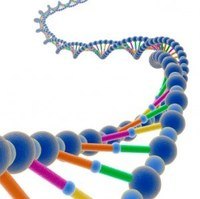
Which of the following best describes a DNA molecule?
5.
MULTIPLE CHOICE QUESTION
1 min • 1 pt
Which of the following units are repeatedly joined together to form a strand of DNA?
6.
MULTIPLE CHOICE QUESTION
30 sec • 1 pt

In a molecule of double-stranded DNA, the amount of Adenine present is always equal to the amount of
7.
MULTIPLE CHOICE QUESTION
1 min • 1 pt
Adenine bonds with ______________.

Access all questions and much more by creating a free account
Create resources
Host any resource
Get auto-graded reports

Continue with Google

Continue with Email

Continue with Microsoft
or continue with

%20(1).png)
Apple

Others
Already have an account?


