
AP - Unit 3: Metabolism, Energy and Enzymes
Authored by Christopher Freidhoff
Biology
11th - 12th Grade
NGSS covered
Used 713+ times


AI Actions
Add similar questions
Adjust reading levels
Convert to real-world scenario
Translate activity
More...
About
This quiz covers enzyme structure and function within the broader context of cellular metabolism and bioenergetics, appropriate for grades 11-12 in Advanced Placement Biology. The questions systematically assess students' understanding of enzyme nomenclature, molecular composition, and the critical relationship between protein structure and function. Students must demonstrate mastery of enzyme kinetics, including how environmental factors like temperature and pH affect enzymatic activity through denaturation and optimal conditions. The quiz extensively covers enzyme regulation mechanisms, requiring students to differentiate between competitive inhibition, non-competitive inhibition, allosteric regulation, and feedback inhibition. Additionally, students need solid comprehension of thermodynamic principles, distinguishing between endergonic and exergonic reactions, understanding activation energy, and recognizing how enzymes catalyze reactions by lowering energy barriers without being consumed in the process. Created by Christopher Freidhoff, a Biology teacher in the US who teaches grades 11 and 12. This comprehensive assessment serves as an excellent tool for formative evaluation during a metabolism unit, allowing teachers to gauge student understanding before moving to more complex metabolic pathways. The quiz works effectively as a review session before unit exams, as homework to reinforce classroom instruction, or as a warm-up activity to activate prior knowledge before introducing new concepts like glycolysis or cellular respiration. Teachers can use individual question clusters to focus on specific areas where students need additional support, such as enzyme inhibition mechanisms or thermodynamic principles. The varied question formats, including diagram interpretation and conceptual application, align with AP Biology standards and prepare students for the analytical thinking required on the AP exam, particularly supporting Learning Objectives 2.1-2.5 regarding enzyme function and metabolic processes.
Content View
Student View
38 questions
Show all answers
1.
MULTIPLE CHOICE QUESTION
1 min • 1 pt
What 3 letters do enzymes typically end in?
2.
MULTIPLE CHOICE QUESTION
30 sec • 1 pt
Enzymes are
Protiens
Lipids
Carbohydrates
DNA
Tags
NGSS.HS-LS1-6
3.
MULTIPLE CHOICE QUESTION
30 sec • 1 pt
In an Exergonic reaction, heat is ________.
Tags
NGSS.HS-PS1-4
4.
MULTIPLE CHOICE QUESTION
30 sec • 1 pt

Which of the following conclusions can be drawn from this graph?
5.
MULTIPLE CHOICE QUESTION
45 sec • 1 pt
On an enzyme, the site that attaches to a substrate
Polypeptide
Base
Substrate
Active site
6.
MULTIPLE CHOICE QUESTION
30 sec • 1 pt

Is this reaction endergonic or exergonic?
Tags
NGSS.HS-PS1-4
7.
MULTIPLE CHOICE QUESTION
30 sec • 1 pt

Is this reaction endergonic or exergonic?
Tags
NGSS.HS-PS1-4
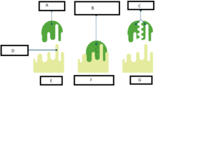
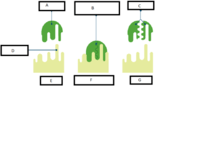

Access all questions and much more by creating a free account
Create resources
Host any resource
Get auto-graded reports

Continue with Google

Continue with Email

Continue with Microsoft
or continue with

%20(1).png)
Apple

Others
By signing up, you agree to our Terms of Service & Privacy Policy
Already have an account?


