
Organization of the Periodic Table
9th Grade
•33 Qs

Similar activities
LT#1 Concept Check_Matter
8th - 12th Grade
•29 Qs
Periodic Table Trends Three Elements
9th - 12th Grade
•28 Qs
UNIT 3-4 Test: Chemistry
8th - 9th Grade
•38 Qs
Objective sem 2
5th - 11th Grade
•30 Qs
Bonding
9th - 12th Grade
•29 Qs
Unit 1: Matter & Its Interactions (Chemistry)
6th - 9th Grade
•30 Qs
Chemical Bonds Pt 1
8th - 12th Grade
•28 Qs
13-09-2021 Year 10 Chemistry Quiz 1 C1- Atomic Structure Pt1
8th - 10th Grade
•30 Qs

Organization of the Periodic Table

Quiz
•
Chemistry
•
9th Grade
•
Practice Problem
•
Medium
+1
Standards-aligned

Chelsa Burch
Used 237+ times
FREE Resource
About this resource
This quiz comprehensively covers the organization of the periodic table, making it ideal for 9th-grade chemistry students who are building their foundational understanding of atomic structure and elemental properties. The questions assess students' knowledge of periodic table terminology (periods, groups, families), classification of elements into metals, nonmetals, and metalloids, and the characteristic properties of major element families including alkali metals, alkaline earth metals, halogens, noble gases, and transition metals. Students need to understand the relationship between an element's position on the periodic table and its chemical and physical properties, recognize specific elements and their locations, and grasp the historical development of periodic organization from Mendeleev's mass-based arrangement to the modern atomic number system. The quiz requires students to apply pattern recognition skills, memorize key element classifications, and understand the connection between electron configuration and chemical behavior across different regions of the periodic table. Created by Chelsa Burch, a Chemistry teacher in US who teaches grade 9. This quiz serves as an excellent tool for formative assessment, homework assignments, or review sessions as students master the fundamental concepts of periodic trends and elemental classification. Teachers can use this as a warm-up activity to gauge student understanding before diving deeper into electron configuration and bonding concepts, or as practice material to reinforce learning after initial instruction on periodic table organization. The variety of question formats, including multiple-select questions, helps students demonstrate different levels of understanding while building confidence with both basic terminology and more complex pattern recognition skills. This assessment aligns with NGSS HS-PS1-1 (using the periodic table as a model to predict properties of elements) and supports the development of crosscutting concepts related to patterns in the natural world that students will apply throughout their chemistry studies.
See more

Enhance your content in a minute
33 questions
Show all answers
1.
MULTIPLE CHOICE QUESTION
30 sec • 12 pts
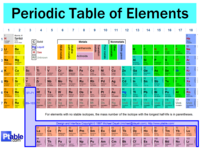
The horizontal row on the periodic table is called a
Tags
NGSS.HS-PS1-1
2.
MULTIPLE CHOICE QUESTION
1 min • 12 pts
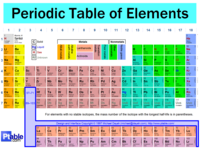
A vertical column is called...
Tags
NGSS.HS-PS1-1
NGSS.HS-PS1-2
3.
MULTIPLE CHOICE QUESTION
30 sec • 12 pts

Most of the elements on the periodic table are classified as _____.
Tags
NGSS.HS-PS1-1
4.
MULTIPLE CHOICE QUESTION
30 sec • 12 pts

This class of elements are sometimes called "semiconductors."
Tags
NGSS.HS-PS1-1
5.
MULTIPLE CHOICE QUESTION
1 min • 1 pt
Elements which are shiny, conduct electricity and heat are called
Tags
NGSS.HS-PS1-1
6.
MULTIPLE CHOICE QUESTION
1 min • 1 pt
Which group of the periodic table is composed of inert (not reactive) gases?
Tags
NGSS.HS-PS1-1
7.
MULTIPLE SELECT QUESTION
1 min • 1 pt
Which elements are not metals? Select ALL that apply.
H
Ag
Al
B

Access all questions and much more by creating a free account
Create resources
Host any resource
Get auto-graded reports

Continue with Google

Continue with Email

Continue with Classlink

Continue with Clever
or continue with

Microsoft
%20(1).png)
Apple

Others
Already have an account?
Similar Resources on Wayground
31 questions
The History of Atomic Structure
Quiz
•
8th - 12th Grade
28 questions
Isotopes/Atoms
Quiz
•
8th - 11th Grade
33 questions
Bohr Models and the Periodic Table Practice
Quiz
•
6th - 9th Grade
37 questions
1WZ - Chem Review
Quiz
•
9th Grade
34 questions
Electron Configurations
Quiz
•
9th Grade - University
35 questions
Naming and Writing Compounds
Quiz
•
8th - 12th Grade
30 questions
Chemistry Exam Review
Quiz
•
9th Grade - University
30 questions
Basic Chemistry Review
Quiz
•
9th - 12th Grade
Popular Resources on Wayground
7 questions
History of Valentine's Day

Interactive video
•
4th Grade
15 questions
Fractions on a Number Line
Quiz
•
3rd Grade
20 questions
Equivalent Fractions
Quiz
•
3rd Grade
25 questions
Multiplication Facts
Quiz
•
5th Grade
22 questions
fractions
Quiz
•
3rd Grade
15 questions
Valentine's Day Trivia
Quiz
•
3rd Grade
20 questions
Main Idea and Details
Quiz
•
5th Grade
20 questions
Context Clues
Quiz
•
6th Grade
Discover more resources for Chemistry
20 questions
Types of Chemical Reactions
Quiz
•
9th - 12th Grade
10 questions
Formative 3BD: Ionic Bonds
Quiz
•
9th Grade
10 questions
Identifying types of reactions
Quiz
•
9th - 12th Grade
20 questions
electron configurations and orbital notation
Quiz
•
9th - 12th Grade
51 questions
Unit 5: Periodic Trends
Quiz
•
9th - 12th Grade
23 questions
Stoichiometry, Limiting/Excess Reactant, % Yield
Quiz
•
9th - 12th Grade
30 questions
Physical Science - U1 Quiz Review
Quiz
•
9th - 12th Grade
16 questions
Bohr Models
Quiz
•
9th - 11th Grade