
Protists, Plants, and Porifera
Authored by Sarah Femminella
Biology
9th - 12th Grade
NGSS covered
Used 29+ times


AI Actions
Add similar questions
Adjust reading levels
Convert to real-world scenario
Translate activity
More...
Content View
Student View
51 questions
Show all answers
1.
MULTIPLE CHOICE QUESTION
20 sec • 1 pt
What is the part of the sponge that allows water to enter?
2.
MULTIPLE CHOICE QUESTION
20 sec • 1 pt
Which part of the sponge body is a large opening at the top of the central cavity through which water leaves the sponge?
3.
MULTIPLE CHOICE QUESTION
45 sec • 1 pt
Sponges eat by
Tags
NGSS.MS-LS2-1
4.
MULTIPLE CHOICE QUESTION
30 sec • 1 pt
The ability of a sponge to regrow lost parts is called
5.
MULTIPLE CHOICE QUESTION
1 min • 1 pt
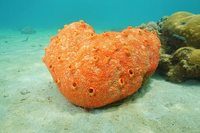
Because sponges cannot move around they are considered ______.
6.
MULTIPLE CHOICE QUESTION
1 min • 1 pt

Sponges feed by ______ particles out of the water column as it passes through their pores.
7.
MULTIPLE CHOICE QUESTION
45 sec • 1 pt

cells have sticky, funnel-shaped collar to collect food particles and a flagellum that creates a water current
Tags
NGSS.MS-LS1-2


Access all questions and much more by creating a free account
Create resources
Host any resource
Get auto-graded reports

Continue with Google

Continue with Email

Continue with Classlink

Continue with Clever
or continue with

Microsoft
%20(1).png)
Apple

Others
Already have an account?


