
Enlightenment and American Revolution
Authored by Steele Wilde
Geography
9th Grade
Used 68+ times


AI Actions
Add similar questions
Adjust reading levels
Convert to real-world scenario
Translate activity
More...
Content View
Student View
40 questions
Show all answers
1.
MULTIPLE CHOICE QUESTION
1 min • 1 pt

Enlightenment philosopher who did not agree with censorship.
Voltaire
Denis Diderot
Mary Wollstonecraft
Adam Smith
2.
MULTIPLE CHOICE QUESTION
30 sec • 1 pt

Enlightenment philosopher who believed men and women should be equal
Voltaire
Denis Diderot
Mary Wollstonecraft
Adam Smith
3.
MULTIPLE CHOICE QUESTION
30 sec • 1 pt

Enlightenment philosopher who edited the Encyclopedia to help educate the public.
Voltaire
Denis Diderot
Mary Wollstonecraft
Adam Smith
4.
MULTIPLE CHOICE QUESTION
45 sec • 1 pt
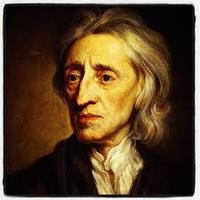
Enlightenment philosopher who believed people had natural rights of life, liberty, and property.
John Locke
Montesquieu
Rousseau
Voltaire
5.
MULTIPLE CHOICE QUESTION
1 min • 1 pt

Enlightenment philosopher who believed to limit government, that it should be divided into separate branches that shared power.
John Locke
Montesquieu
Rousseau
Voltaire
6.
MULTIPLE CHOICE QUESTION
1 min • 1 pt
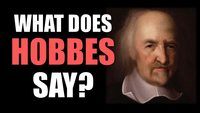
How did Hobbes view human nature?
We are inquisitive and industrious.
We are naturally selfish and quick to fight.
We are naturally altruistic and usually willing to compromise.
We are born a 'blank slate', and we develop differently according to our life's experiences..
7.
MULTIPLE CHOICE QUESTION
1 min • 1 pt

According to John Locke, why are governments created?
God gives monarchs a divine right to rule over their people
People are naturally selfish and need a strong ruler to create order
People set up governments to protect their lives and property
Civil government must be established to offset the power of the church
Access all questions and much more by creating a free account
Create resources
Host any resource
Get auto-graded reports

Continue with Google

Continue with Email

Continue with Microsoft
or continue with

%20(1).png)
Apple

Others
By signing up, you agree to our Terms of Service & Privacy Policy
Already have an account?


