
Practice Test: Atomic Structure
Authored by Tammy Campbell
Chemistry
9th Grade
NGSS covered
Used 835+ times


AI Actions
Add similar questions
Adjust reading levels
Convert to real-world scenario
Translate activity
More...
About
This quiz comprehensively covers atomic structure, the foundational topic in high school chemistry typically taught at the 9th grade level. Students demonstrate their understanding of subatomic particles (protons, neutrons, and electrons), their locations within the atom, and their contributions to atomic properties. The questions assess critical concepts including atomic number, mass number, isotopes, valence electrons, and the relationship between protons and element identity. Students must interpret atomic diagrams, Bohr models, and periodic table information while calculating neutrons from mass and atomic numbers. The quiz also integrates the historical development of atomic theory, requiring knowledge of key scientists like Democritus, Dalton, Thomson, Rutherford, and Bohr, along with their respective atomic models. Students need strong mathematical reasoning skills to solve problems involving subatomic particle calculations and must understand the fundamental principle that atomic number defines an element's identity. Created by Tammy Campbell, a Chemistry teacher in US who teaches grade 9. This practice test serves as an excellent comprehensive review tool that can be implemented as a unit assessment, homework assignment, or formative evaluation before a major exam on atomic structure. The quiz effectively reinforces laboratory observations and textbook learning through varied question formats that require both memorization of key facts and application of mathematical problem-solving skills. Teachers can use this as a warm-up activity by selecting specific question sets, or deploy the entire quiz for thorough preparation before state assessments. The blend of conceptual understanding questions with calculation-based problems makes it particularly valuable for identifying student misconceptions about atomic composition and ensuring mastery of electron configuration basics. This assessment aligns with NGSS HS-PS1-1 (atomic structure and periodic trends) and supports Common Core mathematical practices in scientific contexts.
Content View
Student View
41 questions
Show all answers
1.
MULTIPLE CHOICE QUESTION
1 min • 1 pt
What subatomic particles would you find in the nucleus of an atom?
Tags
NGSS.MS-PS1-1
2.
MULTIPLE CHOICE QUESTION
1 min • 1 pt
Which subatomic particles contribute the most to the mass of an atom?
3.
MULTIPLE CHOICE QUESTION
20 sec • 1 pt
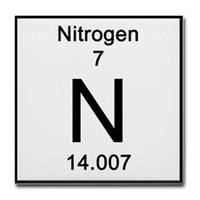
What is the number of protons that the element in this image contain?
Tags
NGSS.MS-PS1-1
4.
MULTIPLE CHOICE QUESTION
20 sec • 1 pt
If an atom has 12 positively charged subatomic particles, which of the following must it also have to be considered a neutral atom?
Tags
NGSS.MS-PS1-1
5.
MULTIPLE CHOICE QUESTION
1 min • 12 pts
An atom has 10 protons, 15 neutrons and 10 electrons what is its mass number.
Tags
NGSS.MS-PS1-1
6.
MULTIPLE CHOICE QUESTION
45 sec • 1 pt
An element with a mass number of 11 and an atomic number of 5 has how many neutrons?
Tags
NGSS.MS-PS1-1
7.
MULTIPLE CHOICE QUESTION
1 min • 12 pts
The particles of the atom you can find by knowing the atomic number.
Tags
NGSS.MS-PS1-1


Access all questions and much more by creating a free account
Create resources
Host any resource
Get auto-graded reports

Continue with Google

Continue with Email

Continue with Microsoft
or continue with

%20(1).png)
Apple

Others
By signing up, you agree to our Terms of Service & Privacy Policy
Already have an account?


