
What caused this? Landforms Quiz
Authored by Celia Hernandez
Science
6th Grade
NGSS covered
Used 18+ times


AI Actions
Add similar questions
Adjust reading levels
Convert to real-world scenario
Translate activity
More...
Content View
Student View
14 questions
Show all answers
1.
MULTIPLE CHOICE QUESTION
1 min • 1 pt
The natural chemical or physical processes that breaks down rock on Earth's surface.
Tags
NGSS.MS-ESS2-2
2.
MULTIPLE CHOICE QUESTION
30 sec • 1 pt
The process by which water, ice, wind or gravity moves weathered rock and soil.
weathering
erosion
deposition
dumptruck
3.
MULTIPLE CHOICE QUESTION
1 min • 1 pt
This type of weathering occurs when rock is physically broken down into smaller pieces of rock.
Tags
NGSS.MS-ESS2-2
4.
MULTIPLE CHOICE QUESTION
1 min • 1 pt

These rocks were made smooth by wind blowing smaller rock particles across their surface. This is an example of:
Tags
NGSS.MS-ESS2-2
5.
MULTIPLE CHOICE QUESTION
1 min • 1 pt

These rocks were broken apart from the continuous freeze/thaw of water in the cracks of the rocks. This is an example of:
Tags
NGSS.MS-ESS2-2
6.
MULTIPLE CHOICE QUESTION
1 min • 1 pt
How is mechanical weathering different from chemical weathering?
Tags
NGSS.MS-ESS2-2
NGSS.MS-PS1-2
7.
MULTIPLE CHOICE QUESTION
1 min • 1 pt
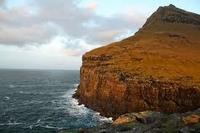
A cliff formed near the ocean. Which statement best describes how this cliff formed?
Tags
NGSS.MS-ESS2-2

Access all questions and much more by creating a free account
Create resources
Host any resource
Get auto-graded reports

Continue with Google

Continue with Email

Continue with Classlink

Continue with Clever
or continue with

Microsoft
%20(1).png)
Apple

Others
Already have an account?



