
S2-Test 4_Review for Scholars (Thermochemistry) At Home
Authored by Jimena Lopez
Chemistry
10th Grade
NGSS covered
Used 24+ times


AI Actions
Add similar questions
Adjust reading levels
Convert to real-world scenario
Translate activity
More...
Content View
Student View
45 questions
Show all answers
1.
MULTIPLE CHOICE QUESTION
5 mins • 1 pt
If 238 J of heat is absorbed by a sample of metal with a mass of 40.7 g, and it raises the temperature from 20.0°C to 32.4°C, what is the specific heat capacity of the metal? (show your work)
Tags
NGSS.HS-PS3-4
2.
MULTIPLE CHOICE QUESTION
5 mins • 1 pt
A liquid with a specific hear of 1.9 J/gC has 4750 J of energy added to it. The temperature changed from 20 degrees C to 30 degrees C, what is the mass of the liquid?
Tags
NGSS.HS-PS3-1
3.
MULTIPLE CHOICE QUESTION
3 mins • 1 pt
The specific heat(c) of copper is 0.39 J/g °C. What is the temperature change(∆t) when 100 Joules of heat(Q) is added to 20 grams?
Tags
NGSS.HS-PS3-4
NGSS.HS-PS3-1
4.
MULTIPLE CHOICE QUESTION
30 sec • 1 pt
Chemical reactions where both q and H are negative are considered
5.
MULTIPLE CHOICE QUESTION
30 sec • 1 pt
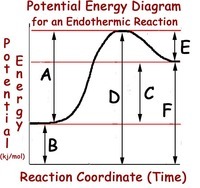
In an _________________ process, the system gains heat from its surrounding
Endothermic
Exothermic
6.
MULTIPLE CHOICE QUESTION
30 sec • 1 pt
In an _____________ process, the system releases heat to its surrounding
Exothermic
Endothemic
7.
MULTIPLE CHOICE QUESTION
5 mins • 1 pt

Thermal energy always moves:
Tags
NGSS.HS-PS3-4
NGSS.HS-PS3-2
Access all questions and much more by creating a free account
Create resources
Host any resource
Get auto-graded reports

Continue with Google

Continue with Email

Continue with Classlink

Continue with Clever
or continue with

Microsoft
%20(1).png)
Apple

Others
Already have an account?

