
Plate Tectonics and Plate Boundaries
Science
6th Grade
NGSS covered
Used 591+ times


AI Actions
Add similar questions
Adjust reading levels
Convert to real-world scenario
Translate activity
More...
About
This quiz comprehensively covers plate tectonics and plate boundaries, representing core earth science content typically taught at the 6th grade level. Students need to understand the three fundamental types of plate boundaries—convergent, divergent, and transform—and the specific geological processes and features associated with each. The questions assess knowledge of how convection currents in the mantle drive plate movement, the formation of oceanic trenches through subduction at convergent boundaries, and the creation of new crust at mid-ocean ridges during divergent processes. Students must also grasp the historical context of continental drift theory, including Alfred Wegener's contributions and the concept of Pangaea as the ancient supercontinent. The quiz requires understanding of different crust types (continental and oceanic), the Ring of Fire around the Pacific Plate, and the relationship between plate boundaries and geological events like earthquakes, volcanic activity, and mountain formation. This quiz was created by a classroom teacher who designed it for students studying 6th grade earth science. The assessment serves as an excellent tool for reviewing fundamental plate tectonic concepts after instruction, helping students consolidate their understanding of how Earth's dynamic processes shape our planet's surface. Teachers can effectively use this quiz as a formative assessment to gauge student comprehension before moving to more complex geological topics, as homework to reinforce classroom learning, or as a warm-up activity to activate prior knowledge before exploring related earth science phenomena. The questions align with middle school earth science standards, particularly those addressing plate tectonics theory, geological processes at plate boundaries, and the evidence supporting continental drift, making it valuable for standards-based instruction focused on understanding Earth's systems and processes.
Content View
Student View
20 questions
Show all answers
1.
MULTIPLE CHOICE QUESTION
20 sec • 1 pt
The type of plate boundary where two plates come together is a .....
2.
MULTIPLE CHOICE QUESTION
20 sec • 1 pt
Which of the following causes Earth's tectonic plates to move?
Tags
NGSS.MS-ESS2-3
3.
MULTIPLE CHOICE QUESTION
20 sec • 1 pt
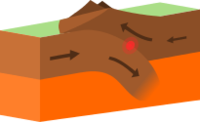
What type of plate boundary is this?
Tags
NGSS.MS-ESS2-3
4.
MULTIPLE CHOICE QUESTION
20 sec • 1 pt
A divergent boundary occurs when plates ....
5.
MULTIPLE CHOICE QUESTION
20 sec • 1 pt

What type of plate boundary is this?
6.
MULTIPLE CHOICE QUESTION
20 sec • 1 pt
Oceanic Trenches are formed by _______ plate boundaries
Tags
NGSS.MS-ESS2-3
7.
MULTIPLE CHOICE QUESTION
20 sec • 1 pt
Mountains are created when....
Tags
NGSS.MS-ESS2-3
NGSS.MS-ESS2-2
Access all questions and much more by creating a free account
Create resources
Host any resource
Get auto-graded reports

Continue with Google

Continue with Email

Continue with Microsoft
or continue with

%20(1).png)
Apple

Others
Already have an account?



