
Carbonyl Compounds Part 1
Authored by Reini Hj Bujang
Chemistry
12th Grade
NGSS covered
Used 48+ times


AI Actions
Add similar questions
Adjust reading levels
Convert to real-world scenario
Translate activity
More...
Content View
Student View
16 questions
Show all answers
1.
MULTIPLE CHOICE QUESTION
1 min • 1 pt
Which of the following is NOT a carbonyl compound?


2.
MULTIPLE CHOICE QUESTION
1 min • 1 pt
On heating compound X with acidified KMnO4, compound Y is obtained. Compound Y does not react with Fehling’s solution. X and Y are most likely to be,
Compound X & Compound Y
CH3COCH3 & CH3COOH
CH3CH(OH)CH3 & CH3COCH3
CH3CH2CH2OH & CH3COCH3
CH3CH2CH2OH & CH3CH2CHO
Tags
NGSS.HS-PS1-1
NGSS.HS-PS1-2
3.
MULTIPLE CHOICE QUESTION
1 min • 1 pt
Acetone reacts with HCN to form a cyanohydrin. It is an example of
Electrophilic addition
Electrophilic substituition
Nucleophilic addition
Nucleophilic substituition
4.
MULTIPLE CHOICE QUESTION
1 min • 1 pt
Which statement about butanone is correct?
Butanone reacts to form silver mirror with Tollen's Reagent
Butanone can be prepared by reduction of 1-butanol
Butanone forms brick red precipitate with Fehling’s solution
Butanone's C=O bond is polar with O δ–
5.
MULTIPLE CHOICE QUESTION
1 min • 1 pt
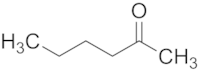
What is the name of this carbonyl compound?
6.
MULTIPLE CHOICE QUESTION
1 min • 1 pt
When reacted with a strong oxidising agent, aldehydes turn into
carboxylic acids
ketones
primary alcohols
secondary alcohols
7.
MULTIPLE CHOICE QUESTION
1 min • 1 pt
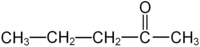
The name of this compound is:

Access all questions and much more by creating a free account
Create resources
Host any resource
Get auto-graded reports

Continue with Google

Continue with Email

Continue with Classlink

Continue with Clever
or continue with

Microsoft
%20(1).png)
Apple

Others
Already have an account?

