
The Scientific Method - Experimental Variables.
9th - 11th Grade
•20 Qs

Similar activities
Formación 4
10th - 12th Grade
•19 Qs
Lifelines of National Economy Class 10
10th Grade
•24 Qs
SECTORES DE PRODUCCION
10th Grade
•15 Qs
ppt
KG - Professional Development
•20 Qs
Kelas 4 Tema 6 Subtema 1
10th Grade
•20 Qs
Evaluación de período II 9º
9th Grade
•20 Qs
Dinamika Penduduk
9th Grade
•20 Qs
I Guerra Mundial o Gran Guerra
7th Grade - University
•15 Qs
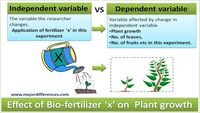
The Scientific Method - Experimental Variables.

Quiz
•
Social Studies
•
9th - 11th Grade
•
Practice Problem
•
Medium
+2
Standards-aligned

Joe Hawthorne
Used 331+ times
FREE Resource

Enhance your content in a minute
20 questions
Show all answers
1.
MULTIPLE CHOICE QUESTION
3 mins • 1 pt

A scientist performs an experiment to see if acids have an effect on the health of a particular type of plant. Three sets of plants were treated with acidic solutions of known pH while the control set was treated with a solution of neutral pH 7.Which is the best conclusion for this experiment?
2.
MULTIPLE CHOICE QUESTION
3 mins • 1 pt

The graph below shows atmospheric carbon dioxide levels since the year 1880.Which of the following conclusions can be drawn from this graph
3.
MULTIPLE CHOICE QUESTION
3 mins • 1 pt
Carmen conducted an experiment to determine if listening to different types of music would affect a person’s pulse. Her hypothesis was that pulse rate would change with different types of music. Each person listened to seven different selections of music for 30 seconds each. Each person’s pulse was taken before the music and then after each 30-second interval of music. The pulses were taken again after the music selections were completed. Based on her experiment, Carmen concluded that a person’s pulse rate changed when the person listened to different types of music. Which component is missing from Carmen’s experiment?
4.
MULTIPLE CHOICE QUESTION
3 mins • 1 pt
In an appropriately designed experiment, a scientist is able to test the effect of
5.
MULTIPLE CHOICE QUESTION
3 mins • 1 pt
Which statement best expresses a basic scientific assumption?
6.
MULTIPLE CHOICE QUESTION
3 mins • 1 pt
An experiment was carried out to determine whether drinking caffeinated soda increases pulse rate. The pulse rates of two groups of people at rest were measured. Group A was then given caffeinated soda and group B was given caffeine-free soda. One hour after drinking the soda, the pulse rates were measured. The participants in the experiment were all the same age, and they were all given the same amount of soda. The dependent variable in this experiment is the
7.
MULTIPLE CHOICE QUESTION
3 mins • 1 pt
A series of steps used by scientists to solve a problem or answer a question.
Access all questions and much more by creating a free account
Create resources
Host any resource
Get auto-graded reports

Continue with Google

Continue with Email

Continue with Classlink

Continue with Clever
or continue with

Microsoft
%20(1).png)
Apple

Others
Already have an account?
Similar Resources on Wayground
15 questions
Political Parties In India by Ms.Heather
Quiz
•
9th - 12th Grade
20 questions
Module 8: State and Non-state Institutions
Quiz
•
11th Grade - University
18 questions
Methods of Production
Quiz
•
10th - 11th Grade
17 questions
The French Revolution Part 1
Quiz
•
9th Grade - Professio...
18 questions
Repaso Período Colonial Noveno.
Quiz
•
9th Grade
25 questions
PH 1 (DISKUSI)
Quiz
•
9th Grade
20 questions
Práctica repaso segundo parcial. 3ro de secundaria
Quiz
•
9th Grade
16 questions
Easter
Quiz
•
5th - 12th Grade
Popular Resources on Wayground
15 questions
Fractions on a Number Line
Quiz
•
3rd Grade
20 questions
Equivalent Fractions
Quiz
•
3rd Grade
25 questions
Multiplication Facts
Quiz
•
5th Grade
22 questions
fractions
Quiz
•
3rd Grade
20 questions
Main Idea and Details
Quiz
•
5th Grade
20 questions
Context Clues
Quiz
•
6th Grade
15 questions
Equivalent Fractions
Quiz
•
4th Grade
20 questions
Figurative Language Review
Quiz
•
6th Grade
Discover more resources for Social Studies
33 questions
PFL & Eco Unit #1 Exam Review (2024 Version)
Quiz
•
11th Grade
10 questions
Exploring the Executive Branch and Presidential Powers

Interactive video
•
6th - 10th Grade
6 questions
Unit 8 DEUA Review

Lesson
•
11th Grade
22 questions
Benchmark 1 Review
Quiz
•
11th Grade
8 questions
Unit 6, Quiz 1 - Rise of Fascism
Quiz
•
9th Grade
15 questions
Solar System
Quiz
•
9th Grade
20 questions
WG Vocabulary List 21 2025
Quiz
•
9th - 12th Grade
18 questions
CHPT 5 REVIEW
Quiz
•
10th Grade