
Joints and Muscles
Authored by Megan Reilly
Biology
7th Grade
NGSS covered
Used 404+ times


AI Actions
Add similar questions
Adjust reading levels
Convert to real-world scenario
Translate activity
More...
About
This quiz thoroughly examines the musculoskeletal system, focusing specifically on joint classification and muscle function, making it appropriate for 7th grade life science students. The content covers the six main types of synovial joints—ball and socket, hinge, pivot, gliding, condyloid, and saddle—requiring students to identify specific examples like the hip and shoulder as ball and socket joints, and the knee and elbow as hinge joints. Students must understand the functional differences between joint types, particularly how hinge joints allow movement in only one direction while ball and socket joints permit multidirectional movement. The quiz also addresses the interconnected nature of the musculoskeletal system, testing knowledge of how tendons connect muscles to bones, the role of synovial fluid in joint lubrication, and the antagonistic relationship where muscle pairs work together through contraction and relaxation. Students need to distinguish between the three muscle types, identify specific muscles like the triceps and biceps, and understand that skeletal muscles attach to bones to facilitate movement. Created by Megan Reilly, a Biology teacher in Great Britain who teaches grade 7. This assessment serves as an excellent tool for reinforcing fundamental concepts about body systems after direct instruction on human anatomy and physiology. The quiz works particularly well as a formative assessment to gauge student understanding before moving to more complex topics like muscle contraction mechanisms or joint disorders. Teachers can deploy this as a warm-up activity to activate prior knowledge, use it for independent practice during stations or centers, or assign it as homework to reinforce classroom learning. The varied question formats help students prepare for different types of assessments while building confidence with anatomical terminology. This quiz aligns with NGSS MS-LS1-3, which requires students to use arguments supported by evidence for how the body is a system of interacting subsystems composed of groups of cells, and supports state standards that emphasize understanding structure-function relationships in human body systems.
Content View
Student View
16 questions
Show all answers
1.
MULTIPLE CHOICE QUESTION
30 sec • 1 pt
What type of joint is the hip and shoulder joint?
A pivot joint
A saddle joint
A condyloid joint
A ball and socket joint
2.
MULTIPLE CHOICE QUESTION
1 min • 1 pt
Hip and shoulder have examples of this type of joint
3.
MULTIPLE CHOICE QUESTION
1 min • 1 pt
The elbows, knees and phalanges are examples of this type of joint
4.
MULTIPLE CHOICE QUESTION
1 min • 1 pt
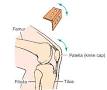
The knee joint is
Tags
NGSS.MS-PS2-1
5.
MULTIPLE CHOICE QUESTION
20 sec • 1 pt

Name this joint
6.
MULTIPLE CHOICE QUESTION
20 sec • 1 pt
Which joint allows movement in only one direction?
7.
MULTIPLE CHOICE QUESTION
20 sec • 1 pt
Synovial fluid

Access all questions and much more by creating a free account
Create resources
Host any resource
Get auto-graded reports

Continue with Google

Continue with Email

Continue with Microsoft
or continue with

%20(1).png)
Apple

Others
By signing up, you agree to our Terms of Service & Privacy Policy
Already have an account?



