Wave - Superposition

Wave - Superposition

KG - University

20 Qs

quiz-placeholder

Similar activities

Assessment test: States of matter and Force

Assessment test: States of matter and Force

4th Grade

20 Qs

Simple Machines

Simple Machines

6th Grade

20 Qs

Genetics 2 Quiz

Genetics 2 Quiz

7th Grade

16 Qs

Revision of EVS Std 5

Revision of EVS Std 5

5th Grade

20 Qs

Quiz 4 Plate Tectonics and Landforms

Quiz 4 Plate Tectonics and Landforms

10th Grade

20 Qs

T10L5: Recent Climate Change Quiz

T10L5: Recent Climate Change Quiz

7th Grade

15 Qs

Is it a biological claim?

Is it a biological claim?

11th - 12th Grade

20 Qs

Seeds and plants

Seeds and plants

2nd - 8th Grade

16 Qs

Wave - Superposition

Wave - Superposition

Assessment

Quiz

Physics, Science

KG - University

Practice Problem

Medium

NGSS
HS-PS4-1, MS-PS4-1, HS-ESS1-2

+1

Standards-aligned

Created by

Syahida Rahim

Used 262+ times

FREE Resource

AI

Enhance your content in a minute

Add similar questions
Adjust reading levels
Convert to real-world scenario
Translate activity
More...

20 questions

Show all answers

1.

MULTIPLE CHOICE QUESTION

30 sec • 1 pt

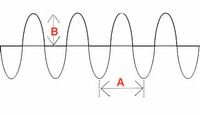
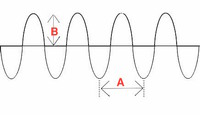
Media Image

Two transverse waves overlap.  Crests overlap with troughs.  Troughs overlap with crests.  The waves are

In-phase
Out-of-phase
In-synchronicity
Out-of-synchronicity

Tags

NGSS.MS-PS4-1

2.

MULTIPLE CHOICE QUESTION

30 sec • 1 pt

Media Image

If two overlapping waves are in-phase, the resultant wave will have ______ compared to the two waves.

Greater amplitude
Greater frequency
Greater wavelength
Greater wave speed

Tags

NGSS.MS-PS4-1

3.

MULTIPLE CHOICE QUESTION

30 sec • 1 pt

What is the superposition of waves?

when a single wave splits into two different waves at a point
when two waves combine at the same place at the same time

4.

MULTIPLE CHOICE QUESTION

30 sec • 1 pt

What are standing waves?

waves that appear to remain in one place and do not seem to move
waves that seem to move along a trajectory

5.

MULTIPLE CHOICE QUESTION

45 sec • 1 pt

Standing waves are formed --

by the superposition of two or more waves moving in opposite directions.
by the superposition of two or more waves moving in the same direction.
by the superposition of two or more waves moving in perpendicular directions.
by the superposition of two or more waves moving in any arbitrary directions.

6.

MULTIPLE CHOICE QUESTION

2 mins • 1 pt

A stretched string is observed to have four equal segments in a standing wave driven at a frequency of 480 Hz.  What driving frequency will set up a standing wave with five equal segments?

600 Hz
360 Hz
240 Hz

Tags

NGSS.HS-PS4-1

7.

MULTIPLE CHOICE QUESTION

30 sec • 1 pt

The changing pitch of a police siren as the car moves past you

sound interfernce
doppler effect
constructive interference
destructive interference

Tags

NGSS.HS-PS4-1

Create a free account and access millions of resources

Create resources

Host any resource

Get auto-graded reports

Google

Continue with Google

Email

Continue with Email

Classlink

Continue with Classlink

Clever

Continue with Clever

or continue with

Microsoft

Microsoft

Apple

Apple

Others

Others

Already have an account?