
Middle School Cell Organelles
Authored by Latonya Jefferson
Science
9th - 11th Grade
NGSS covered
Used 163+ times


AI Actions
Add similar questions
Adjust reading levels
Convert to real-world scenario
Translate activity
More...
About
This quiz focuses on cell biology, specifically cell organelles and the fundamental differences between prokaryotic and eukaryotic cells. The content is appropriate for middle school students in grades 6-8, as it covers foundational cellular concepts without requiring advanced biochemical knowledge. Students need to understand the basic structure and function of cells, including the key organelles found in plant and animal cells such as the nucleus, mitochondria, chloroplasts, vacuoles, lysosomes, and cell membrane. The questions assess students' ability to distinguish between prokaryotic and eukaryotic cells, identify the specific functions of various organelles, and recognize the unique features that differentiate plant cells from animal cells. Students must also demonstrate knowledge of cellular processes like energy production through cellular respiration and photosynthesis, as well as understand the role of organelles in maintaining cellular homeostasis. Created by Latonya Jefferson, a Science teacher in US who teaches grade 9 and 11. This quiz serves as an excellent tool for introducing and reinforcing fundamental cell biology concepts through multiple-choice questions that target specific organelle functions and cellular structures. Teachers can effectively use this quiz as a formative assessment to gauge student understanding before moving on to more complex cellular processes, or as a review activity to consolidate learning after completing a unit on cell structure and function. The quiz works well for homework assignments, allowing students to practice identifying organelles and their functions independently, or as a warm-up activity to activate prior knowledge at the beginning of class. It also functions effectively as a study guide for summative assessments, helping students focus on the essential vocabulary and concepts they need to master. This content aligns with standards MS-LS1-2, which requires students to develop and use models to describe the function of cells and their major parts.
Content View
Student View
15 questions
Show all answers
1.
MULTIPLE CHOICE QUESTION
30 sec • 1 pt
All living things are made of...
bacteria
cells
plants
Tags
NGSS.MS-LS1-1
2.
MULTIPLE CHOICE QUESTION
30 sec • 1 pt
Where is the DNA found in a prokaryotic cell?
3.
MULTIPLE CHOICE QUESTION
30 sec • 1 pt
What type of cell has a nucleus?
4.
MULTIPLE CHOICE QUESTION
30 sec • 1 pt
Under a microscope, what kind of cells lack membrane-bound organelles?
Prokaryotes
Eukaryotes
Plants
Animals
Tags
NGSS.MS-LS1-1
5.
MULTIPLE CHOICE QUESTION
1 min • 1 pt
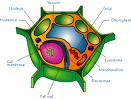
The picture illustrates a
Tags
NGSS.MS-LS1-2
NGSS.MS-LS1-1
6.
MULTIPLE CHOICE QUESTION
30 sec • 1 pt
Directs the activities of the cell
nucleus
mitochondria
endoplasmic reticulum
lysosome
Tags
NGSS.MS-LS1-2
7.
MULTIPLE CHOICE QUESTION
1 min • 1 pt
Controls what enters/leaves a cell
Tags
NGSS.MS-LS1-2
Access all questions and much more by creating a free account
Create resources
Host any resource
Get auto-graded reports

Continue with Google

Continue with Email

Continue with Classlink

Continue with Clever
or continue with

Microsoft
%20(1).png)
Apple

Others
Already have an account?


