
kepler
6th - 9th Grade
•13 Qs

Similar activities
fluid flow SBQ
9th Grade
•10 Qs
Reflection of light
6th - 10th Grade
•10 Qs
Review to Measurement
7th - 8th Grade
•15 Qs
Car Crash Test Intro.
6th - 12th Grade
•10 Qs
Waves
6th - 8th Grade
•16 Qs
Energy Transformation
9th Grade
•10 Qs
(DI) RMI with Dr. Naga Ratna
6th - 10th Grade
•12 Qs
Plaats,tijd-diagrammen
8th Grade
•10 Qs

kepler

Quiz
•
Physics
•
6th - 9th Grade
•
Medium
Standards-aligned

Eva Merolla-Laplant
Used 72+ times
FREE Resource

Enhance your content in a minute
13 questions
Show all answers
1.
MULTIPLE CHOICE QUESTION
2 mins • 1 pt

Kepler's First Law states
objects attract other objects with a force that is directly proportional to the product of their masses
the square of the ratio of the periods of any two planets revolving around the Sun is equal to the cube of the ratio of their average distance from the Sun
An imaginary line joining a planet and the sun sweeps out an equal area of space in equal amounts of time.
Planets move about the Sun in an elliptical orbit with the Sun at one of the foci.
Tags
NGSS.HS-ESS1-4
2.
MULTIPLE CHOICE QUESTION
2 mins • 1 pt

Kepler's Second Law states
objects attract other objects with a force that is directly proportional to the product of their masses
the square of the ratio of the periods of any two planets revolving around the Sun is equal to the cube of the ratio of their average distance from the Sun
An imaginary line joining a planet and the sun sweeps out an equal area of space in equal amounts of time.
Planets move about the Sun in an elliptical orbit with the Sun at one of the foci.
Tags
NGSS.HS-ESS1-4
3.
MULTIPLE CHOICE QUESTION
2 mins • 1 pt

Kepler's Third Law states
objects attract other objects with a force that is directly proportional to the product of their masses
the square of the ratio of the periods of any two planets revolving around the Sun is equal to the cube of the ratio of their average distance from the Sun
An imaginary line joining a planet and the sun sweeps out an equal area of space in equal amounts of time.
Planets move about the Sun in an elliptical orbit with the Sun at one of the foci.
Tags
NGSS.HS-ESS1-4
4.
MULTIPLE CHOICE QUESTION
1 min • 1 pt

What is the Universal law of gravitation equation?
Tags
NGSS.HS-PS2-4
5.
MULTIPLE CHOICE QUESTION
1 min • 1 pt
A person on the Earth weighs 180 pounds. How much will they weigh on the moon? ( Note: The moons "g" is1/6 that of Earth)
30 lbs
360 lbs
0- you are weightless in space
18 lbs
6.
MULTIPLE CHOICE QUESTION
1 min • 1 pt
What states that "every object in the universe attracts every other object"?
Tags
NGSS.HS-PS2-4
7.
MULTIPLE CHOICE QUESTION
1 min • 1 pt
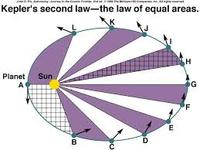
Where is the planet moving faster
Access all questions and much more by creating a free account
Create resources
Host any resource
Get auto-graded reports

Continue with Google

Continue with Email

Continue with Classlink

Continue with Clever
or continue with

Microsoft
%20(1).png)
Apple

Others
Already have an account?
Similar Resources on Wayground
10 questions
Work, KE and PE Part 2
Quiz
•
8th Grade
10 questions
la física y el universo
Quiz
•
8th Grade
15 questions
Rollercoasters (Energy)
Quiz
•
8th Grade
12 questions
HS Physics DO NOW Electric Fields
Quiz
•
9th - 12th Grade
10 questions
SCS Year 7 Electricity
Quiz
•
8th Grade
10 questions
Force
Quiz
•
6th - 7th Grade
11 questions
CONCAVE MIRROR
Quiz
•
7th Grade
12 questions
Force gravity - 1
Quiz
•
6th Grade
Popular Resources on Wayground
15 questions
Fractions on a Number Line
Quiz
•
3rd Grade
20 questions
Equivalent Fractions
Quiz
•
3rd Grade
25 questions
Multiplication Facts
Quiz
•
5th Grade
22 questions
fractions
Quiz
•
3rd Grade
20 questions
Main Idea and Details
Quiz
•
5th Grade
20 questions
Context Clues
Quiz
•
6th Grade
15 questions
Equivalent Fractions
Quiz
•
4th Grade
20 questions
Figurative Language Review
Quiz
•
6th Grade
Discover more resources for Physics
20 questions
Thermal Energy
Quiz
•
5th - 8th Grade
20 questions
Force and Motion
Quiz
•
6th Grade
37 questions
Electricity Review
Quiz
•
9th Grade
10 questions
Exit Check 2.4 - 2nd Law Graphs
Quiz
•
9th Grade
10 questions
Exit Check 2.2 - 3rd Law
Quiz
•
9th Grade
10 questions
Exit Check 2.3 - 2nd Law
Quiz
•
9th Grade
13 questions
Potential and Kinetic Energy Review
Quiz
•
6th Grade
10 questions
Exit Check 2.1 - 1st Law
Quiz
•
9th Grade