
Biomes and Adaptations
Authored by McKinzie Sanders
Science
7th Grade
NGSS covered
Used 60+ times


AI Actions
Add similar questions
Adjust reading levels
Convert to real-world scenario
Translate activity
More...
Content View
Student View
26 questions
Show all answers
1.
MULTIPLE CHOICE QUESTION
30 sec • 1 pt

A large ecosystem is called a ______
Tags
NGSS.MS-LS2-3
2.
MULTIPLE CHOICE QUESTION
30 sec • 1 pt

What is the main factor that separates the biomes?
Tags
NGSS.MS-ESS2-4
NGSS.MS-ESS2-6
3.
MULTIPLE CHOICE QUESTION
30 sec • 1 pt

Which biome is the driest?
Tags
NGSS.3-ESS2-2
4.
MULTIPLE CHOICE QUESTION
30 sec • 1 pt
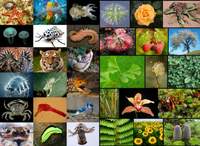
Which biome has the most variety of plants and animals?
Tags
NGSS.MS-LS2-5
NGSS.MS-LS2-4
5.
MULTIPLE CHOICE QUESTION
30 sec • 1 pt
The arctic fox and gray wolf are two examples of animals that change the color of their fur with the season. In the summer, the animals are a brownish colors, and in the winter, they turn white. The change of color helps the animals to survive.
Which of the following provides the best explanation for this change?
The color change helps protect them from predators
The color change helps them raise their young
The color change helps them regulate their body temperature
The color change helps them be seen from a great distance.
Tags
NGSS.MS-LS4-4
NGSS.MS-LS1-5
6.
MULTIPLE CHOICE QUESTION
30 sec • 1 pt
The Venus flytrap plant lives in soil with few nutrients. The plant absorbs nutrients by trapping insects inside its leaves.
The ability of the Venus flytrap to trap insects is an example of which of the following?
Parasitism
Adaptation
Competition
Producer
Tags
NGSS.MS-LS2-1
NGSS.MS-LS1-4
7.
MULTIPLE CHOICE QUESTION
30 sec • 1 pt
The cactus plant lives in a desert environment.
Which characteristic of this plant could be found in many other desert plants?
Leaves and stems that are adapted to conserve water
Broad leaves that protect the plants from the hot sun
Lush growth that serves to trap water if it rains
A deep root system for gathering water
Tags
NGSS.MS-LS2-1
Access all questions and much more by creating a free account
Create resources
Host any resource
Get auto-graded reports

Continue with Google

Continue with Email

Continue with Microsoft
or continue with

%20(1).png)
Apple

Others
By signing up, you agree to our Terms of Service & Privacy Policy
Already have an account?


