
Pressure
Authored by Michael Mynhardt
Science
8th Grade
NGSS covered
Used 3K+ times


AI Actions
Add similar questions
Adjust reading levels
Convert to real-world scenario
Translate activity
More...
Content View
Student View
10 questions
Show all answers
1.
MULTIPLE SELECT QUESTION
1 min • 1 pt

Pressure in gases is a measure of:
the number of collisions per second of the particles with the side of the container.
the force of the collisions of the particles with the side of the container.
the amount of space taken up by the particles in the container.
None of the above
Tags
NGSS.MS-PS2-2
NGSS.MS-PS2-5
2.
MULTIPLE SELECT QUESTION
1 min • 1 pt
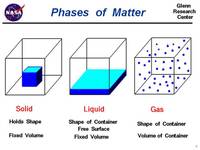
Pressure can be exerted by solids, liquids and gases.
TRUE
FALSE
3.
MULTIPLE CHOICE QUESTION
1 min • 1 pt

A dam (not the wall) is an example of pressure in:
Solids
Liquids
Gases
Plasma
4.
MULTIPLE CHOICE QUESTION
1 min • 1 pt

The pressure inside the balloon will:
Decrease
Increase
Remain the same
Not enough information to formulate an answer
Tags
NGSS.MS-PS1-4
NGSS.MS-PS3-4
5.
MULTIPLE CHOICE QUESTION
1 min • 1 pt

The pressure of the gas in the balloon in the ice water will be:
Greater than that of the balloon in the boiling water.
Less than that of the balloon in the boiling water.
The same as that of the balloon in the boiling water.
Not enough information to answer the statement.
Tags
NGSS.MS-PS1-4
NGSS.MS-PS3-4
6.
MULTIPLE CHOICE QUESTION
1 min • 1 pt

This is an example of the everyday application of pressure in:
Solids
Liquids
Gases
Plasma
Tags
NGSS.MS-PS2-2
7.
MULTIPLE CHOICE QUESTION
30 sec • 1 pt

The pressure inside the syringe will decrease if we move the plunger in:
Direction A
Direction B
We don't have to move the plunger as the pressure will change on its own.
None of the above answers.
Tags
NGSS.MS-PS2-1


Access all questions and much more by creating a free account
Create resources
Host any resource
Get auto-graded reports

Continue with Google

Continue with Email

Continue with Classlink

Continue with Clever
or continue with

Microsoft
%20(1).png)
Apple

Others
Already have an account?
Similar Resources on Wayground

13 questions
Our Environment

Quiz
•
6th Grade - University
10 questions
Science 8 - Characteristics of Life and Cell Theory Quiz
Quiz
•
8th Grade
12 questions
8.8ABC
Quiz
•
8th Grade
10 questions
NCERT class 8 Materials : Metals and Non - Metals
Quiz
•
8th Grade
14 questions
General knowledge
Quiz
•
2nd - 12th Grade
9 questions
Poluição (destruição da camada de ozono)
Quiz
•
8th Grade
12 questions
Glaciers
Quiz
•
8th Grade
10 questions
QUIZ ON SCIENCE 6
Quiz
•
6th Grade - University
Popular Resources on Wayground
15 questions
Fractions on a Number Line
Quiz
•
3rd Grade
20 questions
Equivalent Fractions
Quiz
•
3rd Grade
25 questions
Multiplication Facts
Quiz
•
5th Grade
22 questions
fractions
Quiz
•
3rd Grade
20 questions
Main Idea and Details
Quiz
•
5th Grade
20 questions
Context Clues
Quiz
•
6th Grade
15 questions
Equivalent Fractions
Quiz
•
4th Grade
20 questions
Figurative Language Review
Quiz
•
6th Grade
Discover more resources for Science
33 questions
Grade 6 Quarter 3 PMA 5 Review
Quiz
•
6th - 8th Grade
85 questions
Midpoint D1 Review
Quiz
•
8th Grade
12 questions
Newton's Laws of Motion

Lesson
•
6th - 8th Grade
10 questions
Exploring the Rock Cycle: Types and Formation

Interactive video
•
6th - 8th Grade
10 questions
Exploring the Layers of the Earth
Interactive video
•
6th - 10th Grade
20 questions
Pure Substances & Mixtures
Quiz
•
8th Grade
28 questions
Genes and Heredity
Lesson
•
8th Grade
24 questions
Subatomic Particles
Quiz
•
8th Grade