
Primates
10th Grade
•25 Qs

Similar activities
Succession and Biodiversity
8th - 12th Grade
•20 Qs
IMMUNE REVIEW
9th - 10th Grade
•20 Qs
Meiosis Review
10th Grade
•25 Qs
ECOLOGY: Renewable and Non Renewable Resources - Review
9th - 12th Grade
•20 Qs
Environmental Science Ch. 1
9th - 12th Grade
•20 Qs
Photosynthesis (Supported Biology)
10th Grade
•20 Qs
Human Impact Test
9th - 10th Grade
•20 Qs
Earth Systems Test Review
9th - 10th Grade
•24 Qs

Primates

Quiz
•
Biology
•
10th Grade
•
Medium
+1
Standards-aligned

Cathy Alcala
Used 4+ times
FREE Resource

Enhance your content in a minute
25 questions
Show all answers
1.
MULTIPLE CHOICE QUESTION
45 sec • 1 pt
______________ are a group of mammals that includes humans, apes, monkeys, and lemurs.
Tags
NGSS.MS-LS4-1
2.
MULTIPLE CHOICE QUESTION
45 sec • 1 pt
Which of the following is NOT a characteristic of primates?
well developed eyesight
locomotion
large brains
great sense of smell
3.
MULTIPLE CHOICE QUESTION
45 sec • 1 pt

An _______________ first digit, either a thumb or a toe, can be brought across the palm or foot to touch (or nearly touch) the other digits allowing primates to grasp objects.
Tags
NGSS.MS-LS4-2
4.
MULTIPLE CHOICE QUESTION
45 sec • 1 pt

_______________________ (forward-looking eyes) provide depth perception and enable primates to judge distance and movement of an object.
5.
MULTIPLE CHOICE QUESTION
45 sec • 1 pt
Unlike old world monkeys, new world monkeys ___________________.
6.
MULTIPLE CHOICE QUESTION
1 min • 1 pt
________________ are human-like primates that appear to be more closely related to present-day humans than they are to present-day chimpanzees and bonobos. Humans are the only species of this type of primates that is surviving today.
Tags
NGSS.MS-LS4-2
7.
MULTIPLE CHOICE QUESTION
45 sec • 1 pt
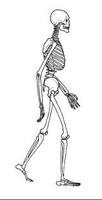
The ability to walk upright on two legs is called:
bipedalism
quadropedalism
bicyclepedalism
tripedalism
Tags
NGSS.MS-LS4-2


Access all questions and much more by creating a free account
Create resources
Host any resource
Get auto-graded reports

Continue with Google

Continue with Email

Continue with Classlink

Continue with Clever
or continue with

Microsoft
%20(1).png)
Apple

Others
Already have an account?
Similar Resources on Wayground
20 questions
Microbiology Review
Quiz
•
KG - University
21 questions
Biological Interactions and Relationships - 5.1
Quiz
•
9th - 12th Grade
20 questions
Bio 2.1, 2.2 Ecosystems EOC Review
Quiz
•
9th - 12th Grade
20 questions
7-4.1
Quiz
•
KG - University
22 questions
Ch26: Heart & Blood Vessels
Quiz
•
10th Grade
25 questions
6.4 Biological Macromolecules
Quiz
•
9th - 10th Grade
20 questions
Speciation & Population Genetics
Quiz
•
9th - 11th Grade
20 questions
Gene Mutations
Quiz
•
9th - 10th Grade
Popular Resources on Wayground
15 questions
Fractions on a Number Line
Quiz
•
3rd Grade
20 questions
Equivalent Fractions
Quiz
•
3rd Grade
25 questions
Multiplication Facts
Quiz
•
5th Grade
22 questions
fractions
Quiz
•
3rd Grade
20 questions
Main Idea and Details
Quiz
•
5th Grade
20 questions
Context Clues
Quiz
•
6th Grade
15 questions
Equivalent Fractions
Quiz
•
4th Grade
20 questions
Figurative Language Review
Quiz
•
6th Grade
Discover more resources for Biology
20 questions
Cell Organelles
Quiz
•
10th Grade
7 questions
Amoeba Sisters Dihybrid Cross Punnett Square

Interactive video
•
9th - 12th Grade
10 questions
Comparing Mitosis and Meiosis: Key Differences and Stages
Interactive video
•
6th - 10th Grade
5 questions
Sex Linked Traits
Interactive video
•
10th Grade
30 questions
Evolution and Taxonomy Review
Quiz
•
10th Grade
10 questions
Cell Structure and Function Concepts
Interactive video
•
6th - 10th Grade
10 questions
Quick 10Q: DNA Replication
Quiz
•
9th - 12th Grade
51 questions
2026 Evolution 2 REVIEW
Quiz
•
10th Grade