
AP Biology Unit 2.1 Unit 2.2
Authored by David Fernandez
Biology
10th - 12th Grade
NGSS covered
Used 315+ times


AI Actions
Add similar questions
Adjust reading levels
Convert to real-world scenario
Translate activity
More...
About
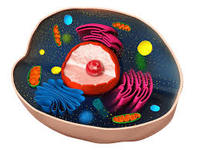
This quiz comprehensively covers cell structure, organelle function, and cellular transport mechanisms, representing core concepts from AP Biology Units 2.1 and 2.2 at the 11th-12th grade level. Students must demonstrate understanding of prokaryotic versus eukaryotic cell organization, identify and explain the functions of major organelles including mitochondria, ribosomes, nucleus, vacuoles, lysosomes, and the endoplasmic reticulum, and distinguish between different types of cellular transport such as endocytosis, exocytosis, and passive transport. The questions require students to apply knowledge of cell biology fundamentals, interpret visual representations of cellular structures, and understand the relationship between organelle structure and function. Students need solid foundational knowledge of cell theory, membrane biology, and the distinguishing characteristics between plant and animal cells to successfully navigate these concepts. Created by David Fernandez, a Biology teacher in the US who teaches grades 10-12. This quiz serves as an excellent formative assessment tool for AP Biology students studying cell structure and function, providing immediate feedback on student understanding of essential cellular concepts. Teachers can effectively use this quiz as a warm-up activity to activate prior knowledge before diving deeper into cellular processes, as homework to reinforce classroom learning, or as review material before unit exams. The quiz aligns with AP Biology Learning Objectives 2.4, 2.5, 2.6, and 2.13, which focus on membrane permeability, compartmentalization in eukaryotic cells, and the relationship between structure and function in biological systems. The varied question formats, including identification, function matching, and comparative analysis, make this resource valuable for differentiating instruction and helping students prepare for the analytical thinking required on AP examinations.
Content View
Student View
17 questions
Show all answers
1.
MULTIPLE CHOICE QUESTION
20 sec • 1 pt
Food is moved into the cell by ________________________.
Tags
NGSS.MS-LS1-7
2.
MULTIPLE CHOICE QUESTION
20 sec • 1 pt

This picture represents which type of cellular transport?
Tags
NGSS.MS-LS1-2
3.
MULTIPLE CHOICE QUESTION
20 sec • 1 pt
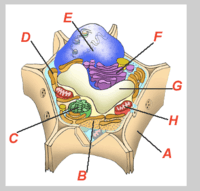
Using this image, what organelle is C?
Tags
NGSS.MS-LS1-2
4.
MULTIPLE CHOICE QUESTION
20 sec • 1 pt
What is the function of the mitochondria?
Tags
NGSS.MS-LS1-2
NGSS.MS-LS1-7
5.
MULTIPLE CHOICE QUESTION
20 sec • 1 pt
What is the function of the vacuole?
Tags
NGSS.MS-LS1-2
6.
MULTIPLE CHOICE QUESTION
20 sec • 1 pt
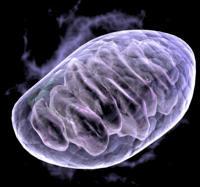
I make proteins for the cell. What am I?
Tags
NGSS.MS-LS1-2
7.
MULTIPLE CHOICE QUESTION
20 sec • 1 pt
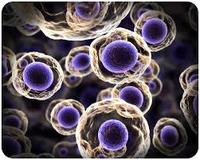
The two kinds of cells are Prokaryotes and Eukaryotes. How are they different?
Tags
NGSS.MS-LS1-1
Access all questions and much more by creating a free account
Create resources
Host any resource
Get auto-graded reports

Continue with Google

Continue with Email

Continue with Classlink

Continue with Clever
or continue with

Microsoft
%20(1).png)
Apple

Others
Already have an account?
Popular Resources on Wayground

15 questions
Fractions on a Number Line

Quiz
•
3rd Grade
20 questions
Equivalent Fractions
Quiz
•
3rd Grade
25 questions
Multiplication Facts
Quiz
•
5th Grade
29 questions
Alg. 1 Section 5.1 Coordinate Plane
Quiz
•
9th Grade
22 questions
fractions
Quiz
•
3rd Grade
11 questions
FOREST Effective communication

Lesson
•
KG
20 questions
Main Idea and Details
Quiz
•
5th Grade
20 questions
Context Clues
Quiz
•
6th Grade
Discover more resources for Biology
21 questions
Cell Cycle and mitosis
Quiz
•
9th - 10th Grade
20 questions
Food Chains and Food Webs
Quiz
•
7th - 12th Grade
10 questions
Exploring Food Webs and Energy Pyramids

Interactive video
•
6th - 10th Grade
10 questions
Exploring the Impact of Genetic Mutations
Interactive video
•
6th - 10th Grade
5 questions
Inherited and Acquired Traits of Animals
Interactive video
•
4th Grade - University
12 questions
Carbon Cycle and Organic Chemistry Concepts
Interactive video
•
9th - 10th Grade
38 questions
Mitosis & Meiosis
Quiz
•
9th - 12th Grade
36 questions
DNA & Protein Synthesis 3.1.1-3.1.3
Quiz
•
9th - 12th Grade