
Atomic Structure- Review game

Quiz
•
Science, Chemistry
•
8th - 9th Grade
•
Practice Problem
•
Medium
Standards-aligned

Chaille Mapes
Used 97+ times
FREE Resource
About this resource
This quiz comprehensively covers atomic structure fundamentals appropriate for 8th and 9th grade physical science students. The questions assess students' understanding of subatomic particles (protons, neutrons, and electrons), their locations within the atom, and their charges. Students must demonstrate mastery of key atomic concepts including atomic number, mass number, valence electrons, and electron energy levels. The quiz requires students to interpret atomic diagrams, calculate the number of subatomic particles in neutral atoms, and understand the relationship between atomic number and element identity. Students need to know that the nucleus contains protons and neutrons, that electrons occupy energy levels around the nucleus with specific capacities (2, 8, 8 for the first three levels), and that valence electrons are those in the outermost energy level. The problems also test understanding of how atomic number defines an element and how mass number represents the sum of protons and neutrons. Created by Chaille Mapes, a Science teacher in US who teaches grade 8-9. This review game serves multiple instructional purposes in the chemistry classroom, functioning effectively as a formative assessment tool to gauge student understanding before moving to more complex atomic concepts like chemical bonding and periodic trends. Teachers can deploy this quiz as a warm-up activity to activate prior knowledge, assign it as homework to reinforce classroom instruction, or use it as targeted practice before unit tests. The varied question formats help students build confidence with atomic structure vocabulary and calculations while identifying areas needing additional support. This assessment aligns with Next Generation Science Standards MS-PS1-1 (developing models to describe atomic composition) and supports the progression toward high school chemistry standards HS-PS1-1 (using the periodic table as a model to predict properties based on electron patterns).
See more
Student preview

20 questions
Show all answers
1.
MULTIPLE CHOICE QUESTION
30 sec • 5 pts
What are the maximum number of electrons that go on the first 3 energy levels (orbitals)?
2, 4, 16
2, 8, 8
4, 8, 12
3, 4, 6
Tags
NGSS.MS-PS1-1
2.
MULTIPLE CHOICE QUESTION
30 sec • 1 pt
What are valence electrons?
electrons on the first orbital
total number of electrons
the electron cloud
the number of electrons on the outermost orbital
Tags
NGSS.HS-PS1-1
NGSS.HS-PS1-2
3.
MULTIPLE CHOICE QUESTION
30 sec • 1 pt
Which particles make up the nucleus of an atom?
protons and neutrons
electrons and protons
electrons, protons, and neutrons
electrons and neutrons
neutrinos and protozoans
Tags
NGSS.MS-PS1-1
4.
MULTIPLE CHOICE QUESTION
30 sec • 1 pt
The subatomic particle that determines the identity of an element.
neutron
proton
electron
quark
5.
MULTIPLE CHOICE QUESTION
30 sec • 1 pt
What is the mass number and name of an element with: 8 protons and 8 neutrons?
16 - Carbon
16 - Oxygen
24 - Oxygen
8 - Neon
8- Argon
Tags
NGSS.MS-PS1-1
6.
MULTIPLE CHOICE QUESTION
30 sec • 1 pt
An element with a mass number of 10 and an atomic number of 6 has how many protons?
4
8
6
10
16
Tags
NGSS.MS-PS1-1
7.
MULTIPLE CHOICE QUESTION
45 sec • 1 pt

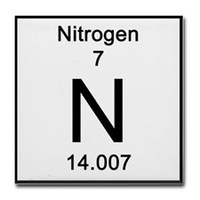
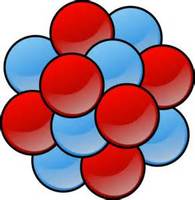
What is the atomic mass of the atom pictured?
11
12
22
23
Tags
NGSS.MS-PS1-1
Access all questions and much more by creating a free account
Create resources
Host any resource
Get auto-graded reports

Continue with Google

Continue with Email

Continue with Classlink

Continue with Clever
or continue with

Microsoft
%20(1).png)
Apple

Others
Already have an account?
Popular Resources on Wayground

15 questions
Fractions on a Number Line
Quiz
•
3rd Grade
20 questions
Equivalent Fractions
Quiz
•
3rd Grade
25 questions
Multiplication Facts
Quiz
•
5th Grade
54 questions
Analyzing Line Graphs & Tables
Quiz
•
4th Grade
22 questions
fractions
Quiz
•
3rd Grade
20 questions
Main Idea and Details
Quiz
•
5th Grade
20 questions
Context Clues
Quiz
•
6th Grade
15 questions
Equivalent Fractions
Quiz
•
4th Grade
Discover more resources for Science
20 questions
Cell Organelles and Functions
Quiz
•
6th - 8th Grade
33 questions
Grade 6 Quarter 3 PMA 5 Review
Quiz
•
6th - 8th Grade
10 questions
Exploring the Rock Cycle: Types and Formation

Interactive video
•
6th - 8th Grade
10 questions
Exploring the Layers of the Earth
Interactive video
•
6th - 10th Grade
14 questions
Biodiversity and Sustainability Quiz
Quiz
•
8th Grade
20 questions
Heredity Punnett square review
Quiz
•
8th Grade
25 questions
Naming Ionic and Covalent Compounds
Quiz
•
9th Grade
23 questions
Newton's 3 Laws of Motion
Quiz
•
8th Grade