
Year 9 Covalent Bonding
10th Grade
•21 Qs

Similar activities
Solutions
10th - 11th Grade
•25 Qs
CARBONYL COMPOUNDS
10th Grade - University
•20 Qs
Unit 5: Periodic Table
KG - University
•17 Qs
Tuesday 09 04
9th - 12th Grade
•20 Qs
periodic table trend quiz
10th - 12th Grade
•20 Qs
PERIODIC TABLE: GROUP 18 AND 1
9th - 12th Grade
•16 Qs
7C Particles - ECAM
7th - 10th Grade
•20 Qs
GENERAL CHEMISTRY 2 REVIEWER
9th - 12th Grade
•20 Qs
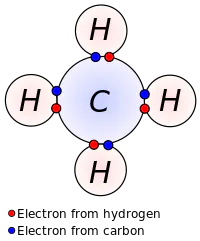
Year 9 Covalent Bonding

Quiz
•
Chemistry
•
10th Grade
•
Practice Problem
•
Medium
+1
Standards-aligned

Jenny Boyes
Used 22+ times
FREE Resource

Enhance your content in a minute
21 questions
Show all answers
1.
MULTIPLE CHOICE QUESTION
2 mins • 1 pt
When two atoms share electrons, a chemical bond is formed. This type of bond is called:
Tags
NGSS.HS-PS1-1
2.
MULTIPLE CHOICE QUESTION
2 mins • 1 pt
What type of compound consists of molecules that made of atoms that are covalently bonded?
3.
MULTIPLE CHOICE QUESTION
2 mins • 1 pt
Molecular compounds that dissolve in water do not conduct electricity because no ___________________ are present.
4.
MULTIPLE CHOICE QUESTION
45 sec • 1 pt
Covalent bonds are between...
Tags
NGSS.MS-PS1-1
5.
MULTIPLE CHOICE QUESTION
30 sec • 1 pt

Where are the nonmetals located on the periodic table?
Tags
NGSS.HS-PS1-1
6.
MULTIPLE CHOICE QUESTION
1 min • 1 pt
Intermolecular forces are the forces
7.
MULTIPLE CHOICE QUESTION
1 min • 1 pt
In general, substances with stronger intermolecular forces have ___________ boiling points than those with weaker intermolecular forces
Tags
NGSS.HS-PS1-3
Access all questions and much more by creating a free account
Create resources
Host any resource
Get auto-graded reports

Continue with Google

Continue with Email

Continue with Classlink

Continue with Clever
or continue with

Microsoft
%20(1).png)
Apple

Others
Already have an account?
Similar Resources on Wayground
20 questions
Chem Unit 1d Periodic Table Revision Quiz
Quiz
•
10th Grade
20 questions
Electrolysis and metallurgy
Quiz
•
10th Grade
16 questions
Naming chemical compounds
Quiz
•
9th Grade - University
20 questions
Name The Disney Animation Films
Quiz
•
KG - University
20 questions
Thermochemistry Test Review
Quiz
•
9th - 12th Grade
20 questions
Mole Review
Quiz
•
10th - 12th Grade
17 questions
Matter and its Nature
Quiz
•
10th Grade - University
20 questions
CHEM Test 8 (9th) 21-22
Quiz
•
1st - 12th Grade
Popular Resources on Wayground
15 questions
Fractions on a Number Line
Quiz
•
3rd Grade
20 questions
Equivalent Fractions
Quiz
•
3rd Grade
25 questions
Multiplication Facts
Quiz
•
5th Grade
22 questions
fractions
Quiz
•
3rd Grade
20 questions
Main Idea and Details
Quiz
•
5th Grade
20 questions
Context Clues
Quiz
•
6th Grade
15 questions
Equivalent Fractions
Quiz
•
4th Grade
20 questions
Figurative Language Review
Quiz
•
6th Grade
Discover more resources for Chemistry
20 questions
Types of Chemical Reactions
Quiz
•
9th - 12th Grade
20 questions
Energy Transformations
Quiz
•
9th - 12th Grade
20 questions
Periodic Table & Trends
Quiz
•
10th Grade
20 questions
Periodic Trends
Quiz
•
10th Grade
24 questions
Identifying Types of Chemical Reactions
Quiz
•
10th - 12th Grade
20 questions
Naming & Writing Chemical Formulas
Quiz
•
10th Grade
20 questions
Atomic Structure
Quiz
•
10th - 12th Grade
10 questions
Identifying Types of Chemical Reactions

Interactive video
•
6th - 10th Grade