
Enzyme Quiz
11th - 12th Grade
•20 Qs

Similar activities
Biodiversity and Conservation
12th Grade
•15 Qs
(1Q) General Chemistry 1 - Review
12th Grade
•18 Qs
Nutrition Practice
9th - 12th Grade
•20 Qs
Breathing (LC)
8th - 12th Grade
•19 Qs
Bio CDF Quizz
9th - 12th Grade
•17 Qs
quiz 2 sec 2
11th Grade
•20 Qs
Matter and its Nature
10th Grade - University
•17 Qs
EARTH PART 4
12th Grade
•16 Qs

Enzyme Quiz

Quiz
•
Biology, Chemistry
•
11th - 12th Grade
•
Medium
+2
Standards-aligned

Jennifer Stark
Used 12+ times
FREE Resource

Enhance your content in a minute
20 questions
Show all answers
1.
MULTIPLE CHOICE QUESTION
3 mins • 1 pt
How do enzymes speed up chemical reaction?
Increasing activation energy
Decreasing activation energy
Increasing deactivation energy
Decreasing deactivation energy
2.
MULTIPLE CHOICE QUESTION
3 mins • 1 pt

Which of the following conclusions can be drawn from this graph?
The optimum pH of the enzyme is 6.6.
The optimum pH of the enzyme is 5.8
The enzyme’s activity increases as pH increases 5.0 to 9.0
The enzyme’s activity is greater around pH of 8.0 .
3.
MULTIPLE CHOICE QUESTION
3 mins • 1 pt

Based on the graph, what is the optimal temperature for this enzyme?
Tags
NGSS.MS-PS1-4
4.
MULTIPLE CHOICE QUESTION
3 mins • 1 pt
What is the function of an enzyme?
Tags
NGSS.MS-PS1-2
5.
MULTIPLE CHOICE QUESTION
3 mins • 1 pt
Which of these is NOT true?
Tags
NGSS.HS-PS1-5
6.
MULTIPLE CHOICE QUESTION
3 mins • 1 pt
The optimum temperature for an enzyme reaction is 37oC. What happens if the temperature continues to increase until over 40oC ?
The enzyme is destroyed
The enzyme denatures
The enzyme dies
The enzyme will still perform at its optimal reaction rate
7.
MULTIPLE CHOICE QUESTION
3 mins • 1 pt
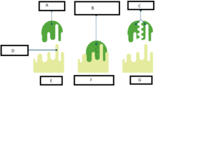
Where do substrates bind on an enzyme?
Create a free account and access millions of resources
Create resources
Host any resource
Get auto-graded reports

Continue with Google

Continue with Email

Continue with Classlink

Continue with Clever
or continue with

Microsoft
%20(1).png)
Apple

Others
Already have an account?
Similar Resources on Wayground
16 questions
2.2 Blood Vessels
Quiz
•
9th - 11th Grade
18 questions
Final Exam Review: Concepts and Calculations
Quiz
•
9th - 12th Grade
20 questions
Chemistry Quiz 1
Quiz
•
12th Grade
20 questions
quiz 2 . 3sec
Quiz
•
11th - 12th Grade
21 questions
atomic structure
Quiz
•
9th - 11th Grade
15 questions
DNA and the Genome
Quiz
•
11th Grade
20 questions
Isotope, Atomic & Molecular Masses, and Inorganic Compounds
Quiz
•
12th Grade
15 questions
Ecology Vocabulary Review
Quiz
•
9th - 12th Grade
Popular Resources on Wayground
5 questions
This is not a...winter edition (Drawing game)
Quiz
•
1st - 5th Grade
25 questions
Multiplication Facts
Quiz
•
5th Grade
10 questions
Identify Iconic Christmas Movie Scenes

Interactive video
•
6th - 10th Grade
20 questions
Christmas Trivia
Quiz
•
6th - 8th Grade
18 questions
Kids Christmas Trivia
Quiz
•
KG - 5th Grade
11 questions
How well do you know your Christmas Characters?

Lesson
•
3rd Grade
14 questions
Christmas Trivia
Quiz
•
5th Grade
20 questions
How the Grinch Stole Christmas
Quiz
•
5th Grade
Discover more resources for Biology
20 questions
Stages of Meiosis
Quiz
•
9th - 12th Grade
16 questions
AP Biology: Unit 2 Review (CED)
Quiz
•
9th - 12th Grade
20 questions
AP Biology: Unit 3 Review (CED)
Quiz
•
9th - 12th Grade
16 questions
AP Biology: Unit 1 Review (CED)
Quiz
•
9th - 12th Grade
30 questions
VCS Biology_ Unit 5_DNA Structure/Function & Replication
Quiz
•
9th - 12th Grade
15 questions
AP Bio Insta-Review Topic 4.1*: Cell Communication
Quiz
•
9th - 12th Grade
102 questions
Fall Final
Quiz
•
9th - 12th Grade
10 questions
Transport Across the Membrane
Quiz
•
9th - 12th Grade