
9 Week Assessment Review
Authored by Ivette Rengifo-Brown
Biology
9th Grade
NGSS covered
Used 27+ times


AI Actions
Add similar questions
Adjust reading levels
Convert to real-world scenario
Translate activity
More...
Content View
Student View
25 questions
Show all answers
1.
MULTIPLE CHOICE QUESTION
30 sec • 1 pt
Which biomolecule has sugars and starches?
2.
MULTIPLE CHOICE QUESTION
30 sec • 1 pt
Which biomolecule functions include enzymes which speeds the rate of chemical reactions, structural components in cells, mechanical functions in muscles and cytoskeleton, cell signaling, and immune response; provides structure and helps with chemical reactions
Tags
NGSS.MS-LS1-7
3.
MULTIPLE CHOICE QUESTION
30 sec • 1 pt
Lipids are made up of which of the following?
4.
MULTIPLE CHOICE QUESTION
30 sec • 1 pt
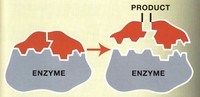
The area that the substrate fits into on the enzyme is called the:
Tags
NGSS.MS-LS3-1
5.
MULTIPLE CHOICE QUESTION
30 sec • 1 pt

Enzymes speed up reaction rates by changing:
Tags
NGSS.MS-PS1-2
NGSS.MS-PS1-5
6.
MULTIPLE CHOICE QUESTION
30 sec • 1 pt

At high temperatures enzyme activity declines because of:
Tags
NGSS.HS-PS1-5
7.
MULTIPLE CHOICE QUESTION
30 sec • 1 pt
Where is the DNA found in a eukaryotic cell?

Access all questions and much more by creating a free account
Create resources
Host any resource
Get auto-graded reports

Continue with Google

Continue with Email

Continue with Classlink

Continue with Clever
or continue with

Microsoft
%20(1).png)
Apple

Others
Already have an account?


