
New England, Middle, and Southern Colonies
Authored by Andrew Hunsberger
Social Studies
4th Grade
Used 81+ times


AI Actions
Add similar questions
Adjust reading levels
Convert to real-world scenario
Translate activity
More...
About
This quiz focuses on the three colonial regions of early America: New England, Middle, and Southern colonies. Designed for fourth-grade students, the assessment covers the foundational concepts of colonial geography, economy, religion, and social structure that shaped early American settlement patterns. Students need to understand how geographic factors influenced economic activities, recognize the relationship between natural resources and colonial development, and comprehend the religious motivations that drove colonization. The questions require students to identify specific colonies within each region, analyze the economic foundations such as shipbuilding and lumber trade in New England, agricultural diversity in the Middle colonies, and plantation agriculture in the South. Students must also grasp the concepts of religious freedom, cultural diversity, and how different colonial societies developed distinct characteristics based on their founding principles and environmental conditions. Created by Andrew Hunsberger, a Social Studies teacher in the US who teaches grade 4. This quiz serves as an excellent tool for assessing student understanding of colonial America and can be effectively used as a unit review, formative assessment, or homework assignment to reinforce key concepts about early American settlements. The comprehensive coverage of all three colonial regions makes it ideal for preparing students for summative assessments while providing immediate feedback on their grasp of colonial geography, economics, and social structures. Teachers can use this quiz as a warm-up activity to activate prior knowledge before lessons on colonial life or as practice material to help students solidify their understanding of how geographic and religious factors shaped early American communities. The assessment aligns with NCSS.D2.Geo.1.3-5, NCSS.D2.His.1.3-5, and supports social studies standards requiring students to analyze how physical environments influenced human settlement patterns and economic activities in colonial America.
Content View
Student View
24 questions
Show all answers
1.
MULTIPLE CHOICE QUESTION
20 sec • 1 pt
Why were the New England colonies founded?
The colonists were looking for religious freedom
The land was great for farming
There were better jobs in the colonies
It's where the explorers landed, so that's where they built the colony
2.
MULTIPLE CHOICE QUESTION
30 sec • 1 pt

What did the colonists mainly use lumber for?
building houses
for firewood
to trade
building ships
3.
MULTIPLE SELECT QUESTION
20 sec • 1 pt
Which of the following are natural resources?
wood
beavers
water
corn
4.
MULTIPLE CHOICE QUESTION
20 sec • 1 pt
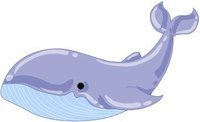
Why were whales important to the New England colonists?
a whale could feed the whole colony
their blubber was used to make oil
colonists followed the whales to help them find their way at sea
colonists went whale-watching for fun
5.
MULTIPLE SELECT QUESTION
30 sec • 1 pt
Which of the following colonies were considered part of the New England colonies? (Select all that apply.)
Massachusetts
Virginia
Rhode Island
New York
Pennsylvania
6.
MULTIPLE CHOICE QUESTION
30 sec • 1 pt
What would happen if you didn't follow the rules in the Massachusetts Bay colony?
You would be given a warning before receiving a consequence
You would be strictly punished or possibly kicked out of the colony
Other colonists would make fun of you
You were sent back to England
7.
MULTIPLE CHOICE QUESTION
20 sec • 1 pt
What were houses like in the New England colonies?
They were small and simple. One family lived together in one room.
They were large and made of bricks.
They were small, but many families lived together in the same house.
They were large mansions for only one family.
Access all questions and much more by creating a free account
Create resources
Host any resource
Get auto-graded reports

Continue with Google

Continue with Email

Continue with Classlink

Continue with Clever
or continue with

Microsoft
%20(1).png)
Apple

Others
Already have an account?


