
Chemical Kinetics
Authored by Rajwinder Kaur
Chemistry
12th Grade
NGSS covered


AI Actions
Add similar questions
Adjust reading levels
Convert to real-world scenario
Translate activity
More...
Content View
Student View
20 questions
Show all answers
1.
MULTIPLE CHOICE QUESTION
1 min • 1 pt
Which of the following is NOT a factor affecting reaction rate?
Tags
NGSS.HS-PS1-5
2.
MULTIPLE CHOICE QUESTION
1 min • 1 pt
Reaction rate means...
Tags
NGSS.HS-PS1-5
3.
MULTIPLE CHOICE QUESTION
1 min • 1 pt
Decreasing the particle size increases the reaction rate because
Tags
NGSS.HS-PS1-5
4.
MULTIPLE CHOICE QUESTION
1 min • 1 pt
A possible rate law for a third overall order of a reaction is __________________
Tags
NGSS.HS-PS1-5
5.
MULTIPLE CHOICE QUESTION
1 min • 1 pt
Given the following rate law,
rate = k[A]2[B]
if [A] were doubled, what must happen to [B] to keep the rate constant?
[B] must quadruple
[B] must double
[B] must be havled
[B] must be quartered
Tags
NGSS.HS-PS1-5
6.
MULTIPLE CHOICE QUESTION
1 min • 1 pt
The catalyst alters the rate of a chemical reaction by,
providing an alternative pathway with a lower Ea
changing the products formed in the direction of the reaction
providing a surface on which the molecules react
increasing the frequencies of collisions between molecules
7.
MULTIPLE CHOICE QUESTION
1 min • 1 pt
Which of the following are true of reaction rates?
I. The overall rate law is determined by the fastest step of a reaction
II. The presence of a catalyst will increase the number of molecules entering the transition state
III. An increase in temperature will increase the rate of a reaction
IV. Increasing the concentration of reactants will increase the rate at which products yield
II+III+IV
I+IV
II + III
I+II+III
Tags
NGSS.HS-PS1-5
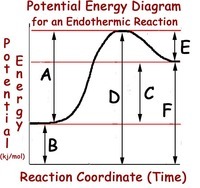
Access all questions and much more by creating a free account
Create resources
Host any resource
Get auto-graded reports

Continue with Google

Continue with Email

Continue with Classlink

Continue with Clever
or continue with

Microsoft
%20(1).png)
Apple

Others
Already have an account?
Similar Resources on Wayground

15 questions
Chemistry Essentials: Drawing Molecules

Quiz
•
9th - 12th Grade
21 questions
Metric Conversions
Quiz
•
6th - 12th Grade
20 questions
Solutions
Quiz
•
9th - 12th Grade
25 questions
Acids and Bases
Quiz
•
9th - 12th Grade
20 questions
Thermochemistry Unit Review
Quiz
•
9th - 12th Grade
15 questions
Intro to Stoichiometry
Quiz
•
10th - 12th Grade
20 questions
UNIT 6- PARTICLES WITH INTERNAL STRUCTURE (REVIEW)
Quiz
•
10th - 12th Grade
15 questions
Another Bohr-ing Atomic Model
Quiz
•
9th - 12th Grade
Popular Resources on Wayground
7 questions
History of Valentine's Day

Interactive video
•
4th Grade
15 questions
Fractions on a Number Line
Quiz
•
3rd Grade
20 questions
Equivalent Fractions
Quiz
•
3rd Grade
25 questions
Multiplication Facts
Quiz
•
5th Grade
22 questions
fractions
Quiz
•
3rd Grade
15 questions
Valentine's Day Trivia
Quiz
•
3rd Grade
20 questions
Main Idea and Details
Quiz
•
5th Grade
20 questions
Context Clues
Quiz
•
6th Grade
Discover more resources for Chemistry
20 questions
Types of Chemical Reactions
Quiz
•
9th - 12th Grade
20 questions
Stoichiometry Practice
Quiz
•
12th Grade
15 questions
Balancing Chemical Equations
Quiz
•
10th - 12th Grade
10 questions
Identifying types of reactions
Quiz
•
9th - 12th Grade
20 questions
electron configurations and orbital notation
Quiz
•
9th - 12th Grade
51 questions
Unit 5: Periodic Trends
Quiz
•
9th - 12th Grade
23 questions
Stoichiometry, Limiting/Excess Reactant, % Yield
Quiz
•
9th - 12th Grade
30 questions
Physical Science - U1 Quiz Review
Quiz
•
9th - 12th Grade