
Cell Transport
Authored by James Banyasz
Science
9th Grade
NGSS covered
Used 20+ times


AI Actions
Add similar questions
Adjust reading levels
Convert to real-world scenario
Translate activity
More...
Content View
Student View
12 questions
Show all answers
1.
MULTIPLE CHOICE QUESTION
45 sec • 1 pt
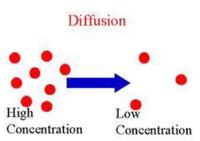
The movement of particles from an area of high to low concentration is known as--
Passive Transport
Active Transport
Tags
NGSS.MS-PS1-5
2.
MULTIPLE CHOICE QUESTION
5 mins • 1 pt
What is it called when large molecules move across the cell membrane from an area of high concentration to an area of low concentration through a protein channel?
Diffusion
Osmosis
Active Transport
Facilitated Diffusion
3.
MULTIPLE CHOICE QUESTION
30 sec • 1 pt
How does a cell maintain homeostasis?
By controlling what enters and leaves the cell
Flexibility
Protective barrier
Structure and support
Tags
NGSS.MS-LS1-2
4.
MULTIPLE CHOICE QUESTION
30 sec • 1 pt
Cell membrane transport that occurs without energy is called--
active transport
endocytosis
passive transport
exocytosis
5.
MULTIPLE CHOICE QUESTION
30 sec • 1 pt
What is the difference between active and passive transport?
6.
MULTIPLE CHOICE QUESTION
30 sec • 1 pt
The movement of molecules from low to high is known as
simple diffusion
facilitated diffusion
active transport
osmosis
7.
MULTIPLE CHOICE QUESTION
45 sec • 1 pt
Osmosis is the movement of _____ across a membrane.

Access all questions and much more by creating a free account
Create resources
Host any resource
Get auto-graded reports

Continue with Google

Continue with Email

Continue with Classlink

Continue with Clever
or continue with

Microsoft
%20(1).png)
Apple

Others
Already have an account?
Similar Resources on Wayground

12 questions
2040 Join the REGENERATION

Quiz
•
7th - 9th Grade
15 questions
Pratique Concentration et Dilution
Quiz
•
9th - 10th Grade
15 questions
Heredity and Traits Review
Quiz
•
7th Grade - University
10 questions
Proteins
Quiz
•
9th - 10th Grade
8 questions
KSSM_FORM 5_CHAPTER 6_SUBCHAPTER 6.1_PART 1
Quiz
•
KG - 12th Grade
16 questions
Chapter 10 Human Transport System
Quiz
•
8th - 10th Grade
10 questions
Carbon footprint quiz
Quiz
•
8th - 9th Grade
15 questions
Cell Respiration
Quiz
•
9th Grade
Popular Resources on Wayground
15 questions
Fractions on a Number Line
Quiz
•
3rd Grade
20 questions
Equivalent Fractions
Quiz
•
3rd Grade
25 questions
Multiplication Facts
Quiz
•
5th Grade
22 questions
fractions
Quiz
•
3rd Grade
20 questions
Main Idea and Details
Quiz
•
5th Grade
20 questions
Context Clues
Quiz
•
6th Grade
15 questions
Equivalent Fractions
Quiz
•
4th Grade
20 questions
Figurative Language Review
Quiz
•
6th Grade
Discover more resources for Science
10 questions
Exploring the Layers of the Earth

Interactive video
•
6th - 10th Grade
25 questions
Naming Ionic and Covalent Compounds
Quiz
•
9th Grade
14 questions
Natural Selection and Adaptation

Lesson
•
9th - 12th Grade
20 questions
Atomic Structure
Quiz
•
9th Grade
10 questions
Exploring the Ring of Fire: Volcanoes and Earthquakes
Interactive video
•
6th - 10th Grade
38 questions
Water Cycle and Groundwater
Quiz
•
9th - 12th Grade
10 questions
Exploring Spring and Neap Tides
Interactive video
•
6th - 10th Grade
15 questions
DNA and RNA review
Quiz
•
9th Grade