
Cell Transport
9th - 12th Grade
•38 Qs

Similar activities
Biology Ch. 1 Test Review
10th Grade
•34 Qs
1Life processes
10th Grade
•40 Qs
Science Form 2_Chap 4.2 Body Defence
8th - 11th Grade
•35 Qs
BIO330 Tutorial 6 Terrestrial Ecosystem
11th Grade - University
•40 Qs
NATURAL SCIENCE TEST: All about food
3rd - 12th Grade
•40 Qs
Stage 1 review - Biology in Healthcare
10th - 12th Grade
•40 Qs
Review Quiz 1 Unit 2: What's in YOUR water?
9th - 10th Grade
•37 Qs
Biology 1B Final Review
9th - 12th Grade
•40 Qs

Cell Transport

Quiz
•
Biology
•
9th - 12th Grade
•
Medium
+3
Standards-aligned

Rebecca Mills
Used 20+ times
FREE Resource

Enhance your content in a minute
38 questions
Show all answers
1.
MULTIPLE CHOICE QUESTION
45 sec • 1 pt
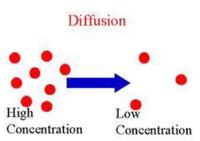
The movement of particles from an area of high to low concentration is known as--
Passive Transport
Active Transport
2.
MULTIPLE CHOICE QUESTION
5 mins • 1 pt
What is it called when large molecules move across the cell membrane from an area of high concentration to an area of low concentration through a protein channel?
Diffusion
Osmosis
Active Transport
Facilitated Diffusion
3.
MULTIPLE CHOICE QUESTION
30 sec • 1 pt
How does a cell maintain homeostasis?
By controlling what enters and leaves the cell
Flexibility
Protective barrier
Structure and support
Tags
NGSS.HS-LS1-3
4.
MULTIPLE CHOICE QUESTION
30 sec • 1 pt
Cell membrane transport that occurs without energy is called--
active transport
endocytosis
passive transport
exocytosis
5.
MULTIPLE CHOICE QUESTION
30 sec • 1 pt
What is the name of the process in which small molecules move from an area of high concentration to an area of low concentration across the cell membrane
Diffusion
Osmosis
Active Transport
Facilitated Diffusion
6.
MULTIPLE CHOICE QUESTION
30 sec • 1 pt
What is the difference between active and passive transport?
7.
MULTIPLE CHOICE QUESTION
30 sec • 1 pt
The movement of molecules from low to high is known as
simple diffusion
facilitated diffusion
active transport
osmosis
Access all questions and much more by creating a free account
Create resources
Host any resource
Get auto-graded reports

Continue with Google

Continue with Email

Continue with Classlink

Continue with Clever
or continue with

Microsoft
%20(1).png)
Apple

Others
Already have an account?
Similar Resources on Wayground
36 questions
AP - Chapter 12: Transcription/Translation
Quiz
•
11th - 12th Grade
41 questions
Genetics and Inheritance
Quiz
•
9th - 10th Grade
36 questions
Xylem & Phloem
Quiz
•
12th Grade
34 questions
Bundle 5 All topics Review
Quiz
•
9th Grade
33 questions
Classwork on irritability
Quiz
•
10th Grade
40 questions
REMEDIAL BIOLOGI KELAS XI
Quiz
•
10th Grade
33 questions
Introduction to Epidemiology
Quiz
•
11th - 12th Grade
35 questions
Heart Anatomy and Physiology
Quiz
•
9th - 12th Grade
Popular Resources on Wayground
15 questions
Fractions on a Number Line
Quiz
•
3rd Grade
20 questions
Equivalent Fractions
Quiz
•
3rd Grade
25 questions
Multiplication Facts
Quiz
•
5th Grade
54 questions
Analyzing Line Graphs & Tables
Quiz
•
4th Grade
22 questions
fractions
Quiz
•
3rd Grade
20 questions
Main Idea and Details
Quiz
•
5th Grade
20 questions
Context Clues
Quiz
•
6th Grade
15 questions
Equivalent Fractions
Quiz
•
4th Grade
Discover more resources for Biology
20 questions
Cell Organelles
Quiz
•
9th Grade
14 questions
Ecological Succession: Primary and Secondary
Quiz
•
9th Grade
22 questions
Human Body Systems Overview
Quiz
•
9th Grade
25 questions
photosynthesis and cellular respiration
Quiz
•
9th Grade
21 questions
Meiosis Vs Mitosis
Quiz
•
10th Grade
10 questions
Comparing Mitosis and Meiosis: Key Differences and Stages

Interactive video
•
6th - 10th Grade
13 questions
Amoeba Sisters Viruses Video quiz
Interactive video
•
9th Grade
20 questions
Cladogram Practice
Quiz
•
10th Grade