
Atomic Bonding: Ionic vs Covalent
Authored by McKenna Malpasuto
Physics
7th Grade
Used 2+ times


AI Actions
Add similar questions
Adjust reading levels
Convert to real-world scenario
Translate activity
More...
Content View
Student View
14 questions
Show all answers
1.
MULTIPLE CHOICE QUESTION
1 min • 1 pt
Ionic Compounds HAVE a positive (+) or negative (-) charge
2.
MULTIPLE CHOICE QUESTION
1 min • 1 pt
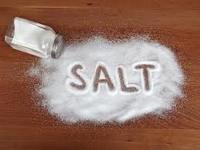
The correct name for NaCl is...
3.
MULTIPLE CHOICE QUESTION
1 min • 1 pt
The octet rule means that all valence shells want to have the number......
4.
MULTIPLE CHOICE QUESTION
1 min • 1 pt
All atoms/elements bond in order to ....
5.
MULTIPLE CHOICE QUESTION
3 mins • 1 pt
Why does CO2 not have a charge?
6.
MULTIPLE CHOICE QUESTION
30 sec • 1 pt
Ionic bonds form between metals and ____.
7.
MULTIPLE CHOICE QUESTION
30 sec • 1 pt
How do covalent bonds form?


Access all questions and much more by creating a free account
Create resources
Host any resource
Get auto-graded reports

Continue with Google

Continue with Email

Continue with Classlink

Continue with Clever
or continue with

Microsoft
%20(1).png)
Apple

Others
Already have an account?
Similar Resources on Wayground

11 questions
F5 Chp 3.2 DC Motor

Quiz
•
KG - University
17 questions
Electric Charge and Static Electricity
Quiz
•
7th - 9th Grade
10 questions
Aplicaciones de Nanotecnología y Nanomateriales
Quiz
•
7th - 9th Grade
11 questions
electrical quantities
Quiz
•
7th Grade
16 questions
Protons, Neutrons, Electrons
Quiz
•
6th - 8th Grade
17 questions
Thermal Energy
Quiz
•
6th - 8th Grade
10 questions
Magnetism
Quiz
•
7th Grade
19 questions
Heating and Cooling
Quiz
•
6th - 9th Grade
Popular Resources on Wayground
15 questions
Fractions on a Number Line
Quiz
•
3rd Grade
20 questions
Equivalent Fractions
Quiz
•
3rd Grade
25 questions
Multiplication Facts
Quiz
•
5th Grade
54 questions
Analyzing Line Graphs & Tables
Quiz
•
4th Grade
22 questions
fractions
Quiz
•
3rd Grade
20 questions
Main Idea and Details
Quiz
•
5th Grade
20 questions
Context Clues
Quiz
•
6th Grade
15 questions
Equivalent Fractions
Quiz
•
4th Grade