
Ionic and Covalent Compounds
Authored by Joshua Miedema
Chemistry
9th - 12th Grade
NGSS covered
Used 188+ times


AI Actions
Add similar questions
Adjust reading levels
Convert to real-world scenario
Translate activity
More...
Content View
Student View
14 questions
Show all answers
1.
MULTIPLE CHOICE QUESTION
45 sec • 1 pt
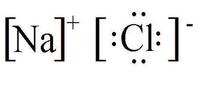
Nonmetals tend to
gain electrons
lose electrons
Tags
NGSS.HS-PS1-1
NGSS.HS-PS1-2
2.
MULTIPLE CHOICE QUESTION
45 sec • 1 pt
If I gain electrons I become
3.
MULTIPLE CHOICE QUESTION
30 sec • 5 pts
Two atoms form a compound by the attraction between positive and negative charges.
covalent compound
ionic compound
polymer
organic compound
Tags
NGSS.HS-PS1-3
4.
MULTIPLE CHOICE QUESTION
30 sec • 1 pt
True or False: An ionic bond forms when atoms of a non-metal give up electrons to atoms of a metal
True
False
Tags
NGSS.HS-PS1-1
NGSS.HS-PS1-2
5.
MULTIPLE CHOICE QUESTION
30 sec • 1 pt
In all covalent bonds, valence electrons are
lost
gained
shared equally
shared
Tags
NGSS.HS-PS1-1
6.
MULTIPLE CHOICE QUESTION
30 sec • 1 pt
Which two elements would NOT form an ionic bond?
calcium and lithium
calcium and oxygen
lithium and oxygen
calcium and carbon
Tags
NGSS.HS-PS1-3
7.
MULTIPLE CHOICE QUESTION
30 sec • 5 pts
What type of compound is formed when atoms share electrons to have a complete octet?
hydrocarbon
covalent compound
ionic compound
inorganic compound
Tags
NGSS.HS-PS1-1
Access all questions and much more by creating a free account
Create resources
Host any resource
Get auto-graded reports

Continue with Google

Continue with Email

Continue with Classlink

Continue with Clever
or continue with

Microsoft
%20(1).png)
Apple

Others
Already have an account?
Similar Resources on Wayground

19 questions
Acids and Bases

Quiz
•
KG - Professional Dev...
11 questions
OCR Chemistry A – 2.1.3(a,e,f,g) AoS and Ideal Gases
Quiz
•
12th Grade
15 questions
Chemical bonds quiz
Quiz
•
9th Grade
10 questions
CHEMISTRY 1
Quiz
•
12th Grade
10 questions
Compounds and Chemical formulas
Quiz
•
6th - 9th Grade
17 questions
law of conservation of matter
Quiz
•
10th - 12th Grade
13 questions
Ionic and Covalent Bonding
Quiz
•
KG - Professional Dev...
10 questions
Alkynes and Benzene
Quiz
•
12th Grade
Popular Resources on Wayground
15 questions
Fractions on a Number Line
Quiz
•
3rd Grade
20 questions
Equivalent Fractions
Quiz
•
3rd Grade
25 questions
Multiplication Facts
Quiz
•
5th Grade
54 questions
Analyzing Line Graphs & Tables
Quiz
•
4th Grade
22 questions
fractions
Quiz
•
3rd Grade
20 questions
Main Idea and Details
Quiz
•
5th Grade
20 questions
Context Clues
Quiz
•
6th Grade
15 questions
Equivalent Fractions
Quiz
•
4th Grade
Discover more resources for Chemistry
20 questions
Types of Chemical Reactions
Quiz
•
9th - 12th Grade
10 questions
Formative 3BC: Ionic v Covalent Bonds
Quiz
•
9th Grade
10 questions
Exploring Stoichiometry Concepts

Interactive video
•
6th - 10th Grade
20 questions
Mixed Bonding Naming
Quiz
•
9th Grade
20 questions
Naming & Writing Chemical Formulas
Quiz
•
10th Grade
20 questions
Chemical Reactions
Quiz
•
9th Grade
20 questions
Practice: E-Con, Orbital Notation, Noble Gas Notation
Quiz
•
10th Grade
20 questions
Covalent Bonding
Quiz
•
10th Grade