
Unit 3: The Periodic Table + Isotopes
Authored by Amy Tan
Chemistry
6th Grade
Used 12+ times


AI Actions
Add similar questions
Adjust reading levels
Convert to real-world scenario
Translate activity
More...
Content View
Student View
18 questions
Show all answers
1.
MULTIPLE CHOICE QUESTION
30 sec • 1 pt

The nucleus of an atom contains which subatomic particles?
protons and electrons
protons and neutrons
electrons and neutrons
protons, electrons, and neutrons
2.
MULTIPLE CHOICE QUESTION
30 sec • 1 pt

In a neutrally charged atom, which two subatomic particles are equal in number?
protons and neutrons
all subatomic particles are equal in number
neutrons and electrons
protons and electrons
3.
MULTIPLE CHOICE QUESTION
30 sec • 1 pt

Which subatomic particle is counted to determine the type of element the atom represents?
proton
neutron
electron
boron
4.
MULTIPLE CHOICE QUESTION
30 sec • 1 pt
Particles in an atom that have no charge are
negatrons
electrons
neutrons
protons
5.
MULTIPLE CHOICE QUESTION
1 min • 1 pt
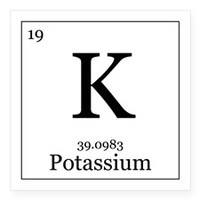
How many neutrons are in an atom of "K"?
29
19
58
20
6.
MULTIPLE CHOICE QUESTION
1 min • 1 pt
The atomic number is equal to _.
the number of protons and also electrons
the number of neutrons only
the total number of protons and neutrons
the number of protons, neutrons, and electrons
7.
MULTIPLE CHOICE QUESTION
30 sec • 1 pt
Adding or subtracting neutrons from an atom means it is now a(n)...
ion
mixture
isotope
neutral atom
Access all questions and much more by creating a free account
Create resources
Host any resource
Get auto-graded reports

Continue with Google

Continue with Email

Continue with Classlink

Continue with Clever
or continue with

Microsoft
%20(1).png)
Apple

Others
Already have an account?
Similar Resources on Wayground

17 questions
Chemical Reactions

Quiz
•
4th - 10th Grade
16 questions
Interdependence Among Living Systems
Quiz
•
KG - University
20 questions
SI (The Metric System)
Quiz
•
6th - 8th Grade
20 questions
KIMIA TING 4
Quiz
•
1st - 10th Grade
19 questions
Scientific Models
Quiz
•
6th - 8th Grade
21 questions
Metric Conversions
Quiz
•
6th - 12th Grade
13 questions
Matter: Atoms, Elements, Compounds, Mixtures, Bonds
Quiz
•
6th - 8th Grade
16 questions
Elements, Compounds, and Chemical Changes
Quiz
•
5th - 12th Grade
Popular Resources on Wayground
7 questions
History of Valentine's Day

Interactive video
•
4th Grade
15 questions
Fractions on a Number Line
Quiz
•
3rd Grade
20 questions
Equivalent Fractions
Quiz
•
3rd Grade
25 questions
Multiplication Facts
Quiz
•
5th Grade
22 questions
fractions
Quiz
•
3rd Grade
15 questions
Valentine's Day Trivia
Quiz
•
3rd Grade
20 questions
Main Idea and Details
Quiz
•
5th Grade
20 questions
Context Clues
Quiz
•
6th Grade