
Unit 3 Exam Review Lectures 5 & 6
Authored by Jillian Gravelle
Science
9th Grade
NGSS covered
Used 4+ times


AI Actions
Add similar questions
Adjust reading levels
Convert to real-world scenario
Translate activity
More...
Content View
Student View
53 questions
Show all answers
1.
MULTIPLE CHOICE QUESTION
45 sec • 1 pt

When a specific population grows past the ecosystem's carrying capacity, what happens to the population?
Tags
NGSS.MS-LS2-4
NGSS.MS-LS2-1
2.
MULTIPLE CHOICE QUESTION
1 min • 1 pt
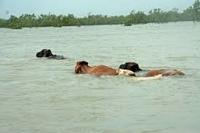
Excessive amounts of rain caused a flood in the southwest United States that resulted in substantial amounts of deaths in the rabbit population? This situation is an example of a density _____________ limiting factor.
Tags
NGSS.MS-LS2-4
NGSS.MS-LS2-1
3.
MULTIPLE CHOICE QUESTION
30 sec • 1 pt
Natural disasters can be considered limiting factors.
true: density independent limiting factors
false; natural disasters are not limiting factors
true: density dependent limiting factors
false: because Mrs. Schaffer said
Tags
NGSS.MS-ESS3-2
4.
MULTIPLE CHOICE QUESTION
30 sec • 1 pt
Limiting factors which impact the size of a population no matter how large that population is.
5.
MULTIPLE CHOICE QUESTION
1 min • 1 pt
An environmental factor such as storms and extreme heat or cold that decrease a population are considered to be.
6.
MULTIPLE CHOICE QUESTION
30 sec • 1 pt
A lion and a cheetah attempt to occupy the same niche. The more aggressive lion survives; the cheetah does not.
Density-Dependent: Competition
Density-Independent: Competition
Density-Dependent: Predator-Prey
Density-Independent: Predator-Prey
Tags
NGSS.MS-LS2-4
7.
MULTIPLE CHOICE QUESTION
1 min • 1 pt

Two arctic fox are fighting with a polar bear for a sea lion carcass. One fox distracts the bear while the other eats. What type of limiting factor is the polar bear?
Predator-Prey Relationships
Competition
Herbivory Effect
Weather
Tags
NGSS.MS-LS2-4
NGSS.MS-LS2-2


Access all questions and much more by creating a free account
Create resources
Host any resource
Get auto-graded reports

Continue with Google

Continue with Email

Continue with Classlink

Continue with Clever
or continue with

Microsoft
%20(1).png)
Apple

Others
Already have an account?


