
Cell Transport Quiz
Authored by Miguel Torres
Biology
9th Grade
Used 7+ times


AI Actions
Add similar questions
Adjust reading levels
Convert to real-world scenario
Translate activity
More...
Content View
Student View
30 questions
Show all answers
1.
MULTIPLE CHOICE QUESTION
30 sec • 1 pt
What is the definition of OSMOSIS?
Diffusion of water through a selectively permeable membrane
Molecular structure that surrounds the cell and controls what enters and leaves the cell
Movement of molecules across the cell membrane against the concentration gradient
Movement of molecules across the cell membrane from an area of high concentration to low concentration
2.
MULTIPLE CHOICE QUESTION
30 sec • 1 pt
What is the definition of ACTIVE TRANSPORT?
Movement of molecules across the cell membrane against the concentration gradient
Diffusion of water through a selectively permeable membrane
Molecular structure that surrounds the cell and controls what enters and leaves the cell
Movement of molecules across the cell membrane from an area of high concentration to low concentration
3.
MULTIPLE CHOICE QUESTION
30 sec • 1 pt

Identify the following structure
Phospholipid
Cell
Cell membrane
Protein
4.
MULTIPLE CHOICE QUESTION
30 sec • 1 pt

What is the name of 'A' found on the structure below
Lipid Bilayer (cell membrane)
Protein
Phosphate hydrophilic heads
Lipid hydrophobic tails
5.
MULTIPLE CHOICE QUESTION
30 sec • 1 pt

What is the name of 'B' found on the structure below
Protein
Lipic bilayer
Phosphate hydrophilic heads
Lipid hydrophobic heads
6.
MULTIPLE CHOICE QUESTION
30 sec • 1 pt
Why would the cell need energy to move molecules across the membrane?
the molecule is going against the concentration gradient
the molecule is to large to pass through the membrane
the lipid membrane requires energy anytime something is moving across the membrane
7.
MULTIPLE CHOICE QUESTION
30 sec • 1 pt
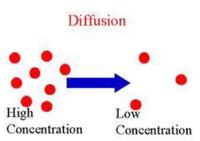
In passive diffusion, substances always move...
from an area of higher concentration to an area of lower concentration
from an area with more of the molecules to an area with fewer of the molecules
from an area of lower concentration to an area of higher concentration
from an area with fewer of the molecules to an area with more of the molecules

Access all questions and much more by creating a free account
Create resources
Host any resource
Get auto-graded reports

Continue with Google

Continue with Email

Continue with Classlink

Continue with Clever
or continue with

Microsoft
%20(1).png)
Apple

Others
Already have an account?
Similar Resources on Wayground

25 questions
Ecology Gse

Quiz
•
9th Grade
25 questions
The Heart Labeling
Quiz
•
9th - 10th Grade
25 questions
Cell Cycle AI
Quiz
•
9th - 12th Grade
26 questions
Nature of Science
Quiz
•
9th Grade
27 questions
Evolution/Genetics/Virus Review
Quiz
•
9th - 10th Grade
26 questions
Spring 2023 Unit 4 Heredity
Quiz
•
9th - 12th Grade
25 questions
Mannslíkaminn Kafli 5
Quiz
•
5th - 10th Grade
25 questions
Physical Education/ Biology
Quiz
•
8th - 12th Grade
Popular Resources on Wayground
15 questions
Fractions on a Number Line
Quiz
•
3rd Grade
10 questions
Probability Practice
Quiz
•
4th Grade
15 questions
Probability on Number LIne
Quiz
•
4th Grade
20 questions
Equivalent Fractions
Quiz
•
3rd Grade
25 questions
Multiplication Facts
Quiz
•
5th Grade
22 questions
fractions
Quiz
•
3rd Grade
6 questions
Appropriate Chromebook Usage

Lesson
•
7th Grade
10 questions
Greek Bases tele and phon
Quiz
•
6th - 8th Grade
Discover more resources for Biology
22 questions
Human Body Systems Overview
Quiz
•
9th Grade
25 questions
photosynthesis and cellular respiration
Quiz
•
9th Grade
18 questions
Enzymes and Their Functions Quiz
Quiz
•
9th Grade
20 questions
Food Chains and Food Webs
Quiz
•
7th - 12th Grade
30 questions
Exploring the World of Plants
Quiz
•
9th Grade
65 questions
Review for TEST 1
Quiz
•
9th - 10th Grade
10 questions
Exploring Food Webs and Energy Pyramids

Interactive video
•
6th - 10th Grade
20 questions
Meiosis and Sexual Reproduction
Quiz
•
9th Grade