
IMF and Liquid properties
Authored by DAWN SOMERS
Chemistry
9th - 12th Grade
Used 18+ times


AI Actions
Add similar questions
Adjust reading levels
Convert to real-world scenario
Translate activity
More...
Content View
Student View
15 questions
Show all answers
1.
MULTIPLE CHOICE QUESTION
30 sec • 1 pt

As water boils, the intermolecular forces break while the forces within the molecule stay in tact since they are stronger. Rank these in order of strongest to weakest: covalent bond London forces hydrogen bond dipole-dipole attraction
dipole-dipole>covalent bond>hydrogen bond>London
London>dipole-diple>hydrogen bond>covalent bond
covalent bond>hydrogen bond>dipole-dipole>London
hydrogen bond>dipole-dipole>London>covalent bond
2.
MULTIPLE SELECT QUESTION
1 min • 1 pt

Check all the Intermolecular forces for: NH3
Dispersion Force
Dipole dipole
Hydrogen bonding
3.
MULTIPLE CHOICE QUESTION
2 mins • 1 pt
Which substance has the weakest intermolecular forces?
Substance A, boiling point of 75 °C
Substance B, boiling point of 105 °C
Substance C, boiling point of 25 °C
Substance d, boiling point of 45 °C
4.
MULTIPLE CHOICE QUESTION
1 min • 1 pt

Intermolecular forces for: CO2
Dispersion Force
Dipole dipole
Hydrogen bonding
5.
MULTIPLE SELECT QUESTION
30 sec • 1 pt
What elements must be present for a Hydrogen Bond to occur? Check all that apply
Nitrogen
Chlorine
Sulfur
Oxygen
Fluorine
6.
MULTIPLE CHOICE QUESTION
30 sec • 1 pt
London forces are stronger in heavier atoms or molecules, and weaker in lighter atoms or molecules. Which of these has the strongest London forces?
7.
MULTIPLE CHOICE QUESTION
30 sec • 1 pt
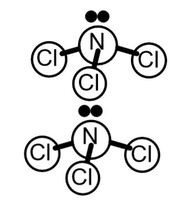
Which of the following is unable to form hydrogen bonds?


Access all questions and much more by creating a free account
Create resources
Host any resource
Get auto-graded reports

Continue with Google

Continue with Email

Continue with Classlink

Continue with Clever
or continue with

Microsoft
%20(1).png)
Apple

Others
Already have an account?
Similar Resources on Wayground

10 questions
Chủ đề: BENZEN VÀ ANKYLBENZEN, STIREN

Quiz
•
10th Grade - Professi...
10 questions
Atomic Structure
Quiz
•
12th Grade - University
10 questions
C2-7 Group 1 elements
Quiz
•
9th - 12th Grade
15 questions
Thermochemistry
Quiz
•
KG - University
10 questions
CHỦ ĐỀ: HALOGEN
Quiz
•
10th Grade - University
16 questions
Chemical Reactions
Quiz
•
9th - 10th Grade
20 questions
Mixed Stiochiometry
Quiz
•
9th - 12th Grade
10 questions
Quiz : Reaction of amide
Quiz
•
12th Grade
Popular Resources on Wayground
15 questions
Fractions on a Number Line
Quiz
•
3rd Grade
10 questions
Probability Practice
Quiz
•
4th Grade
15 questions
Probability on Number LIne
Quiz
•
4th Grade
20 questions
Equivalent Fractions
Quiz
•
3rd Grade
25 questions
Multiplication Facts
Quiz
•
5th Grade
22 questions
fractions
Quiz
•
3rd Grade
6 questions
Appropriate Chromebook Usage

Lesson
•
7th Grade
10 questions
Greek Bases tele and phon
Quiz
•
6th - 8th Grade
Discover more resources for Chemistry
20 questions
Predicting Products
Quiz
•
9th - 12th Grade
11 questions
Balancing Chemical Equations
Lesson
•
9th Grade
10 questions
Exploring Types of Chemical Reactions

Interactive video
•
6th - 10th Grade
19 questions
Stoichiometry, % yield, Limiting Reactants
Quiz
•
10th Grade
20 questions
Types of Chemical Reactions
Quiz
•
9th - 12th Grade
10 questions
Exploring Ionic and Covalent Bonding Concepts
Interactive video
•
6th - 10th Grade
7 questions
GCSE Chemistry - Balancing Chemical Equations #4
Interactive video
•
9th - 10th Grade
24 questions
Unit 2 (Part 1) Bonding Review
Quiz
•
12th Grade