
1.4 The Enlightenment
Authored by V Curry
Social Studies
7th Grade
Used 28+ times


AI Actions
Add similar questions
Adjust reading levels
Convert to real-world scenario
Translate activity
More...
Content View
Student View
14 questions
Show all answers
1.
MULTIPLE CHOICE QUESTION
2 mins • 1 pt
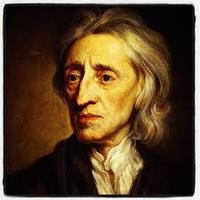
Enlightenment philosopher who believed people had natural rights of life, liberty, and property.
2.
MULTIPLE CHOICE QUESTION
2 mins • 1 pt
Which Enlightenment philosopher argued that people have the right to abolish their government and create a new one?
3.
MULTIPLE CHOICE QUESTION
2 mins • 1 pt
The rights of life, liberty, and property are called:
Unalienable Rights
Essential Rights
Natural Rights
Original Rights
4.
MULTIPLE CHOICE QUESTION
30 sec • 1 pt

Enlightenment philosopher who believed to limit government, that it should be divided into separate branches that shared power.
5.
MULTIPLE CHOICE QUESTION
30 sec • 1 pt
Enlightenment philosophers believe that if government abuses power the people should change it.
6.
MULTIPLE CHOICE QUESTION
30 sec • 1 pt
Locke believed that a government's power came from its ___________________.
7.
MULTIPLE CHOICE QUESTION
45 sec • 1 pt
. . . reason, which is that law teaches all mankind, who would but consult it, that being all equal and independent, no one ought to harm another in his life, health, liberty, or possessions.
John Locke, Two Treatises on Civil Government, 1689
Which concept of the Enlightenment would the passage most likely support?
Truth can be discovered through reasoning and logic.
Humankind can and should improve over time.
People have a right to equality and freedom.
What is natural is also reasonable.
Access all questions and much more by creating a free account
Create resources
Host any resource
Get auto-graded reports

Continue with Google

Continue with Email

Continue with Classlink

Continue with Clever
or continue with

Microsoft
%20(1).png)
Apple

Others
Already have an account?
Similar Resources on Wayground

9 questions
L06 The Great Barrier Reef

Quiz
•
6th - 10th Grade
10 questions
Southern Cotton Kingdom
Quiz
•
7th Grade
10 questions
Regional Powers
Quiz
•
7th Grade - Professio...
13 questions
World Environment Day
Quiz
•
7th Grade
12 questions
The Amish
Quiz
•
KG - University
10 questions
Heritage Quiz
Quiz
•
KG - 10th Grade
10 questions
class 7 history chapter 2
Quiz
•
6th - 10th Grade
10 questions
Defeat Corona Virus
Quiz
•
3rd Grade - University
Popular Resources on Wayground
15 questions
Fractions on a Number Line
Quiz
•
3rd Grade
20 questions
Equivalent Fractions
Quiz
•
3rd Grade
25 questions
Multiplication Facts
Quiz
•
5th Grade
54 questions
Analyzing Line Graphs & Tables
Quiz
•
4th Grade
22 questions
fractions
Quiz
•
3rd Grade
20 questions
Main Idea and Details
Quiz
•
5th Grade
20 questions
Context Clues
Quiz
•
6th Grade
15 questions
Equivalent Fractions
Quiz
•
4th Grade
Discover more resources for Social Studies
38 questions
The Patriot Way: Classroom, Hallway, and Commons
Quiz
•
7th Grade
24 questions
Republic of Texas and Early Statehood Test Review
Quiz
•
7th Grade
24 questions
Quiz #2- American Revolution
Quiz
•
7th Grade
24 questions
Republic of Texas Review
Quiz
•
7th Grade
17 questions
Early Statehood Review-3.0
Quiz
•
7th Grade
8 questions
Agriculture, Laws, and Slavery in Early Texas

Lesson
•
6th - 8th Grade
5 questions
Legislative branch Reiew

Interactive video
•
7th Grade
22 questions
Bill of Rights Scenarios
Quiz
•
7th Grade