
NGSS.MS-LS2-4
Authored by Wayground Content
Science
6th - 8th Grade
NGSS covered


AI Actions
Add similar questions
Adjust reading levels
Convert to real-world scenario
Translate activity
More...
Content View
Student View
20 questions
Show all answers
1.
MULTIPLE CHOICE QUESTION
1 min • 1 pt
A rainforest area is experiencing a severe drought. As a consequence, the insect population has decreased. What will the insect-eating birds most likely do as a result of the drought?
Tags
NGSS.MS-LS2-4
2.
MULTIPLE CHOICE QUESTION
2 mins • 1 pt
After the Aswan High Dam was built on the Nile River, the rate of parasitic blood-flukeinfection doubled in the human population near the dam. As a result of building the dam, the flow of the Nile changed. This changed the habitat, which resulted in an increase in its population of a certain aquatic snail. The snails, which were infected, released larvae of the fluke. These larvae then infected humans. This situation best illustrates that:
Tags
NGSS.MS-LS2-4
3.
MULTIPLE CHOICE QUESTION
2 mins • 1 pt
What are some consequences of deforestation?
Tags
NGSS.MS-LS2-4
4.
MULTIPLE CHOICE QUESTION
2 mins • 1 pt
Which of the following is an abioitic factor that could affect biotic factors?
Population of rabbits.
Length of daylight.
Presence of harmful bacteria.
Number of herbivores.
Tags
NGSS.MS-LS2-4
5.
MULTIPLE CHOICE QUESTION
30 sec • 1 pt
A species could go extinct if:
food becomes more plentiful.
members of the species have adaptations to enhance survival.
the environment changes drastically and no one can adapt.
there is less competition for resources.
Tags
NGSS.MS-LS2-4
6.
MULTIPLE CHOICE QUESTION
30 sec • 1 pt
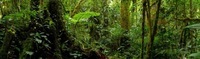
Which biome is more likely to survive a change in the environment?
Tags
NGSS.MS-LS2-4
7.
MULTIPLE CHOICE QUESTION
1 min • 1 pt

The population of deer in a certain area is monitored over a period of six years. The data is represented in the graph provided. Which of the following is the most likely explanation for the change in population in 2009?
Wild dogs, which prey on deer, were being hunted more than usual.
Snowfall in the previous spring was higher than the yearly average.
Humans introduced grazing animals that feed on the same plants as the deer.
More insects that pollinate flowering plants move into the ecosystem.
Tags
NGSS.MS-LS2-4
Access all questions and much more by creating a free account
Create resources
Host any resource
Get auto-graded reports

Continue with Google

Continue with Email

Continue with Classlink

Continue with Clever
or continue with

Microsoft
%20(1).png)
Apple

Others
Already have an account?
Similar Resources on Wayground

20 questions
Układ oddechowy 7

Quiz
•
1st - 6th Grade
19 questions
Scientific Equipment
Quiz
•
7th Grade
18 questions
Sources of Energy
Quiz
•
7th - 10th Grade
17 questions
Reflection and Mirrors
Quiz
•
8th Grade
15 questions
Adapations and food chain
Quiz
•
6th - 7th Grade
15 questions
Types Of Energy
Quiz
•
5th - 8th Grade
17 questions
Ecosystems & Interactions topics 1-3
Quiz
•
7th Grade
20 questions
Winds,Storms and Cyclones
Quiz
•
6th - 12th Grade
Popular Resources on Wayground
7 questions
History of Valentine's Day

Interactive video
•
4th Grade
15 questions
Fractions on a Number Line
Quiz
•
3rd Grade
20 questions
Equivalent Fractions
Quiz
•
3rd Grade
25 questions
Multiplication Facts
Quiz
•
5th Grade
22 questions
fractions
Quiz
•
3rd Grade
15 questions
Valentine's Day Trivia
Quiz
•
3rd Grade
20 questions
Main Idea and Details
Quiz
•
5th Grade
20 questions
Context Clues
Quiz
•
6th Grade
Discover more resources for Science
11 questions
Valentines Day
Quiz
•
6th - 8th Grade
25 questions
Valentine's Day Trivia
Quiz
•
8th Grade
20 questions
Cell Organelles and Functions
Quiz
•
6th - 8th Grade
20 questions
Rocks and The Rock Cycle
Quiz
•
6th Grade
8 questions
Newton's Second Law

Lesson
•
6th - 8th Grade
20 questions
Thermal Energy - Heat Transfer
Quiz
•
6th Grade
10 questions
Exploring the Rock Cycle: Types and Formation
Interactive video
•
6th - 8th Grade
10 questions
Carbon Cycle
Lesson
•
6th - 8th Grade