
Earth Origins Review
Authored by Audrey Schirmer
Science, Social Studies, Other
9th Grade
Used 1+ times


AI Actions
Add similar questions
Adjust reading levels
Convert to real-world scenario
Translate activity
More...
Content View
Student View
40 questions
Show all answers
1.
MULTIPLE CHOICE QUESTION
3 mins • 1 pt
Used to determine whether an object is older or younger than other objects
2.
MULTIPLE CHOICE QUESTION
3 mins • 1 pt
States that younger rocks lie above older rocks if the layers have not been disturbed
3.
MULTIPLE CHOICE QUESTION
45 sec • 1 pt

Analyze the seashell found in the white layer. Which statement is true of the rock layer that contains this fossil?
4.
MULTIPLE CHOICE QUESTION
3 mins • 1 pt
How do geologists use relative dating?
5.
MULTIPLE CHOICE QUESTION
3 mins • 1 pt

What are the relative ages of the features in order from oldest to youngest?
6.
MULTIPLE CHOICE QUESTION
3 mins • 1 pt
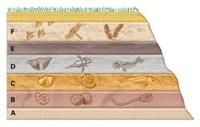
Which rock layer in the diagram seems to be the oldest?
7.
MULTIPLE CHOICE QUESTION
30 sec • 1 pt
1. Which statement best describes the Law of Superposition?
Each sedimentary layer of rock represents 1,000 years of Earth’s age, much like the rings of a tree.
In undisturbed layers of sedimentary rock, the upper rock layers are older than the lower rock layers.
In undisturbed layers of sedimentary rock, the lowest layers contain the older rocks.
Rocks that form near volcanoes are older than surrounding rock.
Access all questions and much more by creating a free account
Create resources
Host any resource
Get auto-graded reports

Continue with Google

Continue with Email

Continue with Classlink

Continue with Clever
or continue with

Microsoft
%20(1).png)
Apple

Others
Already have an account?


