
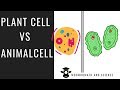
Comparing Plant and Animal Cells: Key Similarities and Differences

Interactive Video
•
English
•
1st - 5th Grade
•
Practice Problem
•
Medium
+2
Standards-aligned
Amelia Wright
Used 102+ times
FREE Resource
Standards-aligned
Read more
10 questions
Show all answers
1.
MULTIPLE CHOICE QUESTION
30 sec • 1 pt
What type of cells contain a nucleus and membrane-bound organelles?
None of the above
Viral particles
Eukaryotic cells
Prokaryotic cells
2.
MULTIPLE CHOICE QUESTION
30 sec • 1 pt
Which organelle is responsible for protein synthesis and is not membrane-bound?
Endoplasmic reticulum
Ribosomes
Mitochondria
Golgi apparatus
3.
MULTIPLE CHOICE QUESTION
30 sec • 1 pt
Which structure provides rigidity and protection to plant cells?
Cell membrane
Chloroplast
Cell wall
Nucleus
4.
MULTIPLE CHOICE QUESTION
30 sec • 1 pt
What is the primary function of chloroplasts in plant cells?
Energy production
Breaking down waste
Protein synthesis
Photosynthesis
5.
MULTIPLE CHOICE QUESTION
30 sec • 1 pt
What is the main difference in vacuole size between plant and animal cells?
Both have equally sized vacuoles
Animal cells have no vacuoles
Plant cells have smaller vacuoles
Plant cells have larger central vacuoles
6.
MULTIPLE CHOICE QUESTION
30 sec • 1 pt
Which cellular component is found in animal cells but not in plant cells?
Chloroplasts
Cell wall
Lysosomes
Plastids
7.
MULTIPLE CHOICE QUESTION
30 sec • 1 pt
What role do lysosomes play in animal cells?
Protein synthesis
Producing energy
Photosynthesis
Breaking down materials
Access all questions and much more by creating a free account
Create resources
Host any resource
Get auto-graded reports

Continue with Google

Continue with Email

Continue with Classlink

Continue with Clever
or continue with

Microsoft
%20(1).png)
Apple

Others
Already have an account?

