
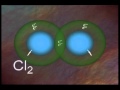
Chemical Bonds and Properties of Metals

Interactive Video
•
Chemistry, Science
•
8th - 12th Grade
•
Practice Problem
•
Hard

Liam Anderson
FREE Resource
Read more
10 questions
Show all answers
1.
MULTIPLE CHOICE QUESTION
30 sec • 1 pt
What happens to metals when they lose electrons?
They become negatively charged.
They gain more electrons.
They become positively charged.
They remain neutral.
2.
MULTIPLE CHOICE QUESTION
30 sec • 1 pt
Why do non-metals have high electronegativity?
They have fewer valence electrons.
They want to lose electrons.
They hold onto their electrons tightly.
They have a full valence shell.
3.
MULTIPLE CHOICE QUESTION
30 sec • 1 pt
What type of bond is formed between a metal and a non-metal?
Covalent bond
Ionic bond
Metallic bond
Hydrogen bond
4.
MULTIPLE CHOICE QUESTION
30 sec • 1 pt
How do non-metals achieve stability?
By forming metallic bonds
By gaining electrons
By sharing electrons
By losing electrons
5.
MULTIPLE CHOICE QUESTION
30 sec • 1 pt
What is the main characteristic of covalent bonds?
Transfer of electrons
Sharing of electrons
Loss of electrons
Gain of electrons
6.
MULTIPLE CHOICE QUESTION
30 sec • 1 pt
What is the 'sea of electrons' in metallic bonds?
A fixed position of electrons
A flow of electrons between atoms
Electrons attached to specific atoms
Electrons that do not move
7.
MULTIPLE CHOICE QUESTION
30 sec • 1 pt
Why are metals good conductors of electricity?
They have a fixed electron position.
They have tightly held electrons.
They have free-moving electrons.
They have no electrons.
Access all questions and much more by creating a free account
Create resources
Host any resource
Get auto-graded reports

Continue with Google

Continue with Email

Continue with Classlink

Continue with Clever
or continue with

Microsoft
%20(1).png)
Apple

Others
Already have an account?

