
Evidence of Evolution
Authored by Thomas Sheppard
Biology
9th Grade
NGSS covered
Used 5+ times


AI Actions
Add similar questions
Adjust reading levels
Convert to real-world scenario
Translate activity
More...
Content View
Student View
24 questions
Show all answers
1.
MULTIPLE CHOICE QUESTION
45 sec • 1 pt
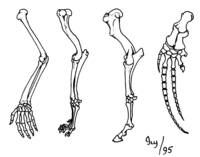
Structures with the same parts have different functions; suggests that organisms share a common ancestry
vestigial structures
homologous structures
adaptive radiation
fossil
Answer explanation
Homologous structures are anatomical features in different organisms that share a common origin but may serve different functions, indicating a shared ancestry. This supports the idea of evolution and common descent.
Tags
NGSS.HS-LS4-1
2.
MULTIPLE CHOICE QUESTION
45 sec • 1 pt
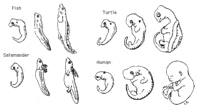
Study of embryos of various organisms to show a common ancestor because of similarities in development
natural selection
embryology
speciation
evolution
Answer explanation
Embryology is the study of embryos and their development, revealing similarities among different organisms that suggest a common ancestor. This supports the idea of evolutionary relationships through shared developmental stages.
Tags
NGSS.HS-LS4-1
3.
MULTIPLE CHOICE QUESTION
45 sec • 1 pt

Some organisms that share a common ancestor have features that have different functions, but similar structures. These are known as
vestigial structures
analogous structures
homologous structures
fossil structures
Answer explanation
Homologous structures are features in different organisms that share a common ancestor, exhibiting similar structures but serving different functions. This distinguishes them from analogous structures, which have similar functions but different origins.
Tags
NGSS.MS-LS4-2
4.
MULTIPLE CHOICE QUESTION
45 sec • 1 pt
How do fossils provide evidence that evolution has happened on Earth?
Fossils show how the sizes of certain animals has changed drastically over millions of years
Fossils show that some species have gone extinct
Fossils show how life forms present today are different than those from the past
Different sedimentary rock layers provide evidence for how the environment has changed over time
Answer explanation
Fossils provide a record of past life forms, showing how they differ from modern species. This evidence of change over time supports the theory of evolution, illustrating the diversity and adaptation of life on Earth.
Tags
NGSS.HS-LS4-1
NGSS.HS-LS4-2
NGSS.HS-LS4-5
5.
MULTIPLE CHOICE QUESTION
45 sec • 1 pt
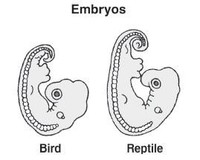
The diagram illustrates an embryonic stage of two organisms.
Which of the following can be determined by observing the embryos shown in the diagram
The organisms share a common ancestry.
The organisms belong to the same genus.
The organisms are native to the same geographic areas.
The organisms will grow into anatomically similar adults.
Answer explanation
The embryos' similarities suggest they share a common ancestry, indicating evolutionary relationships. This does not confirm they belong to the same genus, are geographically related, or will develop into similar adults.
Tags
NGSS.HS-LS4-1
6.
MULTIPLE CHOICE QUESTION
45 sec • 1 pt
Humans, birds, whales, and lizards all have similar arm bones. What is the reason for this?
The function of these bones is the same in all animals
They live in similar environments
They have a common ancestor
All organisms resemble humans
Answer explanation
The similarity in arm bones among humans, birds, whales, and lizards indicates they share a common ancestor. This evolutionary relationship explains the structural similarities despite their different functions and environments.
Tags
NGSS.HS-LS4-1
7.
MULTIPLE CHOICE QUESTION
45 sec • 1 pt
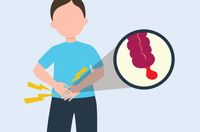
Vestigial structures
structures that perform a similar function but are not similar in origin
remnants of once-important structures that have slowly lost all or most of their function
features found in different organisms that share structural similarities but may have very different functions
preserved remains of an organism
Answer explanation
Vestigial structures are remnants of once-important structures that have slowly lost all or most of their function, such as the human appendix, which no longer serves its original digestive purpose.
Tags
NGSS.HS-LS4-4


Access all questions and much more by creating a free account
Create resources
Host any resource
Get auto-graded reports

Continue with Google

Continue with Email

Continue with Classlink

Continue with Clever
or continue with

Microsoft
%20(1).png)
Apple

Others
Already have an account?
Popular Resources on Wayground

7 questions
History of Valentine's Day

Interactive video
•
4th Grade
15 questions
Fractions on a Number Line

Quiz
•
3rd Grade
20 questions
Equivalent Fractions
Quiz
•
3rd Grade
25 questions
Multiplication Facts
Quiz
•
5th Grade
22 questions
fractions
Quiz
•
3rd Grade
15 questions
Valentine's Day Trivia
Quiz
•
3rd Grade
20 questions
Main Idea and Details
Quiz
•
5th Grade
20 questions
Context Clues
Quiz
•
6th Grade
Discover more resources for Biology
22 questions
Human Body Systems Overview
Quiz
•
9th Grade
25 questions
photosynthesis and cellular respiration
Quiz
•
9th Grade
15 questions
African American Impact in the 1980s
Quiz
•
9th Grade
20 questions
Symbiotic Relationships
Quiz
•
9th Grade
20 questions
Food Chains and Food Webs
Quiz
•
7th - 12th Grade
10 questions
Exploring Food Webs and Energy Pyramids
Interactive video
•
6th - 10th Grade
20 questions
CFA #2 Unit 3 Human Body Systems (21.2 & 21.3)
Quiz
•
9th - 12th Grade
20 questions
Carbon Cycle
Quiz
•
9th Grade