
Fossils Quiz
4th Grade
•8 Qs

Similar activities
Nature
2nd - 5th Grade
•10 Qs
SIFAT CAHAYA/ PROPERTIES OF LIGHT 3
4th Grade
•10 Qs
Science Rocks
3rd - 4th Grade
•10 Qs
Eclipses
KG - Professional Development
•11 Qs
Science Measuring light intensity
4th Grade
•10 Qs
Sources of Energy Quiz 2
4th Grade
•13 Qs
Classification & Lifecycles
4th Grade
•10 Qs
Unit 13 Three states of Matter
4th Grade
•10 Qs
Fossils Quiz

Quiz
•
Science
•
4th Grade
•
Practice Problem
•
Hard
+2
Standards-aligned

Jennifer Nelson
FREE Resource

Enhance your content in a minute
8 questions
Show all answers
1.
MULTIPLE CHOICE QUESTION
30 sec • 1 pt
In which type of rock are scientists likely to find fossils?
Sedimentary
Metamorphic
Igneous
Conglomerate
Tags
NGSS.MS-ESS2-3
NGSS.MS-LS4-1
2.
MULTIPLE CHOICE QUESTION
30 sec • 1 pt
The preserved remains of ancient organisms are called __________.
Tags
NGSS.MS-LS4-1
NGSS.MS-LS4-2
3.
MULTIPLE CHOICE QUESTION
30 sec • 1 pt
How can earthquakes help scientists to discover new fossils?
When Earth shakes, it moves the crust around and this could help expose new rock layers and fossils.
Earthquakes cause sediments to rise to the surface.
Seismographs pick up signals showing where fossils are located.
Earthquakes do not help scientists discover new fossils.
Tags
NGSS.MS-ESS2-2
4.
MULTIPLE CHOICE QUESTION
30 sec • 1 pt
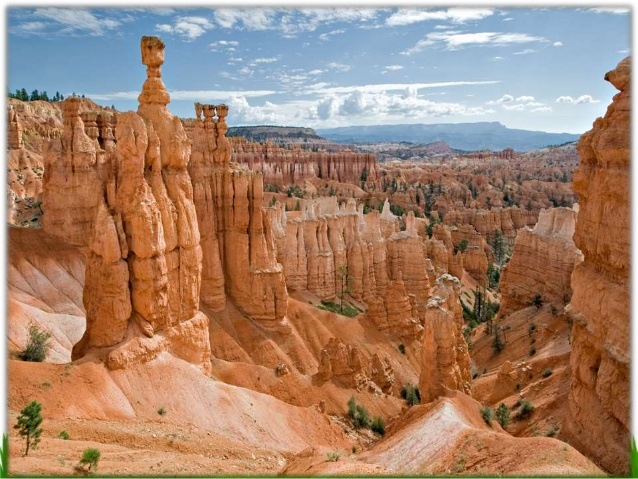
A geologist determines the chronological order in which layers of rock were deposited in a canyon. How does she do this?
She uses carbon dating to find the actual age of the rocks.
She examines the layers of the rocks determining the oldest are at the bottom and youngest are towards the top.
She examines the layers of the rocks determining the youngest are at the bottom and oldest are towards the top.
She determined the exact age of all the fossils in the top layer.
Tags
NGSS.MS-ESS1-4
5.
MULTIPLE CHOICE QUESTION
30 sec • 1 pt
Which fossil provides the best evidence of a marine environment?


6.
MULTIPLE CHOICE QUESTION
30 sec • 1 pt
Which characteristic does the order of the rock layers provide?
Type of environment
Location
Color
Age
Tags
NGSS.MS-ESS1-4
7.
MULTIPLE CHOICE QUESTION
30 sec • 1 pt
Which description BEST explains how fossils and rock layers help scientists understand Earth’s surface?
Fossils are evidence of how each layer was deposited. Scientists use this evidence to support the idea that Earth’s surface is constantly changing.
Rock layers are the exact same in all areas on earth, so finding the age of one layer helps them determine the age of many others.
Rocks deposited towards the top of the surface are the oldest and this can be proven through carbon dating.
Answer explanation
The correct choice highlights that fossils provide evidence of how rock layers were formed, supporting the idea that Earth's surface is dynamic and constantly changing over time.
Tags
NGSS.MS-ESS1-4
NGSS.MS-ESS2-2

Access all questions and much more by creating a free account
Create resources
Host any resource
Get auto-graded reports

Continue with Google

Continue with Email

Continue with Classlink

Continue with Clever
or continue with

Microsoft
%20(1).png)
Apple

Others
Already have an account?
Similar Resources on Wayground
12 questions
Magnets
Quiz
•
4th Grade
11 questions
Classification of living things
Quiz
•
4th - 5th Grade
10 questions
Our Future
Quiz
•
KG - 12th Grade
12 questions
Protecting the environment
Quiz
•
4th Grade
11 questions
Otter
Quiz
•
4th - 6th Grade
12 questions
THE NERVOUS SYSTEM
Quiz
•
4th Grade
13 questions
Layers of the Earth/Tectonic Plates
Quiz
•
4th Grade
10 questions
solid, liquid and gases
Quiz
•
4th Grade
Popular Resources on Wayground
5 questions
This is not a...winter edition (Drawing game)
Quiz
•
1st - 5th Grade
25 questions
Multiplication Facts
Quiz
•
5th Grade
10 questions
Identify Iconic Christmas Movie Scenes

Interactive video
•
6th - 10th Grade
20 questions
Christmas Trivia
Quiz
•
6th - 8th Grade
18 questions
Kids Christmas Trivia
Quiz
•
KG - 5th Grade
11 questions
How well do you know your Christmas Characters?

Lesson
•
3rd Grade
14 questions
Christmas Trivia
Quiz
•
5th Grade
20 questions
How the Grinch Stole Christmas
Quiz
•
5th Grade
Discover more resources for Science
8 questions
4th Grade Science – Quick Check Review
Quiz
•
4th Grade
10 questions
Moon Phases
Quiz
•
4th Grade
20 questions
Types of rocks
Quiz
•
4th Grade
19 questions
Grade 4 Module 3 Twig
Quiz
•
4th Grade
24 questions
Twig Module 3
Quiz
•
4th Grade
15 questions
Weathering and Erosion
Interactive video
•
4th Grade
14 questions
Renewable and Nonrenewable Resources
Quiz
•
4th Grade
10 questions
CBA Review Forces: Magnetism, Friction, and Gravity
Quiz
•
4th Grade