
untitled
Authored by Yasmeen Leach
Science
8th - 9th Grade
NGSS covered
Used 2+ times


AI Actions
Add similar questions
Adjust reading levels
Convert to real-world scenario
Translate activity
More...
Content View
Student View
65 questions
Show all answers
1.
MULTIPLE CHOICE QUESTION
45 sec • 1 pt
What star phase happens when an average star expands its outer layers to increase in size and luminosity (brightness)?
Neutron star
White Dwarf star
Red Giant star
Black Hole
2.
MULTIPLE CHOICE QUESTION
45 sec • 1 pt
Massive stars life cycles come to a close with an explosive Supernova phase which leads to which two outcomes?
A black hole and a neutron star
A black hole and a Red Supergiant
A pulsar and a main sequence star
A planetary nebula and a new planet
3.
MULTIPLE CHOICE QUESTION
45 sec • 1 pt
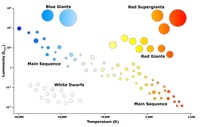
Which category of stars are very hot, but not very bright?
Blue Giants
Red Giants
White Dwarfs
Red Supergiants
Tags
NGSS.HS-ESS1-3
4.
MULTIPLE CHOICE QUESTION
45 sec • 1 pt
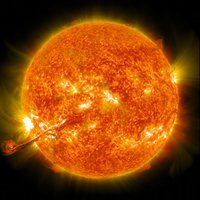
What type of star is the Sun classified as?
A red giant star
A red supergiant star
A neutron star
A main sequence star
Tags
NGSS.MS-ESS1-1
5.
MULTIPLE CHOICE QUESTION
45 sec • 1 pt
Most stars of lower mass are more stable, and more common in our universe. These average stars are known as...
Main Sequence stars
White Dwarfs
Red Giants
Pulsars
6.
MULTIPLE CHOICE QUESTION
45 sec • 1 pt

A collection of gas and dust where new stars are born is known as a...
Planetary Nebula
Black Hole
Supernova
Stellar Nebula
Tags
NGSS.HS-ESS1-3
7.
MULTIPLE CHOICE QUESTION
45 sec • 1 pt
The remnants of a Red Giant star after shedding its outer layers are the _______________ and ________________.
Planetary Nebula and a White Dwarf
Neutron Star and a Pulsar
Neutron Star and a Black Hole
Stellar Nebula and a Main sequence star


Access all questions and much more by creating a free account
Create resources
Host any resource
Get auto-graded reports

Continue with Google

Continue with Email

Continue with Microsoft
or continue with

%20(1).png)
Apple

Others
By signing up, you agree to our Terms of Service & Privacy Policy
Already have an account?


