
Charged vs Uncharged Objects
11th - 12th Grade
•20 Qs

Similar activities
Physics equations
9th - 11th Grade
•20 Qs
Astro IGCSE
10th - 12th Grade
•16 Qs
MCAS Engineering Design
9th - 12th Grade
•15 Qs
Sound Waves
8th - 12th Grade
•20 Qs
BBC How to Make - Headphones
9th - 12th Grade
•20 Qs
Vectors and Projectiles
11th Grade
•20 Qs
Lesson 3: Development of Features
11th Grade
•20 Qs
PRE-TEST MEASUREMENT
12th Grade
•20 Qs
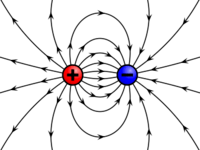
Charged vs Uncharged Objects

Quiz
•
Physics
•
11th - 12th Grade
•
Practice Problem
•
Hard
+3
Standards-aligned

Charles Martinez
FREE Resource

Enhance your content in a minute
20 questions
Show all answers
1.
MULTIPLE CHOICE QUESTION
30 sec • 1 pt
A student rubs a certain rod with plastic wrap. The rod then repels a glass rod that has been rubbed with silk and attracts a rubber rod that has been rubbed with fur. This observation shows that the first rod has a(n) _______________ charge.
positive
negative
neutral
undetermined
Tags
NGSS.MS-PS2-3
NGSS.MS-PS2-5
2.
MULTIPLE CHOICE QUESTION
30 sec • 1 pt
Objects become electrically charged as a result of the transfer of__________________
protons.
electrons.
neutrons.
nuclei.
3.
MULTIPLE CHOICE QUESTION
30 sec • 1 pt
The nucleus of an atom has _______________ electric charge.
positive
negative
neutral
both positive or negative
4.
MULTIPLE CHOICE QUESTION
30 sec • 1 pt
Rubbing a balloon through dry hair gives the balloon a _______________ electric charge.
positive
negative
neutral
balanced
Tags
NGSS.MS-PS2-3
5.
MULTIPLE CHOICE QUESTION
30 sec • 1 pt
Robert Milliken’s research showed that electric charge is quantized, which means that
a proton has a charge equal to that of two electrons.
an electron can have any amount of electric charge.
all charge is an integer multiple of a fundamental charge.
all charge is an integer multiple of the charge of a neutron.
6.
MULTIPLE CHOICE QUESTION
30 sec • 1 pt
A negatively charged rod is brought near a metal sphere that is not grounded. When the rod is taken away, the metal sphere will have _______________________.
positive charge.
a negative charge.
an induced charge.
no charge.
7.
MULTIPLE CHOICE QUESTION
30 sec • 1 pt
Uncharged objects can be attracted by a charged object because the uncharged objects acquire a surface charge by the process of __________________.
contact
polarization
conduction
charge transfer
Create a free account and access millions of resources
Create resources
Host any resource
Get auto-graded reports

Continue with Google

Continue with Email

Continue with Classlink

Continue with Clever
or continue with

Microsoft
%20(1).png)
Apple

Others
Already have an account?
Similar Resources on Wayground
20 questions
Planet Orbits
Quiz
•
12th Grade
15 questions
Magnetism and magnetic effect
Quiz
•
12th Grade
16 questions
P6. Waves
Quiz
•
8th - 12th Grade
15 questions
Spectra Year 13 Physics
Quiz
•
10th - 12th Grade
15 questions
Phy F5 Chap 3 ELECTROMAGNETISM
Quiz
•
11th Grade
15 questions
Q4 PS Pre-Summative Test
Quiz
•
11th Grade
15 questions
Unit 2.1 and 2.2 Motion and Forces
Quiz
•
11th - 12th Grade
17 questions
Statics Charges V2 (EDUCAKE)
Quiz
•
11th Grade
Popular Resources on Wayground
5 questions
This is not a...winter edition (Drawing game)
Quiz
•
1st - 5th Grade
25 questions
Multiplication Facts
Quiz
•
5th Grade
10 questions
Identify Iconic Christmas Movie Scenes

Interactive video
•
6th - 10th Grade
20 questions
Christmas Trivia
Quiz
•
6th - 8th Grade
18 questions
Kids Christmas Trivia
Quiz
•
KG - 5th Grade
11 questions
How well do you know your Christmas Characters?

Lesson
•
3rd Grade
14 questions
Christmas Trivia
Quiz
•
5th Grade
20 questions
How the Grinch Stole Christmas
Quiz
•
5th Grade