
Ocean Currents Waves
6th - 8th Grade
•15 Qs

Similar activities
Nervous System
7th Grade
•15 Qs
Bundle 2 Unit 1
6th Grade
•17 Qs
Ecosystems Review
6th Grade
•16 Qs
Ionic bonding
7th Grade
•10 Qs
Inleidende quiz_thema energie
6th - 8th Grade
•20 Qs
Study Guide - The Universe
8th Grade
•14 Qs
Term 4 Week 3 Hiomework Task
8th Grade
•20 Qs
Pollution Vocab Quiz
7th Grade
•10 Qs
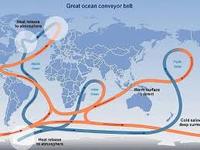
Ocean Currents Waves

Quiz
•
Science
•
6th - 8th Grade
•
Practice Problem
•
Hard
+1
Standards-aligned

Charles Martinez
FREE Resource

Enhance your content in a minute
15 questions
Show all answers
1.
MULTIPLE CHOICE QUESTION
1 min • 1 pt
Sarah can float more easily in ocean water than in water in a swimming pool. Why is it easier for her to float in ocean water?
ocean water is denser
ocean water is deeper
there is a larger volume of ocean water to float in
she has a smaller mass in ocean water
2.
MULTIPLE CHOICE QUESTION
1 min • 1 pt
Which best describes the Gulf Stream?
A cold ocean current that cools the weather off near Australia.
A cold ocean current that helps decrease global warming.
A warm ocean current that influences weather along the east coast of the U.S. and up toward Europe.
A warm ocean current that influences weather in Cuba and moves toward Antarctica.
Tags
NGSS.MS-ESS2-6
3.
MULTIPLE CHOICE QUESTION
1 min • 1 pt
How do deep ocean currents form?
The form as warm, dense water sinks and flows beneath cold ocean water.
They form as cold, dense water sinks and flows beneath warm ocean water.
They form as warm, dense water sinks and flows with other warm ocean water.
The wind blows causing the deep ocean currents.
Tags
NGSS.MS-ESS2-6
4.
MULTIPLE CHOICE QUESTION
1 min • 1 pt
Which of the following does NOT affect surface currents?
strength of the wind
presence of the wind
latitude and longitude
speed of the wind
Tags
NGSS.MS-ESS2-6
5.
MULTIPLE CHOICE QUESTION
1 min • 1 pt
Most ocean waves are formed by
earthquakes
landslides
impacts of cosmic bodies
wind
6.
MULTIPLE CHOICE QUESTION
1 min • 1 pt
Which of the following does NOT control surface currents?
tides
global wind
Coriolis Effect
continental deflections (bouncing off of the continents)
Tags
NGSS.MS-ESS2-6
7.
MULTIPLE CHOICE QUESTION
1 min • 1 pt
What phenomenon does the Coriolis Effect arise from?
Rotation of the Earth on its axis.
Revolution of the Earth on its axis.
Curvature of the Earth’s surface.
Effect of winds high in the atmosphere.
Tags
NGSS.MS-ESS2-6
Access all questions and much more by creating a free account
Create resources
Host any resource
Get auto-graded reports

Continue with Google

Continue with Email

Continue with Classlink

Continue with Clever
or continue with

Microsoft
%20(1).png)
Apple

Others
Already have an account?
Similar Resources on Wayground
13 questions
INTERACT GENERAL KNOWLEGE TRIVIA
Quiz
•
7th - 12th Grade
17 questions
Heat (NT Science)
Quiz
•
7th Grade
19 questions
States of Matter Quiz
Quiz
•
7th Grade
15 questions
IS_Unit9_Checkpoint 9.2_E
Quiz
•
7th Grade
10 questions
Plants Adaptation
Quiz
•
6th Grade
10 questions
Weather tools
Quiz
•
6th Grade
12 questions
IS_Unit6_Checkpoint 6.3_E
Quiz
•
7th Grade
10 questions
Reversible and Irreversible Changes week 5
Quiz
•
6th Grade
Popular Resources on Wayground
15 questions
Fractions on a Number Line
Quiz
•
3rd Grade
20 questions
Equivalent Fractions
Quiz
•
3rd Grade
25 questions
Multiplication Facts
Quiz
•
5th Grade
22 questions
fractions
Quiz
•
3rd Grade
20 questions
Main Idea and Details
Quiz
•
5th Grade
20 questions
Context Clues
Quiz
•
6th Grade
15 questions
Equivalent Fractions
Quiz
•
4th Grade
20 questions
Figurative Language Review
Quiz
•
6th Grade
Discover more resources for Science
33 questions
Grade 6 Quarter 3 PMA 5 Review
Quiz
•
6th - 8th Grade
85 questions
Midpoint D1 Review
Quiz
•
8th Grade
20 questions
Rocks and The Rock Cycle
Quiz
•
6th Grade
12 questions
Ecological Succession
Quiz
•
7th Grade
12 questions
Newton's Laws of Motion

Lesson
•
6th - 8th Grade
10 questions
Exploring the Rock Cycle: Types and Formation

Interactive video
•
6th - 8th Grade
10 questions
Exploring the Layers of the Earth
Interactive video
•
6th - 10th Grade
20 questions
Pure Substances & Mixtures
Quiz
•
8th Grade