
Unit 9 Lesson 3 Self-Check Patterns of Interaction
Authored by TC Sun
Science
8th Grade


AI Actions
Add similar questions
Adjust reading levels
Convert to real-world scenario
Translate activity
More...
Content View
Student View
8 questions
Show all answers
1.
MULTIPLE SELECT QUESTION
30 sec • 1 pt

Which statements describe the feeding interaction between frogs and insects? Circle all that apply.
The frog is a predator.
The interaction is mutualistic.
The frog is a parasite.
The number of insects can influence the number of frogs in the ecosystem.
2.
DROPDOWN QUESTION
30 sec • 1 pt
If a drought causes insect populations to decrease, the frog population will likely (a) . If populations of birds that eat insects decrease, the frog population will likely (b) .
remain stable
disappear
3.
DRAG AND DROP QUESTION
1 min • 1 pt

Hundreds of pounds of barnacles may be attached to the surface of whales at a given time. Unnoticed by the whale, barnacles avoid (a) and filter plankton from ocean water while the whales feed. This interaction is an example of (b) , where the barnacles (c) while the whale is unaffected.
4.
MULTIPLE CHOICE QUESTION
30 sec • 1 pt

Whale lice live on the surface of whales. They are very small, and they feed on whale skin. Which statement best describes the relationship between lice and barnacles?
They have a predator-prey relationship.
They are both whale parasites.
They compete for food resources.
They do not compete for food resources, but may compete for space on a whale.
5.
MULTIPLE SELECT QUESTION
30 sec • 1 pt
Atlantic salmon migrate to rivers in New England to reproduce and to the coast of Greenland to feed. Which of these scenarios could cause a decrease in salmon populations due to competition? Circle all that apply.
Abundant food resources in Greenland
Limited food resources in Greenland
Increased predation by birds
Limited space for reproduction in New England rivers
6.
DRAG AND DROP QUESTION
1 min • 1 pt
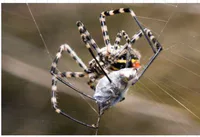
In a predator-prey relationship, the population sizes of the two species are interconnected. When the prey population (a) , the predator population has more food available, which allows it to (b) . However, as the predator population grows, it consumes more prey, causing the prey population to (c) . Eventually, the reduced prey population cannot support the large predator population, leading to a (d) in predator numbers. This cyclical pattern continues over time, creating fluctuations in both populations.
7.
DRAG AND DROP QUESTION
1 min • 1 pt
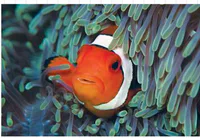
Predators and parasites both depend on other species, but their effects differ. Predators usually (a) prey quickly, while parasites (b) hosts slowly, often keeping them alive. Predation is a (c) interaction, whereas parasitism typically lasts a (d) . Unlike predators, parasites often rely on (e) host to survive.
Access all questions and much more by creating a free account
Create resources
Host any resource
Get auto-graded reports

Continue with Google

Continue with Email

Continue with Classlink

Continue with Clever
or continue with

Microsoft
%20(1).png)
Apple

Others
Already have an account?



