
Early Atomic Theory
9th - 12th Grade
•19 Qs

Similar activities
Term 1 Week 4 Topic 2.1
11th - 12th Grade
•18 Qs
ulangan harian Kd 3.10 kelas XI MIA 1
11th Grade
•15 Qs
Isotope POGIL
10th - 12th Grade
•14 Qs
Carbon Compounds & Alkanes
11th Grade
•20 Qs
HIDROKARBON
10th Grade
•20 Qs
Hakikat Ilmu Kimia dan Struktur Atom
10th - 11th Grade
•15 Qs
Periodic table of elements
10th - 11th Grade
•15 Qs
Grams, Moles
9th - 12th Grade
•16 Qs
Early Atomic Theory

Quiz
•
Chemistry
•
9th - 12th Grade
•
Practice Problem
•
Hard
Standards-aligned

Charles Martinez
FREE Resource

Enhance your content in a minute
19 questions
Show all answers
1.
MULTIPLE CHOICE QUESTION
30 sec • 1 pt

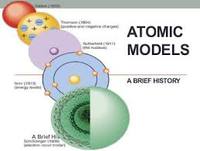
This model this model was the first to show a nucleus, consisting of protons and neutron. Electrons surround the nucleus but are not shown in distinct energy levels.
Tags
NGSS.HS-PS1-8
2.
MULTIPLE CHOICE QUESTION
30 sec • 1 pt

This was the first model of the atom ever proposed. It was simple and described atoms as tiny spheres that could not be broken down into smaller pieces.
3.
MULTIPLE CHOICE QUESTION
30 sec • 1 pt

This is the most complete and current model of the atom. It consists of 61 elementary particles. Electrons are located in complex orbitals.
Tags
NGSS.HS-PS1-2
4.
MULTIPLE CHOICE QUESTION
30 sec • 1 pt

This model added on to previous models by showing electrons existed at certain "energy levels". However it does not accurately show what those levels look like.
Tags
NGSS.HS-PS1-1
5.
MULTIPLE CHOICE QUESTION
30 sec • 1 pt

This model was developed after J.J. Thompson discovered electrons, a particle smaller than an atom. Is shows electrons floating freely in a positive space.
6.
MULTIPLE CHOICE QUESTION
10 sec • 1 pt

Ernest Rutherford discovered that atoms were mostly _________________.
7.
MULTIPLE CHOICE QUESTION
45 sec • 1 pt

What does the nucleus of an atom contain?
Tags
NGSS.HS-PS1-8

Access all questions and much more by creating a free account
Create resources
Host any resource
Get auto-graded reports

Continue with Google

Continue with Email

Continue with Classlink

Continue with Clever
or continue with

Microsoft
%20(1).png)
Apple

Others
Already have an account?
Similar Resources on Wayground
20 questions
Acid Nomenclature Game
Quiz
•
9th - 10th Grade
19 questions
OCR A Chemistry – 5.2.2 Entropy and ∆G
Quiz
•
12th Grade
20 questions
IPC Unit 8: Changes in Matter
Quiz
•
9th - 12th Grade
21 questions
Matter in Our Surroundings
Quiz
•
9th - 11th Grade
15 questions
Histórico da Química
Quiz
•
12th Grade
20 questions
Compounds: Formulas and Names
Quiz
•
12th Grade
19 questions
Acids and Bases
Quiz
•
KG - Professional Dev...
19 questions
JADUAL BERKALA DAN SIFAT FIZIK KUMPULAN 1
Quiz
•
8th - 10th Grade
Popular Resources on Wayground
15 questions
Fractions on a Number Line
Quiz
•
3rd Grade
20 questions
Equivalent Fractions
Quiz
•
3rd Grade
25 questions
Multiplication Facts
Quiz
•
5th Grade
54 questions
Analyzing Line Graphs & Tables
Quiz
•
4th Grade
22 questions
fractions
Quiz
•
3rd Grade
20 questions
Main Idea and Details
Quiz
•
5th Grade
20 questions
Context Clues
Quiz
•
6th Grade
15 questions
Equivalent Fractions
Quiz
•
4th Grade
Discover more resources for Chemistry
20 questions
Types of Chemical Reactions
Quiz
•
9th - 12th Grade
10 questions
Formative 3BC: Ionic v Covalent Bonds
Quiz
•
9th Grade
10 questions
Exploring Stoichiometry Concepts

Interactive video
•
6th - 10th Grade
20 questions
Mixed Bonding Naming
Quiz
•
9th Grade
20 questions
Naming & Writing Chemical Formulas
Quiz
•
10th Grade
20 questions
Chemical Reactions
Quiz
•
9th Grade
20 questions
Practice: E-Con, Orbital Notation, Noble Gas Notation
Quiz
•
10th Grade
20 questions
Covalent Bonding
Quiz
•
10th Grade