
AP Physics Oscillation
Authored by Charles Martinez
Physics
10th Grade
NGSS covered
Used 1+ times


AI Actions
Add similar questions
Adjust reading levels
Convert to real-world scenario
Translate activity
More...
Content View
Student View
10 questions
Show all answers
1.
MULTIPLE CHOICE QUESTION
30 sec • 1 pt
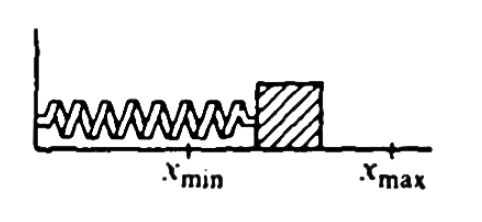
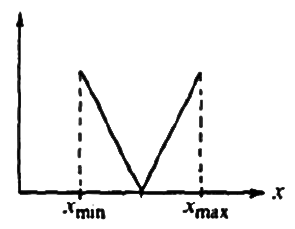
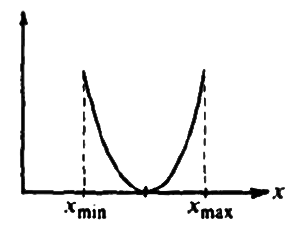
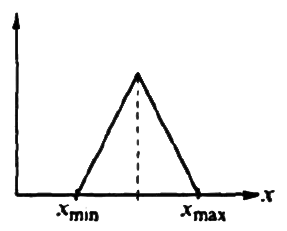
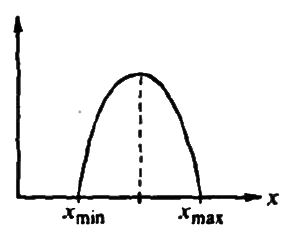
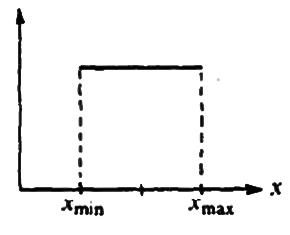
Question 1 of 2: A block oscillates without friction on the end of a spring as shown. The minimum and maximum lengths of the spring as it oscillates are, respectively, xmin and xmax. The graphs below can represent quantities associated with the oscillation as functions of the length x of the spring. Which graph can represent the total mechanical energy of the block-spring system as a function of x?
2.
MULTIPLE CHOICE QUESTION
30 sec • 1 pt
Question 2 of 2: A block oscillates without friction on the end of a spring as shown. The minimum and maximum lengths of the spring as it oscillates are, respectively, xmin and xmax. The graphs below can represent quantities associated with the oscillation as functions of the length x of the spring. Which graph can represent the kinetic energy of the block as a function of x?
Tags
NGSS.HS-PS3-2
NGSS.HS-PS3-1
3.
MULTIPLE CHOICE QUESTION
30 sec • 1 pt
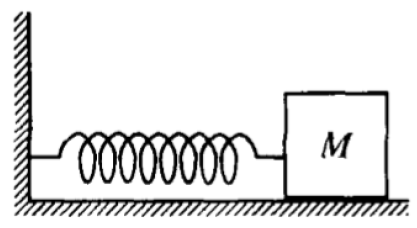
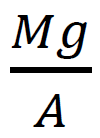
An ideal massless spring is fixed to the wall at one end, as shown. A block of mass M attached to the other end of the spring oscillates with amplitude A on a frictionless, horizontal surface. The maximum speed of the block is 𝑣𝑚. The force constant of the spring is
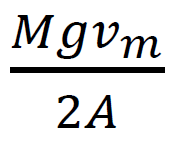
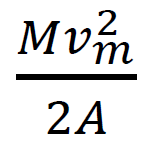
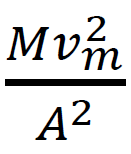
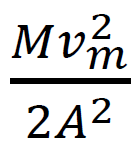
Tags
NGSS.HS-PS2-1
4.
MULTIPLE CHOICE QUESTION
30 sec • 1 pt
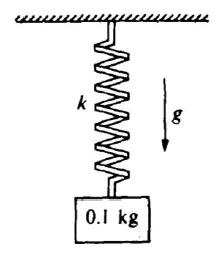
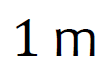
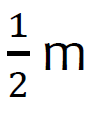
Question 1 of 2: A 0.1-kilogram block is attached to an initially unstretched spring of force constant
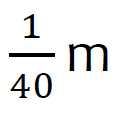
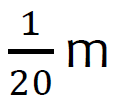
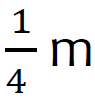
k = 40 newtons per meter as shown. The block is released from rest at time t = 0. What is the amplitude, in meters, of the resulting simple harmonic motion of the block?
5.
MULTIPLE CHOICE QUESTION
30 sec • 1 pt
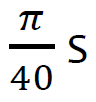
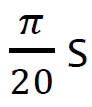
Question 2 of 2: A 0.1-kilogram block is attached to an initially unstretched spring of force constant
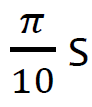
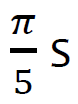
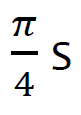
k = 40 newtons per meter as shown. The block is released from rest at time t = 0. What will the resulting period of oscillation be?
6.
MULTIPLE CHOICE QUESTION
30 sec • 1 pt
Question 1 of 2: A particle moves in a circle in such a way that the x and y coordinates of its motion, given in meters as functions of time in seconds, are
𝑥 = 5 cos (3𝑡)
𝑦 = 5 sin(3𝑡)
What is the radius of the circle?


7.
MULTIPLE CHOICE QUESTION
30 sec • 1 pt
Question 2 of 2: A particle moves in a circle in such a way that the x and y coordinates of its motion, given in meters as functions of time in seconds, are
𝑥 = 5 cos (3𝑡)
𝑦 = 5 sin(3𝑡)
Which of the following is true of the speed of the particle?
It is always equal to 5 m/s.
It is always equal to 15 m/s.
It oscillates with a range of
0 to 5 m/s.
It oscillates with a range of
0 to 15 m/s.
It oscillates with a range of
5 to 15 m/s.
Tags
NGSS.HS-PS3-2


Access all questions and much more by creating a free account
Create resources
Host any resource
Get auto-graded reports

Continue with Google

Continue with Email

Continue with Microsoft
or continue with

%20(1).png)
Apple

Others
Already have an account?


