
Natural Selection
Authored by Lisa Thompson
Science
7th Grade
NGSS covered


AI Actions
Add similar questions
Adjust reading levels
Convert to real-world scenario
Translate activity
More...
Content View
Student View
15 questions
Show all answers
1.
MULTIPLE CHOICE QUESTION
1 min • 1 pt
The phrase "Survival of the Fittest" would best describe...
Natural selection
Artificial selection
Selective breeding
None of the above
Tags
NGSS.MS-LS4-4
2.
MULTIPLE CHOICE QUESTION
1 min • 1 pt

Guppies are small fish that live in South American rivers. They can have different- sized spots on their bodies. The river bottoms are covered in rocks. Guppies with spots that are the same size as the rocks on the bottom are harder for bigger fish to see and catch. The diagram below shows a population of guppies that live in a river. At time 1, the population had the same number of guppies with small and large spots. At time 2, after many generations, there were many more guppies with small spots and fewer guppies with large spots in the population. How did the environment change between time 1 and time 2? How did the population change?
You cannot tell how the environment changed. With each generation, more guppies passed on the gene for small spots to their offspring.
The rocks became smaller. With each generation, more guppies with small spots survived long enough to pass on the gene for small spots to their offspring.
The rocks became smaller. Guppies with small spots are more likely to survive, so the guppies with large spots changed to have small spots.
The rocks became smaller. Guppies with small spots are more likely to survive, so both kinds of guppies passed on the gene for small spots to their offspring.
Tags
NGSS.MS-LS4-4
NGSS.MS-LS2-4
NGSS.MS-LS1-5
3.
MULTIPLE CHOICE QUESTION
1 min • 1 pt
Do organisms "decide" to evolve and change?
Yes, they know they need to change to survive
No, they change because of natural selection
4.
MULTIPLE CHOICE QUESTION
1 min • 1 pt
A green rat snake that lives in the grass and a brown rat snake that lives in the desert is a form of ______________.
Human Genetic Modification
Selective Breeding
Natural Selection
Artificial Breeding
Tags
NGSS.MS-LS4-4
5.
MULTIPLE CHOICE QUESTION
1 min • 1 pt

According to natural selection, light colored tree trunks would favor
light colored moths
dark colored moths
red colored moths
red and light colored moths
Tags
NGSS.MS-LS4-4
6.
MULTIPLE CHOICE QUESTION
1 min • 1 pt

How did the environment change between time 1 and time 2? How did the population change?
You cannot tell how the environment changed. With each generation, more squirrels passed on the gene for black fur to their offspring.
There were more black trees. Squirrels with black fur are more likely to survive, so the squirrels with gray fur changed to have black fur.
There were more black trees. Squirrels with black fur are more likely to survive, so both types of squirrels passed on the gene for black fur to their offspring.
There were more black trees. With each generation, more squirrels with black fur survived long enough to pass on the gene for black fur to their offspring.
Tags
NGSS.MS-LS4-4
NGSS.MS-LS2-4
NGSS.MS-LS1-5
7.
MULTIPLE CHOICE QUESTION
1 min • 1 pt
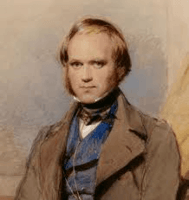
Who was the naturalist that traveled the world to study plants and animals?
Albert Einstein
Charles Darwin
Charles Barkley
Isaac Newton
Tags
NGSS.HS-LS4-1
NGSS.HS-LS4-2
NGSS.HS-LS4-4

Access all questions and much more by creating a free account
Create resources
Host any resource
Get auto-graded reports

Continue with Google

Continue with Email

Continue with Classlink

Continue with Clever
or continue with

Microsoft
%20(1).png)
Apple

Others
Already have an account?
Similar Resources on Wayground

10 questions
Pure Substances and Mixtures

Quiz
•
7th Grade
14 questions
General knowledge
Quiz
•
2nd - 12th Grade
15 questions
T10L5: Recent Climate Change Quiz
Quiz
•
7th Grade
20 questions
วาเลนไทน์สดใส ลูก พ.น ห่างไกลโควิท 19
Quiz
•
6th - 12th Grade
20 questions
Science 7 Recall
Quiz
•
7th - 8th Grade
15 questions
camel adaptations
Quiz
•
5th - 7th Grade
10 questions
Energy Transformation Quiz
Quiz
•
7th Grade
15 questions
GRADE 7- SCIENTIFIC!
Quiz
•
7th Grade
Popular Resources on Wayground
15 questions
Fractions on a Number Line
Quiz
•
3rd Grade
20 questions
Equivalent Fractions
Quiz
•
3rd Grade
25 questions
Multiplication Facts
Quiz
•
5th Grade
54 questions
Analyzing Line Graphs & Tables
Quiz
•
4th Grade
22 questions
fractions
Quiz
•
3rd Grade
20 questions
Main Idea and Details
Quiz
•
5th Grade
20 questions
Context Clues
Quiz
•
6th Grade
15 questions
Equivalent Fractions
Quiz
•
4th Grade
Discover more resources for Science
20 questions
Cell Organelles and Functions
Quiz
•
6th - 8th Grade
33 questions
Grade 6 Quarter 3 PMA 5 Review
Quiz
•
6th - 8th Grade
12 questions
Ecological Succession
Quiz
•
7th Grade
10 questions
Exploring the Rock Cycle: Types and Formation

Interactive video
•
6th - 8th Grade
10 questions
Exploring the Layers of the Earth
Interactive video
•
6th - 10th Grade
10 questions
Exploring the Rock Cycle
Interactive video
•
6th - 8th Grade
12 questions
Photosynthesis
Quiz
•
7th Grade
10 questions
Exploring Weathering, Erosion, and Deposition Processes
Interactive video
•
6th - 10th Grade