
Environmental Problems
Authored by Lisa Thompson
Science
11th Grade
NGSS covered
Used 1+ times


AI Actions
Add similar questions
Adjust reading levels
Convert to real-world scenario
Translate activity
More...
Content View
Student View
15 questions
Show all answers
1.
MULTIPLE CHOICE QUESTION
1 min • 1 pt
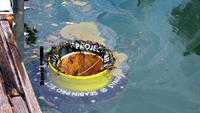
The Seabin is a floating trash can that collects trash found in the ocean. To evaluate the effectiveness (how well it works) of this device, what data would need to be collected?
The amount of trash it collects daily.
The amount of trash in the area.
The amount of trash in the area before and after the use of the Seabin.
The amount of trash created by the closest city.
Tags
NGSS.MS-ETS1-3
2.
MULTIPLE CHOICE QUESTION
1 min • 1 pt

Students decide to create a garden in a once vacant filled with trash. The collected the trash, recycled the glass and plastic they found, as well as any paper. Which observation is the best evidence that they have made a positive effect on the Earth.
Bees, that had not been seen in that area for over a decade have returned to collect pollen from the flowers and vegetables in the garden.
More people stop by to visit the garden and take pictures for the 'gram, because of the beautiful flowers that can now be seen.
A local paper did a an article about the students and how they have brought the community together by gardening.
The students get extra credit points in their science class for their community project.
Tags
NGSS.MS-ESS3-3
NGSS.MS-ESS3-4
NGSS.MS-LS2-5
3.
MULTIPLE CHOICE QUESTION
1 min • 1 pt
Which of the following would be most effective method to slow down destruction of certain species of birds and small mammals from over hunting?
increase the demand for meat and pelts from these animals
Prevent nature documentaries from being made about these animals
Decrease the size of their habitat.
Regulate the number of animals that can be hunted in a certain area at certain times
Tags
NGSS.MS-LS2-4
NGSS.MS-LS2-5
4.
MULTIPLE CHOICE QUESTION
1 min • 1 pt

A toxin that breaks down slowly is introduced into the environment through the spraying of insecticides. The toxin is very lethal when an organism receives high levels of it. Which organism in the food web is in the most danger?
Grass
Rabbit
Fox
Fish
Tags
NGSS.MS-LS2-4
NGSS.MS-LS2-1
5.
MULTIPLE CHOICE QUESTION
1 min • 1 pt
Which results from an increase in the greenhouse effect?
continental shifts
wildfires
volcanic eruptions
global warming
Tags
NGSS.MS-ESS3-5
6.
MULTIPLE CHOICE QUESTION
1 min • 1 pt
A harmful substance that contaminates a
natural environment
Deforestation
Environmental Impact
Overexploitation
Pollution
Tags
NGSS.MS-ESS3-3
7.
MULTIPLE SELECT QUESTION
1 min • 2 pts
According to the article why do plastics represent a huge environmental problem?
The research found that if no action is taken, the plastic crisis will grow to 29 million metric tons per year by 2040.
91% of all plastic that has ever been made is not recycled
Plastic takes 400 years to decompose.
There’s no telling what the irreversible effects of plastic pollution will have on the environment in the long run.
Tags
NGSS.MS-ESS3-3
NGSS.MS-ESS3-4
NGSS.MS-PS1-3
Access all questions and much more by creating a free account
Create resources
Host any resource
Get auto-graded reports

Continue with Google

Continue with Email

Continue with Classlink

Continue with Clever
or continue with

Microsoft
%20(1).png)
Apple

Others
Already have an account?
Similar Resources on Wayground

10 questions
Pollution

Quiz
•
University
15 questions
Theories on the Origin of the Universe
Quiz
•
11th Grade
15 questions
Rock cycle/classification
Quiz
•
11th Grade
20 questions
Compounds: Formulas and Names
Quiz
•
12th Grade
10 questions
Week 2 - Changing Earth
Quiz
•
University
10 questions
STS Prelim Quiz1 BIT 1-B
Quiz
•
University
20 questions
quiz prelims
Quiz
•
9th - 12th Grade
10 questions
Organology Part 1 - Pre Test
Quiz
•
University
Popular Resources on Wayground
15 questions
Fractions on a Number Line
Quiz
•
3rd Grade
20 questions
Equivalent Fractions
Quiz
•
3rd Grade
25 questions
Multiplication Facts
Quiz
•
5th Grade
22 questions
fractions
Quiz
•
3rd Grade
20 questions
Main Idea and Details
Quiz
•
5th Grade
20 questions
Context Clues
Quiz
•
6th Grade
15 questions
Equivalent Fractions
Quiz
•
4th Grade
20 questions
Figurative Language Review
Quiz
•
6th Grade
Discover more resources for Science
14 questions
Natural Selection and Adaptation

Lesson
•
9th - 12th Grade
38 questions
Water Cycle and Groundwater
Quiz
•
9th - 12th Grade
12 questions
Cell Organelles and Their Functions
Lesson
•
9th - 12th Grade
12 questions
Homeostasis: Positive and Negative Feedback Loops

Interactive video
•
11th Grade
13 questions
Amoeba Sisters: Biomolecules
Interactive video
•
9th - 12th Grade
60 questions
2025 Genetics Test Study Guide
Quiz
•
9th - 12th Grade
10 questions
Understand Cell Functions and Organelles
Quiz
•
9th - 12th Grade
16 questions
Explore Cell Cycle Stages and Mitosis
Quiz
•
9th - 12th Grade