
Science Graphing Models and Maps
7th Grade
•15 Qs

Similar activities
Sc-F3 27April
7th - 9th Grade
•11 Qs
Unit Conversion
University
•11 Qs
Synthetic fibers and plastics
8th Grade
•15 Qs
INTELIGENCIAS - COGNITIVOS
10th - 12th Grade
•10 Qs
Dihybrid Cross
11th Grade
•20 Qs
Using the Periodic Table
7th - 8th Grade
•10 Qs
Radioactivity
7th Grade
•10 Qs
(2.4) Isotopes and Its Uses
10th Grade
•17 Qs
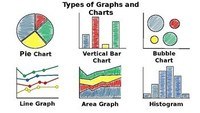
Science Graphing Models and Maps

Quiz
•
Science
•
7th Grade
•
Practice Problem
•
Hard
+2
Standards-aligned

Lisa Thompson
FREE Resource

Enhance your content in a minute
15 questions
Show all answers
1.
MULTIPLE CHOICE QUESTION
1 min • 1 pt
What do contour lines that are farther apart represent?
waterfall
steep area
gentle slope
river
2.
MULTIPLE CHOICE QUESTION
1 min • 1 pt

The distance between contour lines is called...
Contour interval
Contour line
Colors
Mountains
3.
MULTIPLE CHOICE QUESTION
1 min • 1 pt
Which of the following is an example of a model?
A scientific experiment
A road map
A computer
A laboratory
Tags
DOK Level 1: Recall
4.
MULTIPLE CHOICE QUESTION
1 min • 1 pt
Why are models useful in science?
They are more complex than reality
They provide a way to investigate things that are too small, large, complex, or distant
They replace real-world experiments
They are exact replicas of real systems
Tags
DOK Level 1: Recall
5.
MULTIPLE CHOICE QUESTION
1 min • 1 pt
What must a model do to be useful?
Be more complex than the real thing
Closely represent the real thing in important ways
Be identical to the real thing
Be completely different from the real thing
Tags
DOK Level 1: Recall
6.
MULTIPLE CHOICE QUESTION
1 min • 1 pt
Explain why scientists might use models to study Earth's climate.
Because Earth's climate is simple and easy to understand
Because Earth's climate is complex and difficult to study directly
Because models are more accurate than real-world data
Because models can predict the future with certainty
Tags
DOK Level 2: Skill/Concept
7.
MULTIPLE CHOICE QUESTION
1 min • 1 pt
What is a limitation of using models in science?
Models are always accurate
Models can never be improved
Models are not the real thing and may not capture all details
Models are more complex than the real system
Tags
DOK Level 2: Skill/Concept

Access all questions and much more by creating a free account
Create resources
Host any resource
Get auto-graded reports

Continue with Google

Continue with Email

Continue with Classlink

Continue with Clever
or continue with

Microsoft
%20(1).png)
Apple

Others
Already have an account?
Similar Resources on Wayground
10 questions
SDG Intro Test
Quiz
•
12th Grade
10 questions
Seven branches of Science
Quiz
•
7th Grade
10 questions
Grade 8 Science - Mr. Randy.
Quiz
•
6th - 8th Grade
15 questions
Science 8 Q1 M4: Effect of Temperature to the Speed of Sound
Quiz
•
8th Grade
10 questions
Movimentos da Terra
Quiz
•
University
10 questions
Our Future
Quiz
•
KG - 12th Grade
10 questions
Biological and health psychology
Quiz
•
11th Grade
15 questions
Nutrition in living organisms plants
Quiz
•
7th Grade
Popular Resources on Wayground
15 questions
Fractions on a Number Line
Quiz
•
3rd Grade
20 questions
Equivalent Fractions
Quiz
•
3rd Grade
25 questions
Multiplication Facts
Quiz
•
5th Grade
22 questions
fractions
Quiz
•
3rd Grade
20 questions
Main Idea and Details
Quiz
•
5th Grade
20 questions
Context Clues
Quiz
•
6th Grade
15 questions
Equivalent Fractions
Quiz
•
4th Grade
20 questions
Figurative Language Review
Quiz
•
6th Grade
Discover more resources for Science
33 questions
Grade 6 Quarter 3 PMA 5 Review
Quiz
•
6th - 8th Grade
12 questions
Ecological Succession
Quiz
•
7th Grade
12 questions
Newton's Laws of Motion

Lesson
•
6th - 8th Grade
10 questions
Exploring the Rock Cycle: Types and Formation

Interactive video
•
6th - 8th Grade
10 questions
Exploring the Layers of the Earth
Interactive video
•
6th - 10th Grade
22 questions
Wave Properties
Lesson
•
7th Grade
20 questions
Food Chains & Food Webs
Quiz
•
5th - 7th Grade
20 questions
Earth's Spheres
Quiz
•
6th - 8th Grade